I will, feel free to grab me at my poster session or drop me a dm/ email and we can find an alternative time.
19.02.2026 09:37 — 👍 0 🔁 0 💬 0 📌 0

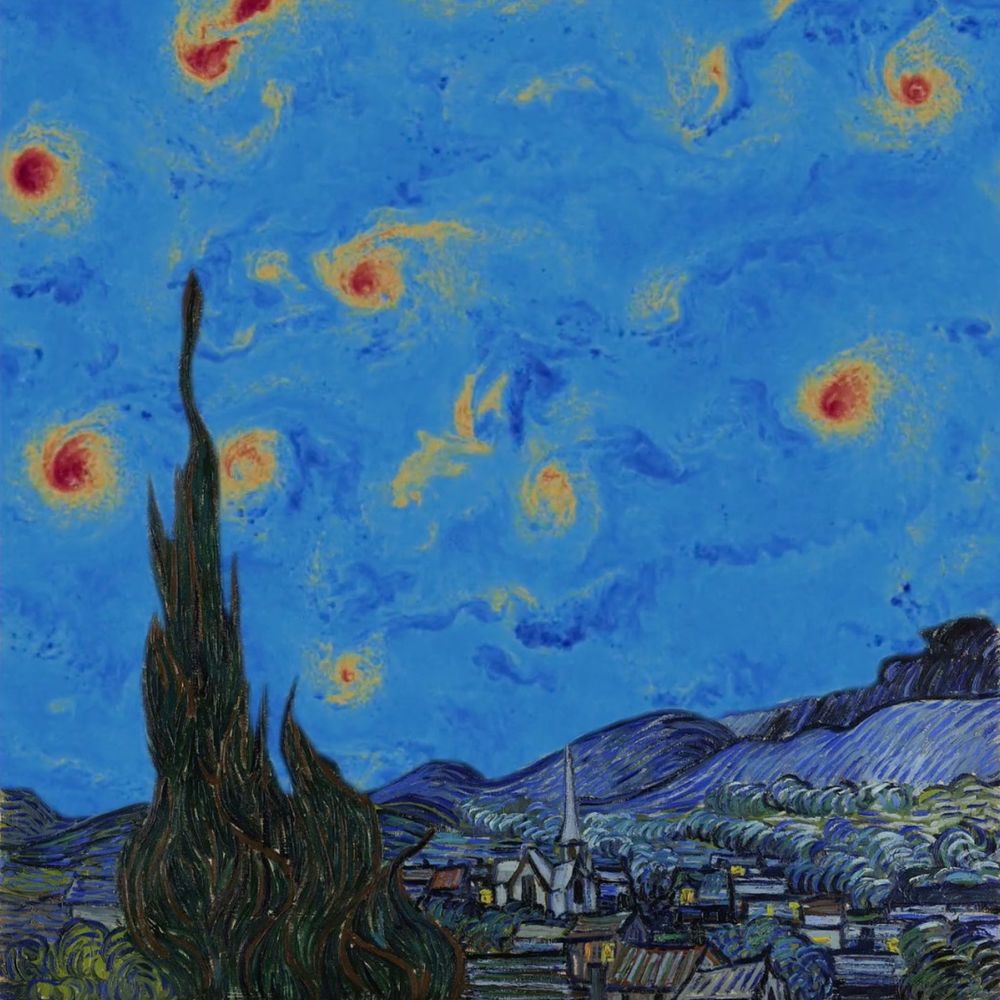
Global map showing sea surface temperature anomalies in January 2026 relative to 1982 to 2010. Most areas are warmer than average. Red is shown for warmer sea surface temperatures, and blue is shown for colder sea surface temperatures. Data is from NOAA OISSTv2.1.
While the La Niña signature (cooling in the eastern Tropical Pacific) remained prevalent in January, there are signs it is beginning to fade in recent weeks. Elsewhere, anomalous warmth continues in the extratropics of both hemispheres.
Data from NOAA OISSTv2.1 (www.ncei.noaa.gov/products/opt...) 🌊
18.02.2026 13:24 — 👍 41 🔁 23 💬 0 📌 0
The RMT is the regional mean temperature of Northern Europe, using IPCC AR6 boundaries. We have conducted equivalent analysis for all of the IPCC AR6 boundaries and national boundaries, but focused on Northern Europe here as a relevant case study.
18.02.2026 13:57 — 👍 0 🔁 0 💬 1 📌 0
Thank you for your message, I'd be happy to discuss our work further if you would like to call sometime. The colours in Figure 3 represent the density of trajectories or how many runs enter a given part of the distribution, due to the methodology they don't correspond to probabilities.
18.02.2026 13:57 — 👍 0 🔁 0 💬 1 📌 0
I am also very interested in the economic impacts of these climate changes, and how we think about model information in this space more generally. I will be at my poster 4-6pm on Tue Feb 24th in the PS24A Session. Message to find out more or to meet up. I have attached a preview of the poster here!
17.02.2026 20:00 — 👍 0 🔁 0 💬 0 📌 0
If you would like to learn more about the uncertainty surrounding the impacts of changes to the Atlantic Meridional Overturning Circulation and approaches to projecting these impacts combined with global warming scenarios, please do come and chat.
17.02.2026 20:00 — 👍 0 🔁 0 💬 1 📌 0
AGU - iPosterSessions - an aMuze! Interactive system
*** Ocean Sciences Poster on "Uncertainty Quantification of the Regional Temperature Consequences of a Large AMOC Reduction"***
I will be presenting a poster at the Ocean Sciences Meeting #OSM next week. See this link for a sneak preview:
osm26.ipostersessions.com?s=77-E2-6D-B...
17.02.2026 20:00 — 👍 2 🔁 0 💬 2 📌 0
This means that we may be able to say more about the future of the Southern Ocean than we might expect from "initial condition anomalies".
10.09.2025 16:21 — 👍 0 🔁 0 💬 0 📌 0
Therefore, when we look at the change from "present day" (the initial value anomaly), the high initial condition uncertainty is spuriously moved to our projections, when we actually know our current conditions well, and the projections agree on our future trajectories.
10.09.2025 16:21 — 👍 0 🔁 0 💬 1 📌 0
This means that variance in the raw data is much higher at the start than the end of the run, due to initial condition impacts.
10.09.2025 16:21 — 👍 0 🔁 0 💬 1 📌 0
This is key for all modellers projecting the Southern Ocean (and potentially more widely). As shown in the attached figure, the Antarctic Circumpolar Current shows great variability in the present day but much lower in the future as long-timescale variability shuts down.
10.09.2025 16:21 — 👍 0 🔁 0 💬 1 📌 0
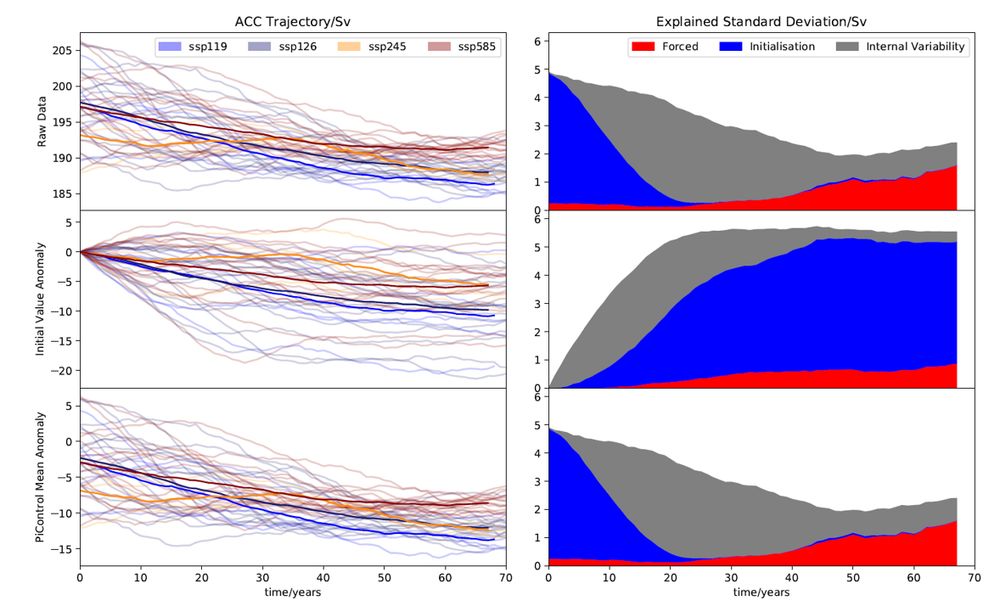
I am very excited about this point: it makes a huge difference whether we analyse raw data, changes from the "present day", or from "pre-industrial" in our models. Changes from the "present day" can mean projecting forward current variability and add potentially spurious uncertainty to projections.
10.09.2025 16:21 — 👍 0 🔁 0 💬 1 📌 0
▪️ Consequences for Climate Projections: Long timescale variability can contribute the majority of uncertainty in climate projections.
10.09.2025 16:21 — 👍 0 🔁 0 💬 1 📌 0
▪️ Shutdown of the lower circulation cell: Under even weak future forcing the oscillations are damped out and the strength of the lower circulation cell decreases
10.09.2025 16:21 — 👍 0 🔁 0 💬 1 📌 0
The key points were:
▪️ Centennial Oscillations: Southern Ocean oscillations on hundred-year timescales exist in the CMIP6 ensemble of global climate models
10.09.2025 16:21 — 👍 0 🔁 0 💬 1 📌 0

🌊 The Atlantic “conveyor belt” (AMOC) is weakening under climate change. A new @nature.com study suggests collapse is unlikely this century, but the risks remain very serious.
Hear from lead author @jonbakerocean.bsky.social in our next webinar.
📅 2 Sep 2025, 2–3PM CEST
🔗 bit.ly/climtip-webi...
19.08.2025 13:14 — 👍 12 🔁 7 💬 1 📌 1

The shutdown of ocean currents could freeze Europe
When climate change poses a strategic threat, it needs a strategic response
Great article in The Economist on the Atlantic Meridional Overturning Circulation (AMOC) and the impact of potential changes in it (a key focus of my current work). www.economist.com/leaders/2025...
18.08.2025 10:20 — 👍 4 🔁 3 💬 0 📌 0
Earth’s climate is approaching irreversible tipping points
Scientists are racing to work out just how close they might be
It is good to see @economist.com highlighting the importance of climate tipping points, and the work being done to understand and prepare for them. It discusses the work being done by UK groups (including the @aria-research.bsky.social project which I am part of) www.economist.com/interactive/...
15.08.2025 12:35 — 👍 57 🔁 27 💬 3 📌 0
Finally, the thesis also shows that under global cooling (perhaps due to a future overshoot in temperatures), the Southern Ocean becomes destabilised, triggering new and faster oscillations (such as in the Antarctic Circumpolar Current), and even a counterintuitive loss of sea ice in some sectors.
28.07.2025 17:25 — 👍 3 🔁 0 💬 0 📌 0
As centennial variability dominates the uncertainty in some of the Southern Ocean, this shutdown in variability dominates the behaviour of uncertainty in features (e.g. the Antarctic Circumpolar Current), so the initial oscillation state accounts for a large amount of uncertainty in trajectories.
28.07.2025 17:25 — 👍 1 🔁 0 💬 1 📌 0
Applying global warming forcing to the system leads to the shutdown of convection and the loss of the oscillatory behaviour (shown in figure). Under plausible future scenarios (SSP scenarios for CMIP), this shutdown occurs even with strong mitigation, suggesting a tipping point may have been passed.
28.07.2025 17:25 — 👍 1 🔁 0 💬 1 📌 0
These oscillations involve multiple mechanisms, both the more traditional heat release behaviour and a novel advective mechanism involving the gyres. While both mechanisms involve deep convection, the advective mechanism involves motion of heat around the gyre.
28.07.2025 17:25 — 👍 1 🔁 0 💬 1 📌 0
Centennial (roughly hundred year period) oscillations exist in the Southern Ocean across the CMIP6 ensemble of climate models. These oscillations can be seen in many features such as the ocean heat, currents (such as the Antarctic Circumpolar Current, shown in the figure), and dense water formation.
28.07.2025 17:25 — 👍 1 🔁 0 💬 1 📌 0
Thesis link: www.repository.cam.ac.uk/items/f8e627...
I will try to outline some of the key takeaways from my thesis in the rest of this post:
28.07.2025 17:25 — 👍 1 🔁 0 💬 1 📌 0

PhD Graduation!!
Very happy to finally graduate from my PhD, focusing on Southern Ocean Centennial Oscillations in the CMIP6 Ensemble”. I am incredibly grateful to all those who have supported me throughout, friends, family and colleagues (too many to name here,please check out my acknowledgements).
28.07.2025 17:25 — 👍 4 🔁 0 💬 1 📌 0
Many thanks to my co-authors Andrew Meijers, Peter Haynes, and Mark Webb.
Additional thanks to the institutions that have funded and/or supported my PhD and this research: @granthamlse.bsky.social, @climtip.bsky.social, C-CLEAR DTP, @bas.ac.uk, @metoffice.gov.uk .
22.07.2025 09:09 — 👍 1 🔁 0 💬 0 📌 0
3) The loss of this variability dominates our ability to make future projections about features in the Southern Ocean, such as the Antarctic Circumpolar Current and ocean heat uptake.
22.07.2025 09:09 — 👍 0 🔁 0 💬 1 📌 0
2) We also demonstrate that these oscillations and the associated dense water formation cease under all future climate scenarios.
22.07.2025 09:09 — 👍 0 🔁 0 💬 1 📌 0
understander of things climate-related, and some other things
@thepolycrisis.bsky.social
The University of Cambridge flagship MBA business programme at Cambridge Judge Business School.
Unlocking science of #Minerals, #Crystals, #fossils, gems, and geology.
Professor of Energy Policy, Professor of Earth and Environment, Passionate About Energy and Climate Justice
Climate scientist & oceanographer. @royalsociety.org Professor @uniofeastanglia.bsky.social . Member @thecccuk.bsky.social #carbonbudget author.
ClimateTech VC. Postings on climate change, CDR, SRM, climate policy & pinball. Host of Climate Chat on YouTube: https://www.youtube.com/@climatechat/streams
Soon to be former astrophysicist, currently based in Cambridge
Postdoctoral oceanographer studying the ocean carbon sink 🦈🤿🕹️
🏠 @imev-mer.fr (CNRS-Sorbonne Université) as part of the Horizon Europe @tricuso.bsky.social project
💻 https://louisedelaigue.owlstown.net/
🚀 http://bit.ly/3HWFD5I
The Natural Environment Research Council's Arctic Office. We support the UK Arctic research community through engagement; advocacy and delivery.
🎨 Illustrator // Volcanologist
📍 Durham University
🧬 Freelance illustrator for Nature journals
🔗 linktr.ee/annabellefoster
Climate impacts and policy at Queen Mary University of London, and Climate and Environment Thematic Research Lead at UK Parliament (ex of CCC, BEIS, Defra). Floods and coastal erosion. Adaptation policy. Maybe some HE thoughts and reflections on running.
Non-profit, Open Access and multidisciplinary journal for climate research.
We're an action-oriented community with high methodological and ethical standards, aiming to empower urgent action on climate change.
Homepage 👇
plosclimate.org
Doctoral Researcher working on Antarctic ice dynamics at PIK Potsdam and MPI-GEA 🇦🇶🧊
Co-Chair of APECS Germany ❄️
Junior Chief Editor at PolF 📑
Views are my own.
Live simply, so that others can simply live.
Physicist, science educator, environmental scientist, ...
We are changemakers, a community of ocean lovers, guided by the principle that we are stronger and more influential together.
Paleoclimate, climate modeling, atmospheric rivers, the Last Interglacial, ice sheets, grad student at UConn. He/him. 🏃🚴🧗
Postdoctoral Researcher at Utrecht University | Climate Scientist - Physicist - Mathematician | Tipping - Subpolar Gyre - Weather Regimes - Complexity | Runner | she/her