Jesse’s was the first (and hopefully not last) professional introduction to mention both my college basketball fandom and trusty banana Halloween costume 🏀🍌
17.11.2025 16:31 — 👍 1 🔁 0 💬 0 📌 0
Last week, I had the pleasure of speaking (virtually) to folks in the @nmsu.edu psychology dept for their Friday Forum. Presented my work on the longitudinal dynamics of G-E interplay across cognitive development. Thanks @jgrabman.bsky.social for the invite!
17.11.2025 16:31 — 👍 4 🔁 0 💬 2 📌 1

Your Genes Are Simply Not Enough to Explain How Smart You Are
Seven years ago, I took a bet with Charles Murray about whether we’d basically understand the genetics of intelligence by now.
In 2018, Charles Murray challenged me to a bet: "We will understand IQ genetically—I think most of the picture will have been filled in by 2025—there will still be blanks—but we’ll know basically what’s going on." It's now 2025, and I claim a win. I write about it in The Atlantic.
13.10.2025 13:33 — 👍 348 🔁 125 💬 11 📌 18

Prepping for @dgps.bsky.social Methods, few recent papers pushing ctsem and dynamic models in interesting directions
#1 Developmental changes in twin cognitive correlation (ACE) across age, test instrument, zygosity, with @evangiangrande.bsky.social @ent3c.bsky.social et al
osf.io/preprints/ps...
25.09.2025 09:36 — 👍 14 🔁 5 💬 1 📌 1
conspiracy theory-type rabbit-holes, where a lot of the online sources are fringe and hotly debated, it's easier to believe what All-Powerful-And-Knowing Chatbot says. Safeguards related to AI literacy could help.
I also really dislike his stigmatizing use of the word "crazy"
26.08.2025 14:08 — 👍 1 🔁 0 💬 1 📌 0
Agreed, it's odd he implies that psychosis is either genetic or environmental. Most of this boils down to a diathesis-stress model, with AI-provided info as the stressor and, as @dingdingpeng.the100.ci mentions, dynamics. Big issue with AI is the apparent trustworthiness of the source. Cf...
26.08.2025 14:08 — 👍 2 🔁 0 💬 1 📌 0
Philosophy <--> Science
21.08.2025 14:46 — 👍 0 🔁 0 💬 0 📌 0
The causality facade isn't limited to AI/ML, of course. But the more complex and black-boxy the model, the easier that facade is to ignore/downplay.
20.08.2025 14:51 — 👍 1 🔁 0 💬 0 📌 0
difficult to validate and built on untestable assumptions about the causal structure, confounds etc. Adding more covariates doesn't necessarily help. See "The Good, the Bad, and the Ugly" section on CausalML here arxiv.org/pdf/2206.15475
20.08.2025 14:51 — 👍 1 🔁 0 💬 1 📌 0
This has become my latest pet peeve. "Causal" is sexy and creates the impression that you're uncovering mechanism(s), but "causal estimates" are often just associational and/or reliant on strong assumptions that are rarely met.
E.g., CausalML applied to observational data. Cool, but...
20.08.2025 14:51 — 👍 1 🔁 0 💬 1 📌 0
Big thanks to @margotvdweijer.bsky.social for spearheading this effort! And to our coauthors @appelbap.bsky.social, Emily Bassett, and @lucasjmatthews.bsky.social
15.08.2025 14:28 — 👍 1 🔁 0 💬 0 📌 0
Check out our preprint on ethical and legal considerations regarding Mendelian Imputation of missing parental genotypes! The method raises tricky questions about informed consent and potential harm. We highlight gaps in current practice and provide recommendations for researchers and IRBs.
15.08.2025 14:26 — 👍 7 🔁 1 💬 1 📌 0
I'm happy to share our latest manuscript "Impediments to countering racist pseudoscience", coauthored with @gillianrbrown1.bsky.social @kztwyman.bsky.social & Marcus Feldman.
25.07.2025 09:17 — 👍 75 🔁 32 💬 1 📌 2
Combatting harmful misappropriations of behavioral genetics requires response at multiple levels, including organizational. To that end, the BGA Public Science Committee has released a Statement on the Misuse of Genetics
20.06.2025 13:59 — 👍 4 🔁 1 💬 0 📌 0
S/O to my advisors, @jorsmo.bsky.social and Ben Neale; our wonderful collaborators in Finland and @fimm-uh.bsky.social, especially Aarno Palotie and Olli Pietilänen; and the Stanley Center for Psychiatric Research @broadinstitute.org
23.05.2025 15:51 — 👍 1 🔁 0 💬 0 📌 0

Global functioning is used widely to inform treatment and prognosis. In our sample, GF scores were associated with important severity- and course-related variables including hospitalization burden and cognitive performance.
23.05.2025 15:51 — 👍 0 🔁 0 💬 1 📌 0

We addressed those gaps using the SUPER-Finland study, which includes linked register data for every single psychiatric hospitalization in Finland since 1969. Global functioning has been assessed routinely at inpatient admission and discharge nationwide since 1994. A peek at the raw GF scores:
23.05.2025 15:51 — 👍 0 🔁 0 💬 1 📌 0
These results suggest that integrating genomics with clinically relevant, longitudinal phenotypes may help parse heterogeneity in schizophrenia severity, prognosis, and course.
Caveat: as is typical in Psych Gen, effect sizes were small and PGS are not sufficiently predictive for clinical use.
23.05.2025 15:51 — 👍 0 🔁 0 💬 1 📌 0

Leveraging ~120k GF measures from a complete hospitalization register, we found that higher SZ PGS predicted worse GF at admission & discharge, and less functional improvement during hospitalization. Higher EA PGS predicted better discharge GF and greater improvement, but worse admit GF
23.05.2025 15:51 — 👍 0 🔁 0 💬 1 📌 0
Tomorrow!! Check out a great panel on the communication of polygenic score research
13.05.2025 15:59 — 👍 1 🔁 0 💬 0 📌 0
Deadline tomorrow!! Already shaping up to be a great issue.
30.01.2025 14:29 — 👍 2 🔁 1 💬 0 📌 0

Behavior Genetics
🚨 2 weeks left to submit your abstract for our special issue 🚨
"Behavioral Genetics as a Public Science: Impacts and Implications" 🌏🧬
We welcome both empirical and theoretical articles that explore the broader significance of genetic research on human behavior
👇👇
link.springer.com/journal/1051...
15.01.2025 15:51 — 👍 2 🔁 1 💬 0 📌 1
Chapter 7 of Groth-Marnat, Gary (2016). Handbook of Psychological Assessment, Sixth Edition: Wiley.
Geared towards clinicians but provides a thorough history of MMPI development, updates, and psychometrics. PDF is available online!
09.01.2025 21:11 — 👍 0 🔁 0 💬 0 📌 0
This is the first I've heard of "palliative psychiatry," a concept that strikes me as equal parts inaccurate, unnecessary, and potentially harmful.
Worth a read for Paul's insightful comments.
09.01.2025 20:36 — 👍 2 🔁 0 💬 0 📌 0

Call for Abstracts: CPSP Special Issue on Nonclinical Providers
Call for Abstracts Special Issue of Clinical Psychology: Science and Practice: The Role of Non-Clinical Providers in Expanding Equitable Access to Effective Youth Mental Health Care Important date...
‼️Call for Submissions‼️
Special Issue in @apajournals.bsky.social @scpdiv12.bsky.social CPSP: "The Role of Non-Clinical Providers in Expanding Equitable Access to Effective Youth Mental Health Care"
Email @randimschuster.bsky.social and I with any questions!
docs.google.com/document/d/1...
08.01.2025 15:49 — 👍 5 🔁 5 💬 0 📌 1

Love a cheeky badge ribbon @broadinstitute.org
16.12.2024 17:18 — 👍 5 🔁 0 💬 0 📌 0
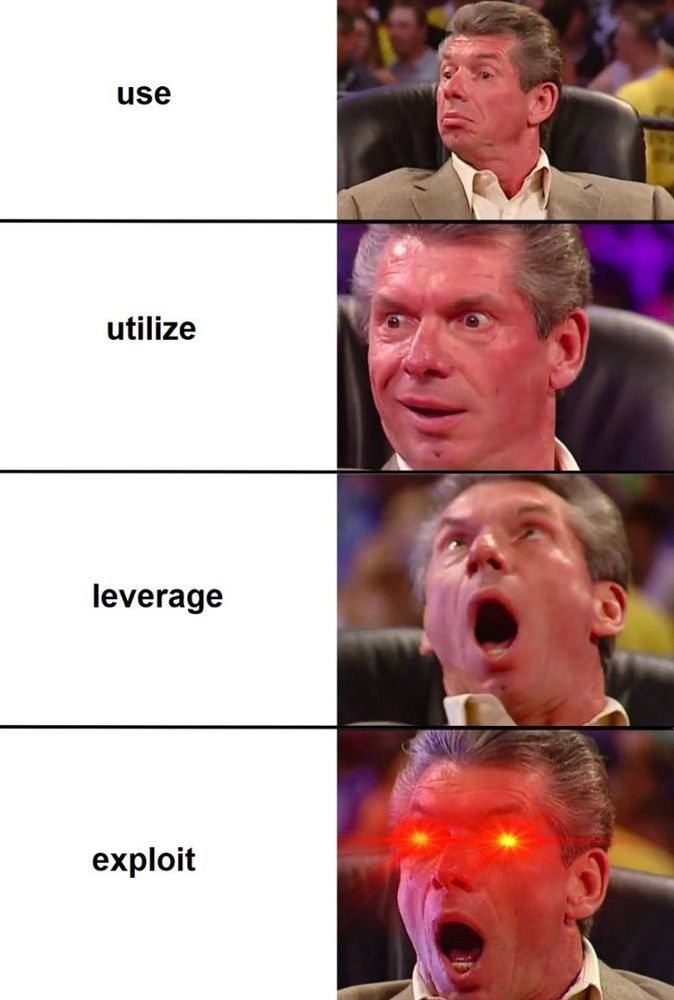
#ScienceWriting
13.12.2024 14:29 — 👍 200 🔁 45 💬 6 📌 7
Social psychologist, studying boredom, interest, and thinking (...and why it's so hard for so many of us!). Assistant Professor @ University of Florida 🐊
🌐 erinwestgate.com
📸 https://instagram.com/erin.corwin.westgate
Statistical physics of the brain 🧠 & other complex systems 🦠 | Asst Prof of Physics & QBio at Yale
X: @ChrisWLynn
Lab: lynnlab.yale.edu/
I had a marvellous time ruining everything.
Scientist. President of @Humanists_UK Lecturer in Genetics @UCL
Genetics, race, eugenics, books, cricket, +–=÷×
@kbjmanagement
adamrutherford.com
Professor, UW Biology / Santa Fe Institute
I study how information flows in biology, science, and society.
Book: *Calling Bullshit*, http://tinyurl.com/fdcuvd7b
LLM course: https://thebullshitmachines.com
Corvids: https://tinyurl.com/mr2n5ymk
he/him
SIPS brings together scholars working to improve methods and practices in psychological science. Join us!
https://improvingpsych.org/membership/
#PsychSciSky #OpenScience
improvingpsych.org
Evolution; animal behaviour; animal culture; human cognitive evolution; niche construction; anti-racism
#evolution #evodevo #philbio #philsci #animalculture #animalbehavior
precision psychiatry & psychiatric genetics
postdoc @ massgen | harvard med | broad institute
Postdoctoral fellow at PROMENTA, University of Oslo.
Genetics – Intergenerational Transmission of Inequalities – Mental Health – Education
https://perlinedemange.github.io/
Postdoc in psychiatric genetics at UCL
Co-founder of Project Implicit, Society for Improving Psychological Science, and the Center for Open Science; Professor at the University of Virginia
Postdoctoral Scholar @UCLA & Affiliate Fellow @broadinstitute of @MIT and @Harvard. Alumni @TuftsUniversity. GWAS of complex traits. Unraveling GxE effects.
A molecular medicine research institute focusing on human genomics and precision medicine at HiLIFE, University of Helsinki.
FI: Suomen molekyylilääketieteen instituutti FIMM, Helsingin yliopisto
Website: www.fimm.fi
Postdoc in psychiatric genetics and clinical psychologist at University Hospital Bonn | PhD @ucl.ac.uk | Within-family analyses, statistical genetics, polygenic scores, behaviour genetics, epigenetics | he/him
Prof for Developmental #Psychology @uzh-ch.bsky.social | Director @jacobscenteruzh.bsky.social | Head of the @kweltentdeckende.bsky.social Lab | Founding board member @dsn-zh.bsky.social | #Multilingual #Language #Development | Football fanatic
Assistant Professor of Psychology @NMSU| Memory & Metacognition| www.grab-lab.com
Assistant professor of Psychiatry, Human Genetics, and Computational Medicine at UCLA
Husband, Father and grandfather, Datahound, Dog lover, Fan of Celtic music, Former NIGMS director, Former EiC of Science magazine, Stand Up for Science advisor, Pittsburgh, PA
NIH Dashboard: https://jeremymberg.github.io/jeremyberg.github.io/index.html
Geneticist @takedapharma | Former postdoc/scientist w @dalygene @bmneale @apalotie @novartis | 🇲🇾 | Hot Yoga & Pilates | Sassy opinions my own | he/him | HinJew
Researcher in Behaviour Genetics @ UCL