Venetian-style tramezzini
09.12.2025 14:40 — 👍 3 🔁 0 💬 0 📌 0
@mdenardi.bsky.social
Thomas Sargent Professor of Economics at the University of Minnesota and consultant at the Minneapolis Fed. Views are my own. RT ≠ E. Web page: https://users.nber.org/~denardim/
Venetian-style tramezzini
09.12.2025 14:40 — 👍 3 🔁 0 💬 0 📌 0
General equilibrium behind the window. Strategic interaction on the windowsill.
The chickens are the recurring protagonists of my Intermediate Micro class. The Grinch dropped by for yesterday’s lecture.

Morning photo from my office at the University of Minnesota this morning. Outside temperature -22 degrees Celsius. Time: 6:35 am.
04.12.2025 12:46 — 👍 7 🔁 0 💬 0 📌 0Please submit to this conference to help make it a great one! I will be there, together with Stéphane Bonhomme and Michèle Tertilt.
19th Annual Meeting of the Portuguese Economic Journal - Aveiro, 3-5 July 2026
Deadline: 15 March 2026
Website: lnkd.in/d6Dmdfx7


📍Back from a busy week at the #Fed’s #OIGI in #Minneapolis.
Productive time interacting w/ coauthors & researchers + v engaged seminar on workforce in large-scale home visiting.
Many thanks to Abigail Wozniak for the invite & to @mdenardi.bsky.social for hosting - had a great time! 🙏

Coercion and Monopsony in Modern American Manufacturing: Evidence from Alabama Prison Labor Susan Helper Suresh Naidu Akseli Palomaki Adam Reich Aaron Sojourner We study coercion and monopsony in contemporary U.S. manufacturing labor markets. We combine administrative data from the Alabama Department of Corrections work release program with a unique survey of workers in the Alabama auto supply chain where workers report their work-release status. We first present descriptive patterns of work-release labor, finding that the use of incarcerated (i.e., work-release) labor is concentrated in the auto supply industry, especially in the Montgomery area, where Hyundai’s assembly plant is located. In the survey, the share of plant-level workers who are incarcerated is negatively correlated with non-incarcerated wages. The survey also enables estimation of hypothetical quit elasticities separately among incarcerated and non-incarcerated workers. Incarcerated workers are estimated to have quit elasticities less than half that of non-incarcerated workers. Because Alabama law requires employers to pay the same wage to incarcerated and non-incarcerated workers in the same jobs, the additional monopsony power introduced by employer access to incarcerated workers creates an incentive and ability for employers to reduce plant-level wages to, and employment of, non-incarcerated workers. We build a quantitative model of firm-specific labor supply that, for incarcerated workers, distinguishes the roles of coercion (the risk of physical harm in prison from not working), wage garnishment that blunts the consumption effect of higher wages, and monopsony (limited mobility across employers). Using it, we estimate effects on free and incarcerated workers’ welfare from i) reforming prison conditions to eliminate violence, ii) eliminating prison labor wage garnishment, iii) imposing a $15 minimum wage, &iv) abolishing prison labor. Free worker welfare goes up in all scenarios...
How does employer access to prisoners’ labor through work release impact the well-being of those workers & of free workers?
New working paper by Sue Helper, Suresh Naidu, Akseli Palomaki, Adam Reich, + me provides evidence, focus on auto manufacturing in AL
#EconSky
papers.ssrn.com/sol3/papers....
#EconJMP
02.11.2025 13:58 — 👍 4 🔁 3 💬 0 📌 0His broader work combines structural and empirical approaches, including causal policy evaluation and applied macroeconometrics. He brings strong technical skills, clear economic insight, and a research agenda at the frontier of health, inequality, and policy design.
01.11.2025 22:19 — 👍 3 🔁 0 💬 0 📌 0He finds that these reforms generated large welfare gains for low-income families, produced substantial crowd-out of private coverage, but had little effect on private premiums.
01.11.2025 22:19 — 👍 1 🔁 0 💬 1 📌 0Francisco’s job-market paper develops a quantitative equilibrium model with rich household heterogeneity to study how U.S. Medicaid expansions affected private insurance markets and welfare.
01.11.2025 22:19 — 👍 1 🔁 0 💬 1 📌 0
I have a truly fantastic Econ PhD job market candidate on the market this year:
Francisco Bullano is a macroeconomist whose research bridges public economics and health.
His Web page: franciscobullano.com
Please look at his job market package very closely.

#EctJ published its Sept 2025 issue, with @mdenardi.bsky.social's 2024 Sargan Lecture on "Health inequality and health types", Chen Qiu's "Cross-fitted empirical likelihood on semiparametric models" as Editors' Choice of lead article, and 6 more fine contributions
academic.oup.com/ectj/issue/2...

Household saving and labour supply are shaped by many risks – wages, marriage, health, longevity – as well as bequest motives. This column develops a model that tracks individuals from age 26 through to retirement and death to show how these risks interact to drive economic behaviour. The findings highlight that incorporating risk, and how it differs by gender, marital status, and age, helps design policies that protect households from shocks without distorting work and saving incentives.
Household saving & labour supply are shaped by various risks throughout the lifespan. M Borella, @mdenardi.bsky.social @fang-yang-econ.bsky.social & @johanatch.bsky.social analyse how these risks interact to better design policy that protects households from shocks.
cepr.org/voxeu/column...
#EconSky

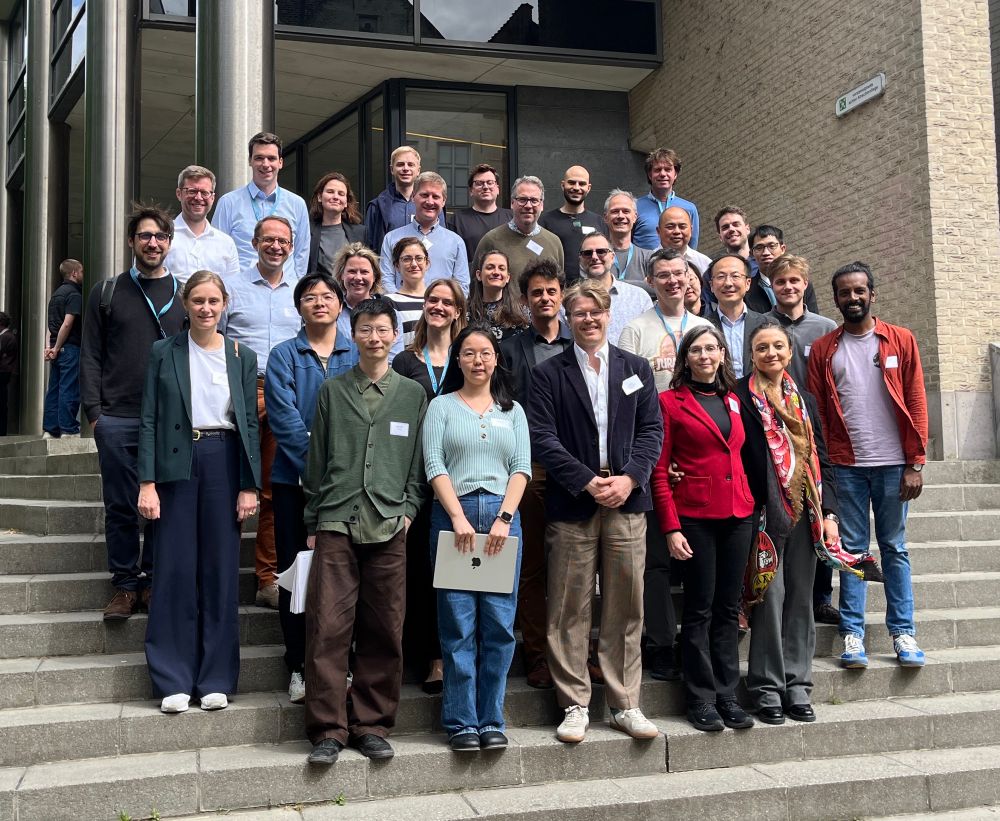


🇬🇧A month in London-a great time to reflect & recharge. B4 things ramp up again, a quick recap of May–June
1️⃣ @cesifo.org Area Conference Labor Economics
2️⃣ @kuleuvenuniversity.bsky.social Applied Workshops
3️⃣ @rfberlin.bsky.social Workshop Economics of Aging
4️⃣ Workshop Economics of Risky Behavior
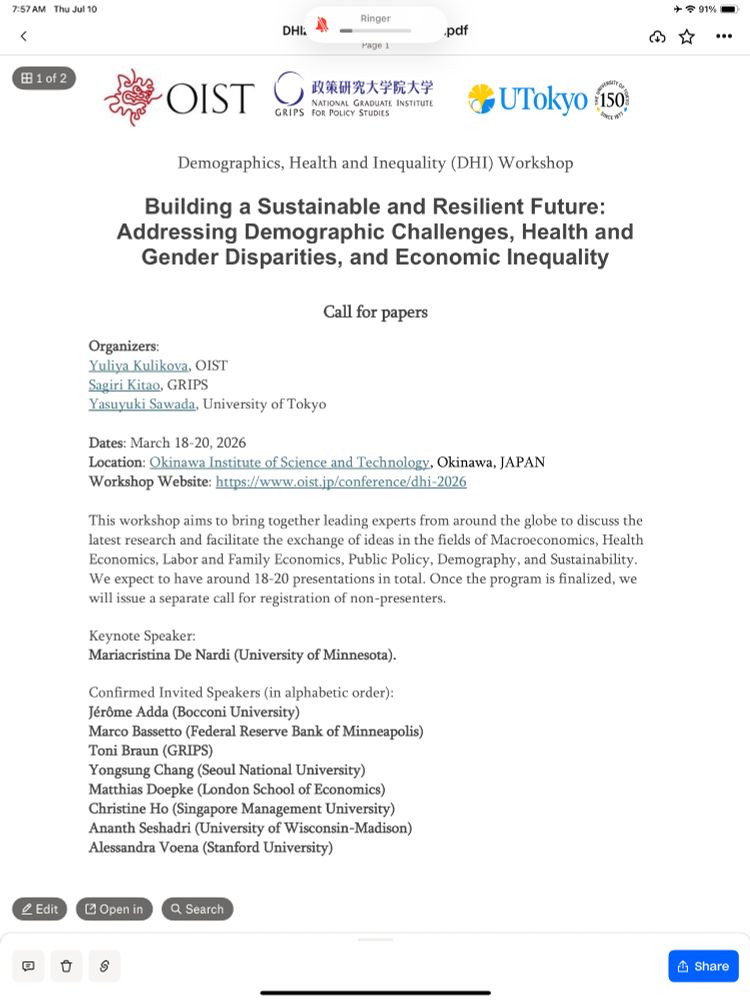
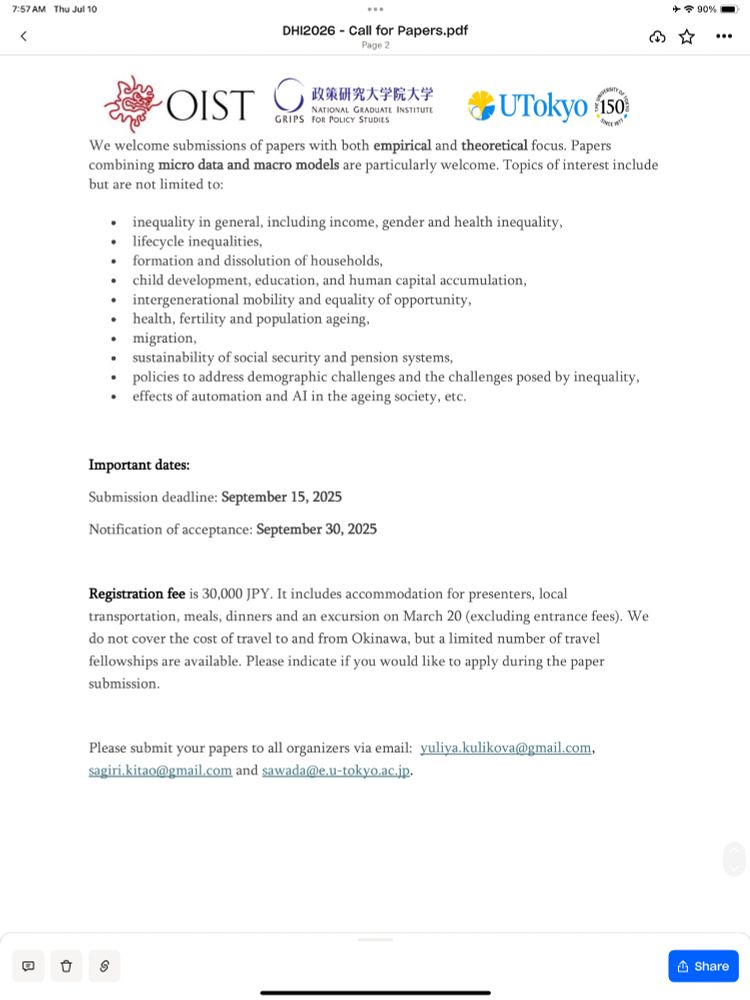
Call for papers
10.07.2025 13:07 — 👍 5 🔁 4 💬 0 📌 0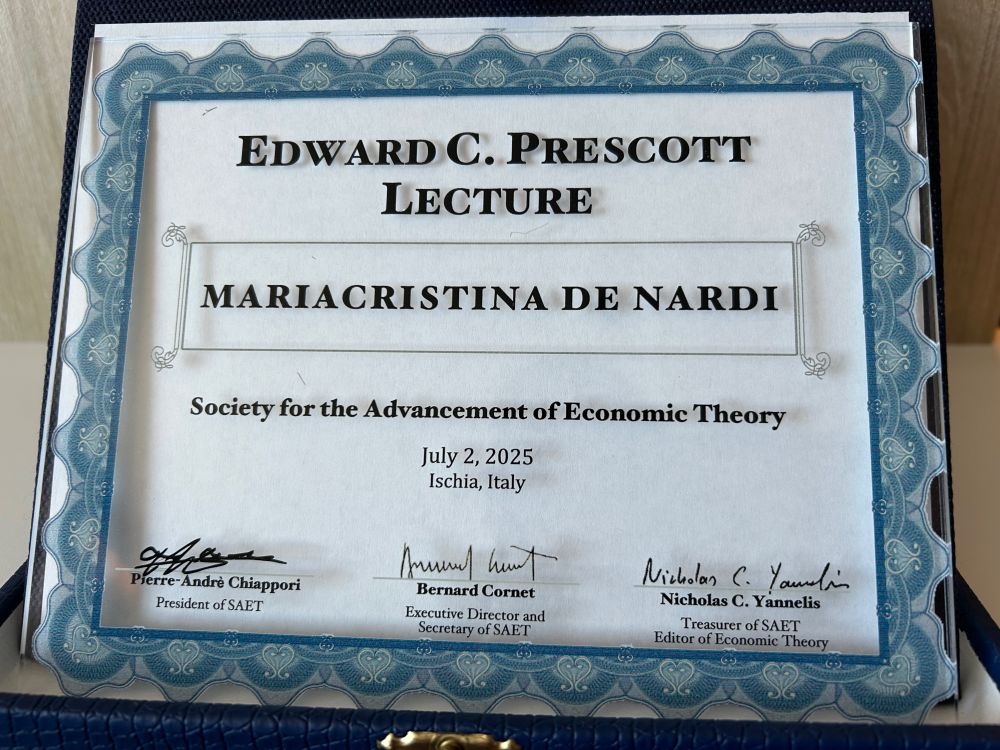
I am grateful to Ed for his mentorship and to SAET for inviting me to give this lecture.
03.07.2025 15:29 — 👍 12 🔁 2 💬 0 📌 0Thank you, Christian — to both you and Jerome Adda — for a fantastic conference and the honor of being a plenary speaker alongside Joseph Hotz. The event was both productive and enjoyable, and your Berlin initiative is truly inspiring!
07.06.2025 08:32 — 👍 9 🔁 0 💬 0 📌 0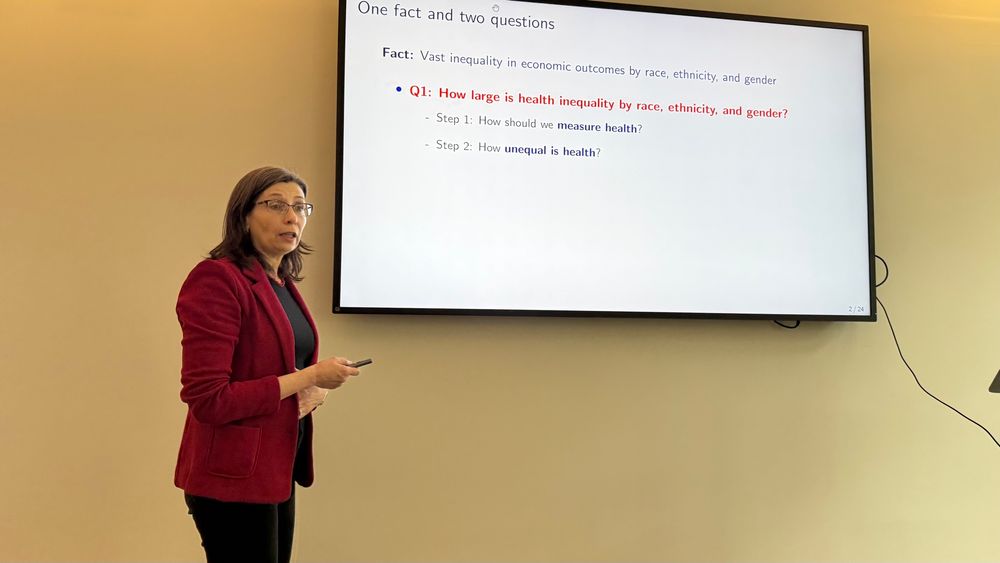
We are kicking off the RFBerlin Workshop on the Economics of Aging with @mdenardi.bsky.social’s keynote lecture on “Health Inequality and Economic Disparities by Race, Ethnicity, and Gender”.
05.06.2025 08:10 — 👍 7 🔁 1 💬 0 📌 0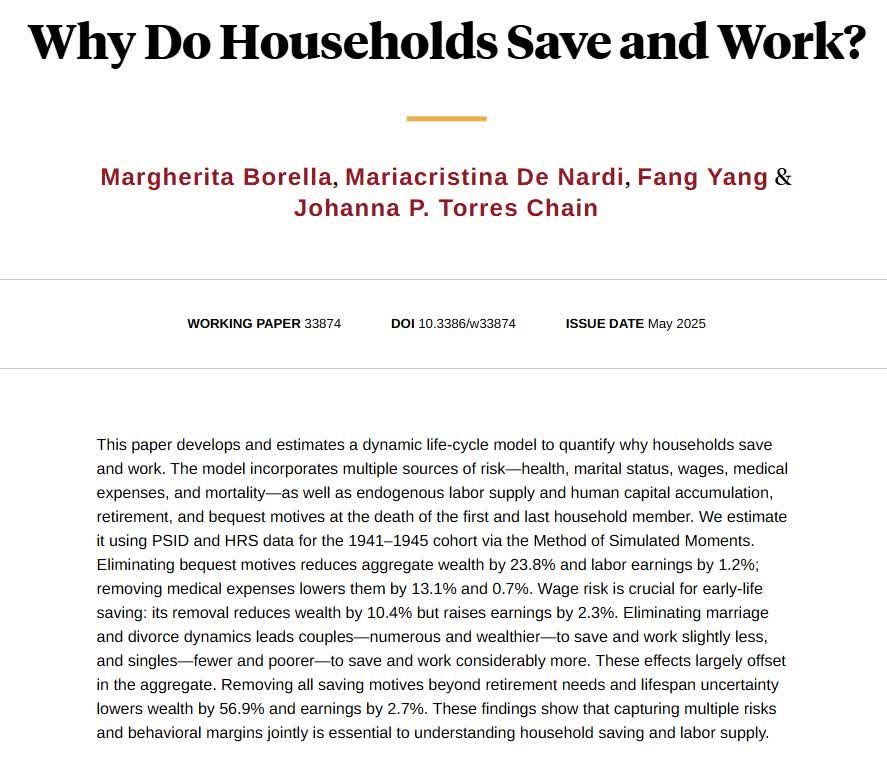
Exploring why households work and save. Bequest motives and risks in wages, medical expenses, and marital dynamics explain 56.9 percent of aggregate wealth and 2.7 percent of aggregate earnings, from Borella, @mdenardi.bsky.social, Yang, and Torres Chain https://www.nber.org/papers/w33874
06.06.2025 15:15 — 👍 7 🔁 2 💬 0 📌 0
HCEO member @gabriconti.bsky.social's paper on how the impact of an early childhood intervention differs with educational attainment polygenic score is now out in @NBER working papers. www.nber.org/papers/w33781
12.05.2025 19:03 — 👍 3 🔁 2 💬 0 📌 0I learned a lot from this conference and it was fun too!
01.06.2025 05:23 — 👍 5 🔁 0 💬 0 📌 0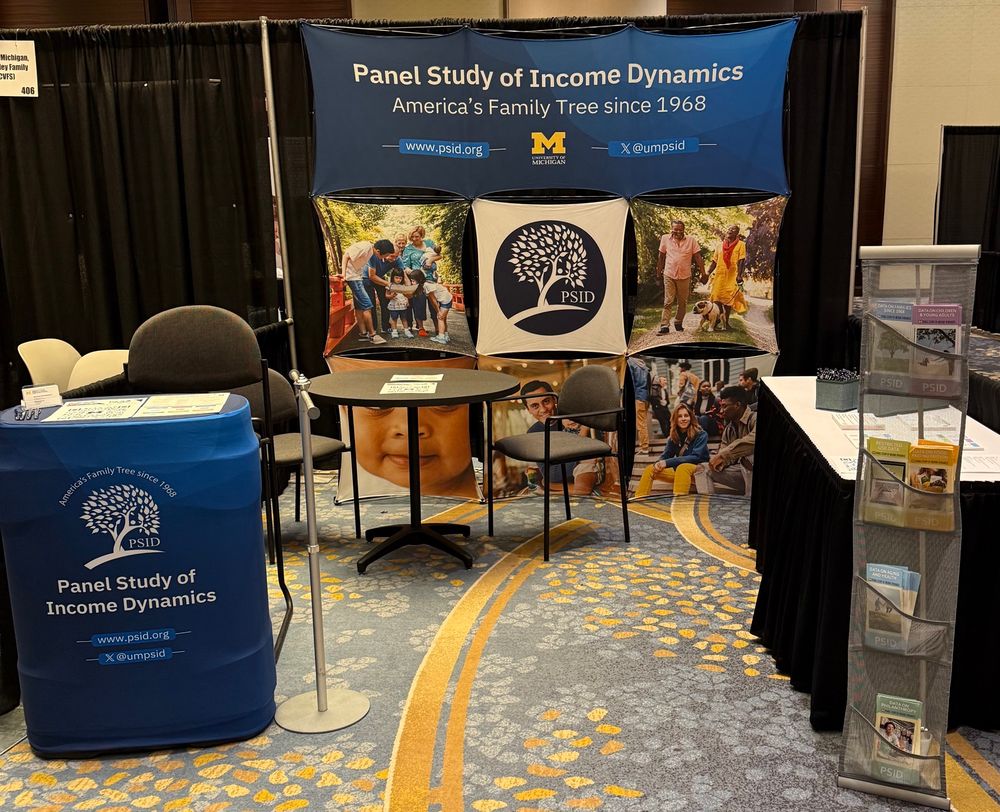
Good morning, #PAA2025! Come see us in the Expo Hall at Booth 404 where study staff will be able to help you with your #PSIDdata questions!
11.04.2025 13:17 — 👍 9 🔁 1 💬 0 📌 0Hard endorse
09.04.2025 09:22 — 👍 48 🔁 5 💬 3 📌 0What a great visit and seminar feedback! Thank you very much for inviting me!
22.03.2025 00:00 — 👍 9 🔁 1 💬 0 📌 0
Good to see the FT editorial draw attention to this less well known casualty of the US regime - official statistics
on.ft.com/43Tejhn
C'mon, Iowa!
04.03.2025 12:18 — 👍 6 🔁 4 💬 1 📌 1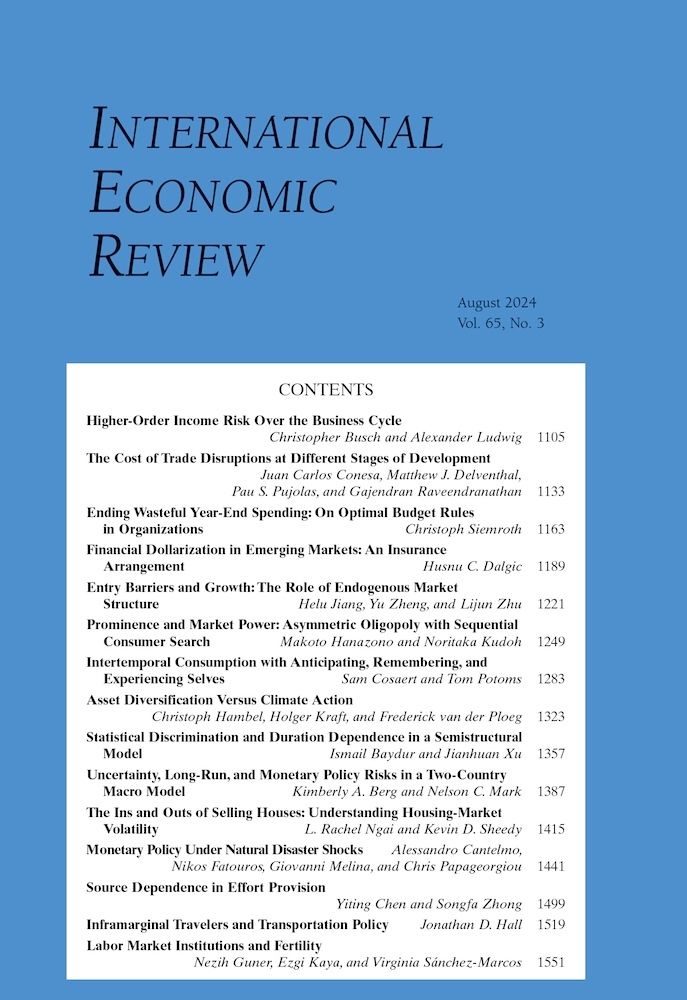
Guys, a trade collapse today vs the 1930s. We already know the (ugly) answer:
onlinelibrary.wiley.com/doi/full/10....
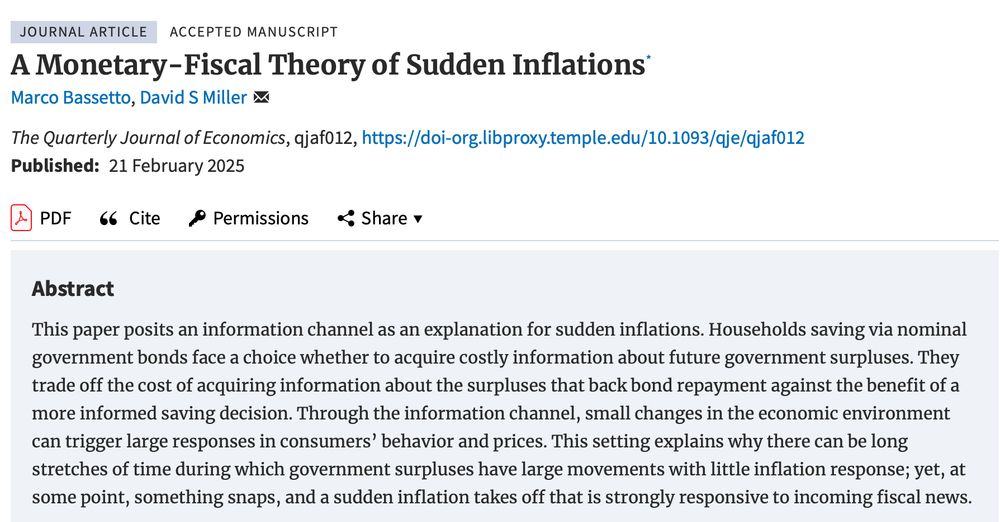
doi.org/10.1093/qje/...
02.03.2025 20:15 — 👍 5 🔁 2 💬 1 📌 0A national cryptocurrency reserve is a scam. It is simply an attempt by those who own cryptocurrency to trade it for US dollars or gold from the Treasury. The federal government will be left holding this bag of hazardous waste.
02.03.2025 20:24 — 👍 56 🔁 14 💬 2 📌 0