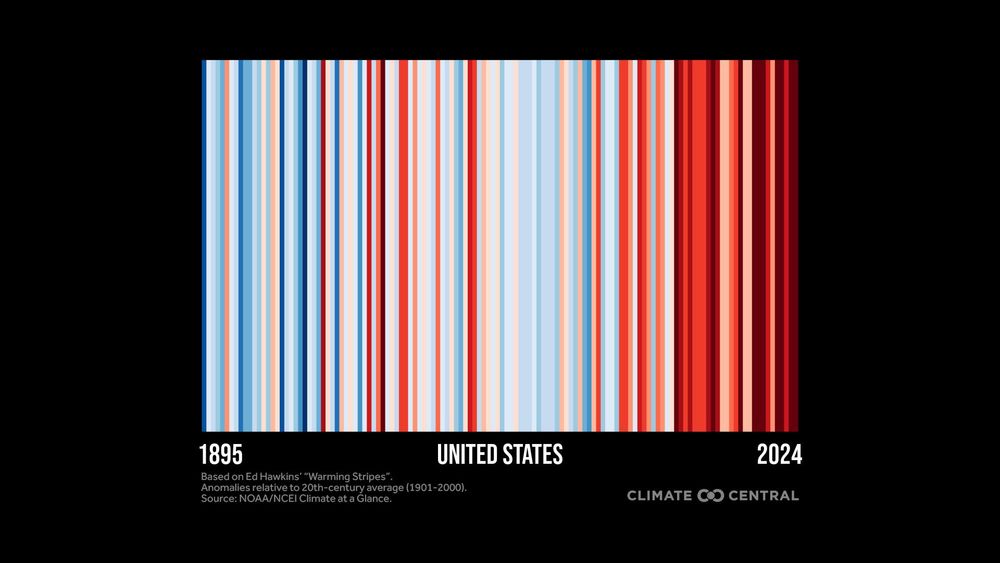
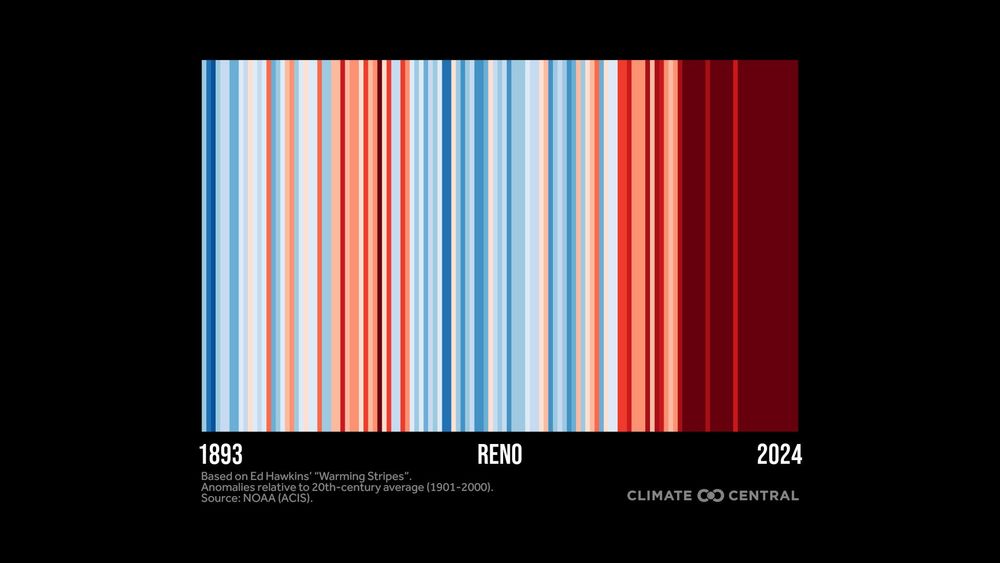
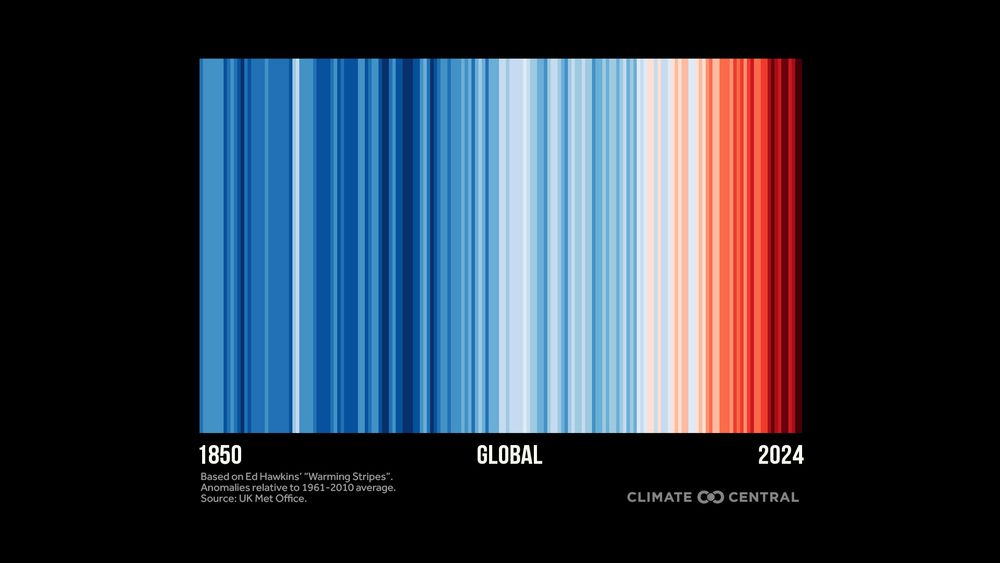
I see that scrunchy :)
04.02.2026 20:00 — 👍 1 🔁 0 💬 0 📌 0
“Unambiguously correct”
03.02.2026 12:20 — 👍 1 🔁 0 💬 0 📌 0

A Secret Panel to Question Climate Science Was Unlawful, Judge Rules
Today we won.
A U.S. District Court ruled that the administration violated federal law when it secretly convened a group of climate contrarians to produce a thoroughly debunked report to overturn the Endangerment Finding.
The science still matters. We won't stop.
www.nytimes.com/2026/01/30/c...
31.01.2026 02:26 — 👍 500 🔁 121 💬 6 📌 7
Thank you UCS and EDF!!!
31.01.2026 00:39 — 👍 1 🔁 0 💬 0 📌 0
NO!
29.01.2026 20:38 — 👍 1 🔁 0 💬 0 📌 0
Between the Old Bay and McRib posts, I'm starting to worry about you.
29.01.2026 15:06 — 👍 1 🔁 0 💬 1 📌 0
It’s a graph. But it’s also people. Real people who dedicated years of their lives to making the world a better place. Our colleagues, our neighbors, our friends.
28.01.2026 14:14 — 👍 3 🔁 1 💬 0 📌 0
A must follow!
25.01.2026 11:15 — 👍 2 🔁 0 💬 0 📌 0
Newly Disclosed Records Show Trump Administration’s Unlawful Actions Related to Secretly Formed “Climate Working Group”
The records are part of more than 68,000 pages of records obtained by EDF and the Union of Concerned Scientists as as the result of a lawsuit.
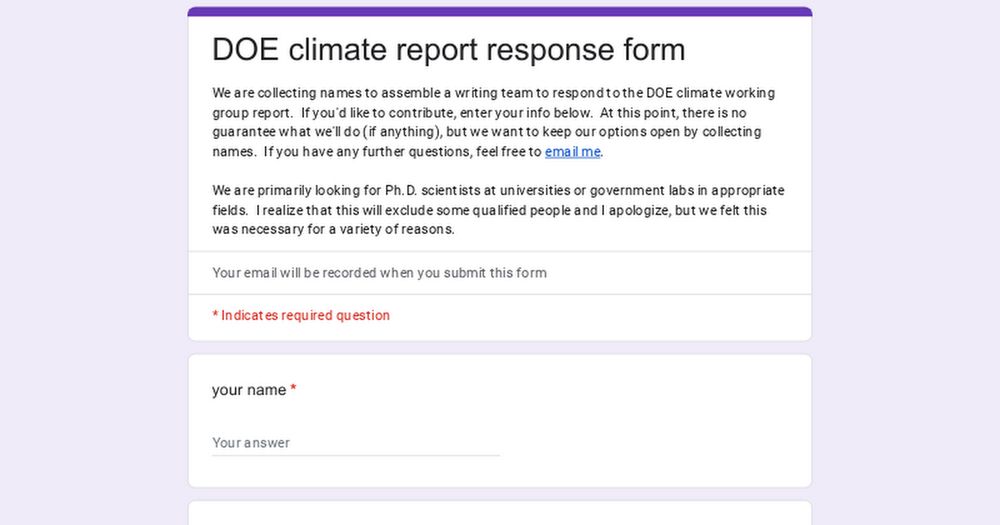
My colleague @bobkopp.net has a nice thread rundown of the many problems and illegal actions of the Dept of Energy Climate Working Group report based on the emails that came out yesterday from @envdefensefund.bsky.social lawsuit: www.edf.org/media/newly-... I would just add a few things re NCA5 1/
23.01.2026 14:57 — 👍 14 🔁 8 💬 1 📌 1

Flyer announcing NOAA NCEI Insurance Tools Cafe on January 8, 2026 11-12:30 ET
Join us this Thursday as NOAA demos three new and improved environmental data products being co-developed with the #insurance and #reinsurance sector that help users assess risk, improve critical decision-making, and build resilience! You can register here: lnkd.in/et2CyxAN
05.01.2026 19:12 — 👍 3 🔁 2 💬 0 📌 0
epa.gov/cira too
11.12.2025 00:08 — 👍 0 🔁 0 💬 0 📌 0
Ahem. Also epa.gov/cira
10.12.2025 19:32 — 👍 2 🔁 0 💬 0 📌 0

Flyer describing the title, time, and location of an oral panel session at the 2025 American Geophysical Union annual conference. Panel Discussion: Industry and Data: Improving Economic Resilience ith Environmental Information. December 18, 2025. 3:25pm CT. Room 348/349. Join us for a discussion on how NOAA is transforming data into action to build a resilient future. Moderated by Allison Crimmins, NOAA
Looking forward to moderating a great discussion on how the retail, insurance/ reinsurance, and architecture and engineering industries are using NOAA's weather and climate data to guide decision-making and build resilience. Hope you can join us! #AGU25 agu.confex.com/agu/agu25/me...
09.12.2025 21:26 — 👍 4 🔁 1 💬 1 📌 0

🚨 JUST PUBLISHED 🚨
⚠️ The 2025 @lancetcountdown.bsky.social report reveals climate change inaction is costing lives and livelihoods, and harming the economy.
❤️🩹 Protecting people’s health demands all hands on deck.
Read more: www.lancetcountdown.org/2025-report/ #LancetClimate25
29.10.2025 00:23 — 👍 130 🔁 85 💬 0 📌 12

U.S. Billion-Dollar Weather and Climate Disasters | Climate Central
Explore U.S. billion-dollar weather and climate disasters since 1980, including total costs, trends, and impacts.
Today, the U.S. faces one billion+ dollar climate/weather disaster on average every 2w. That's a massive increase from one every 4m in the 1980s.
This is 'global weirding' and people are taking notice!
The government told NOAA to stop tracking these events: but @climatecentral.org is on the job.
22.10.2025 16:11 — 👍 250 🔁 135 💬 9 📌 8
Also, personal life achievement unlocked- I cited @theonion.com in a scientific paper. :)
02.10.2025 13:43 — 👍 5 🔁 0 💬 0 📌 0

📢 Submissions are now open for the U.S. Climate Collection, a joint @theAGU + @ametsoc initiative.
This special collection will publish U.S.-focused climate assessment science that’s free to read, ensuring rigorous, accessible science informs decisions for years to come.
🔗 buff.ly/1tHUSLC
25.09.2025 13:37 — 👍 33 🔁 22 💬 2 📌 1
Thank you
23.09.2025 18:06 — 👍 3 🔁 0 💬 1 📌 0

DOE CWG STATEMENT (second paragraph of section 2.1.1, page 3): “Piao et al. (2020) noted
that greening was even observable in the Arctic.”
COMMENT: This statement implies that the Arctic greening signal was caused by elevated CO2
,
however that is not the scientific consensus. Piao et al. (2020) attribute the greening trend in the
Arctic predominantly to growing season length driven by warmer temperatures (see also Y.
Zhang et al., 2022). Piao et al. (2020) also note that this positive impact of increasing
temperatures appears to have weakened over the past four decades, “suggesting a possible
saturation of future greening in response to warmer temperature” (see also comment on
greenness trends related to Section 2.1.1, first sentence of Page 4). It is also important to put
Arctic greening more broadly into the context of the carbon cycle and other impacts. While
above-ground plants may have displayed more leaf area over the past decades, rising
temperatures also thaw permafrost and drive accelerated decomposition in highly carbon rich
soils (Turetsky et al., 2020), a process which is expected to accelerate as climate continues to
warm (Miner et al., 2022). Thus even with Arctic greening, high latitude terrestrial systems may
become net carbon sources to the atmosphere, causing an amplifying feedback (Braghiere et
al., 2023). Other risks to the Arctic linked to higher CO2
levels and rising temperatures are not
mentioned in this report (Virkkala et al., 2025). The Arctic is warming at a rate of 2 to 3 times the
global average, leading to thawing of permanently frozen soils (permafrost), with downstream
impacts including loss of structural support for buildings and subsidence, threatening
communities, roads, runways, and other assets across Alaska (Manos et al., 2025; University of
Alaska Fairbanks Institute of Northern Engineering US Army Corps of Engineers Alaska District
& Laboratory, 2019).
Our comment on the DOE CWG report is done. It tips the scales at 439 pages, approx. 3x longer than the DOE report.
This is related to Brandolini's law: The amount of energy needed to refute bullshit is an order of magnitude bigger than that needed to produce it.
Example: refuting one sentence.
28.08.2025 01:13 — 👍 367 🔁 138 💬 11 📌 25

Clip from Buffy the Vampire Slayer showing Buffy saying “I’m the thing that monsters have nightmares about”
Oh you’re taking public comments?
29.07.2025 23:18 — 👍 4 🔁 0 💬 0 📌 1
Looking forward to hearing more tonight! peoplesbooktakoma.com/event/human-...
17.06.2025 16:26 — 👍 8 🔁 4 💬 1 📌 0
Climate change is humanity's greatest challenge. Our goal is to awaken the world and dramatically accelerate progress.
potentialenergycoalition.org
Research Scientist and Director of Experimental Research at the Yale Program on Climate Change Communication | XandY co-founder
The Science Communication Unit at UWE is internationally renowned for its activities, engaging the public with science and training science communicators. https://www.uwe.ac.uk/research/centres-and-groups/scu
World's only evidence-based & impact-focused climate photography resource. A Climate Outreach project.
Browse our image library and resources at climatevisuals.org
Professor Emeritus at UCBerkeley. Best-selling author of The ALL NEW Don’t Think of an Elephant.
Survey research on public views of science & environment; climate change; human/environment interactions; society in the Arctic. Also: walking my dog through the woods, and gazing at the night sky. All graphs & photos are my own unless otherwise cited.
Political scientist. Author. Host of PBS Serving Up Science. www.sherilkirshenbaum.com
Delivering science to help fish, wildlife, water, land + people adapt to a changing climate.
We're a partnership between the US Geological Survey and a consortium of regional institutions hosted by the University of Minnesota.
Social scientist. Working at the intersection of coastal climate adaptation, disaster recovery, housing, policy & governance.
Associate Professor|Community & Regional Planning @ ECU|www.anuradha.net
Pirate Name - Pearl
Alum, UC Berkeley & Texas A&M
Climate impacts and policy at Queen Mary University of London, and Climate and Environment Thematic Research Lead at UK Parliament (ex of CCC, BEIS, Defra). Floods and coastal erosion. Adaptation policy. Maybe some HE thoughts and reflections on running.
UNC Planning PhD candidate studying geographies of climate risk and (im)mobility — jpcollins.me
urban ecology, evolution, nature, cities, planets, exo-planets
Author of: Cities That Think like Planets
https://uwapress.uw.edu/book/9780295743677/cities-that-think-like-planets/
Climate Change Adaptation | Nature-based Solutions | Monitoring & Evaluation | Cities | Basque Centre for Climate Change | IMAGINE Adaptation (own views)
Day job policymaking on climate change/adaptation gap. Research public goods provision (IR, IPE, Law)
Nature | Academia | Disability | Politics | LGBTQ+ | BookTok | Writer | Anime | Gamer | Fandoms | Photography
☕️📚🇨🇦🇬🇧🔸🏴🏳️🌈🐈⬛🍵
Oxford | UBC | Columbia | Waseda
@ClimateCentral.org VP, Chief Meteorologist, #ClimateMatters Director
Proud #PennState Alum, Twin Mom, #StubbornClimateOptimist
#Unless #ShowYourStripes #GSD
PhD Climate Scientist. Alaska. The Earth is warming because of us. Mooseologist. All opinions are my own. Future FIFA Peace Prize winner. Signal: Climatologist.49
Glaciologist & Deputy Lead Scientist @nsidc.bsky.social. Climate Science Engagement Lead @ciresceee.bsky.social. 2025 AGU Climate Comms Awardee. More at www.changingice.com. Views my own!
Climate scientist, ex-EPA. Writing climate science & policy at The Saraph Report. Saraph, my name's root, means fire, which is appropriate for climate work. Interested in books, food, and contra dancing when not obsessing over carbon.
We are an independent, nonprofit successor to Climate(.)gov, safeguarding public access to trusted climate data, tools, and information.
Donate: https://donorbox.org/climate-us-protected-by-you
Retired clean energy policy expert. Mostly on the top of a mountain.