Thanks to my great mentor and co-author, Daphna Oyserman.
11.11.2025 23:55 — 👍 0 🔁 0 💬 0 📌 0
Costly Morality Theory of Honor: An Evolutionary, Culture-as-Situated-Cognition Perspective
Honor isn’t a relic of some "honor societies". It’s a universal human strategy, a moral language we all speak, even when we don’t call it “honor.”
Read the paper here: journals.sagepub.com/doi/epub/10....
11.11.2025 23:53 — 👍 0 🔁 0 💬 1 📌 0
In places where life is riskier or institutions are weaker, being honorable demands greater sacrifice (hyper cooperation), because proving trustworthiness is harder.
11.11.2025 23:53 — 👍 1 🔁 0 💬 1 📌 0
Across societies, what counts as “honorable” depends on which moral traits best signal trustworthiness, loyalty, fairness, courage, and on how costly it is to display them.
11.11.2025 23:52 — 👍 1 🔁 0 💬 1 📌 0
Our model differs between virtue signaling, which often involves low-cost, performative gestures, and honor, which requires genuine personal sacrifice; the cost itself is what makes the signal credible.
11.11.2025 23:52 — 👍 1 🔁 0 💬 1 📌 0
From this logic, we developed a 2×2 model showing how different moral traits and levels of personal cost produce distinct patterns of honor across societies.
11.11.2025 23:52 — 👍 1 🔁 0 💬 1 📌 0
We argue that honor is a costly signal of trustworthiness. People send costly signals about their moral character to be seen as reliable partners, increasing their chances of collaboration rather than being viewed as free riders.
So, in short: Honor = Morality + Cost.
11.11.2025 23:51 — 👍 0 🔁 0 💬 1 📌 0
From there came the Coherency Problem. Because each culture-based study defined honor differently, researchers created various measures, some focusing on family protection, others on violence, chastity, or reputation. The field splintered into sub-scales that don’t connect.
11.11.2025 23:51 — 👍 0 🔁 0 💬 1 📌 0
When psychologists later joined the conversation, they inherited that local focus. That’s the Localization Problem, explaining honor in terms of regional customs (duels, family defense, gender roles) without asking what psychological mechanism unites them.
11.11.2025 23:50 — 👍 0 🔁 0 💬 1 📌 0
They carefully documented customs, revenge, hospitality, family protection, modesty, and showed how honor organized social life. It was brilliant work, but descriptive. It treated honor as a cultural practice, not a psychological process.
11.11.2025 23:50 — 👍 0 🔁 0 💬 1 📌 0
For decades, psychologists have studied honor. Yet, the science of honor is still in theoretical trouble.
The confusion began with anthropology. Early anthropologists were fascinated by the honor codes of Mediterranean villages.
11.11.2025 23:50 — 👍 1 🔁 0 💬 1 📌 0
Is honor about reputation? revenge? violence? gender roles or…?
The universal mechanism of honor has remained unclear.
We propose a solution: Costly Morality Theory of Honor.
We argue that the DNA of honor is costly morality.
Just came out in PSPR
Read comments for more details ↓
11.11.2025 23:47 — 👍 2 🔁 0 💬 1 📌 0
Thanks to my mentors, collaborators, and students.
27.02.2025 20:36 — 👍 14 🔁 1 💬 2 📌 0
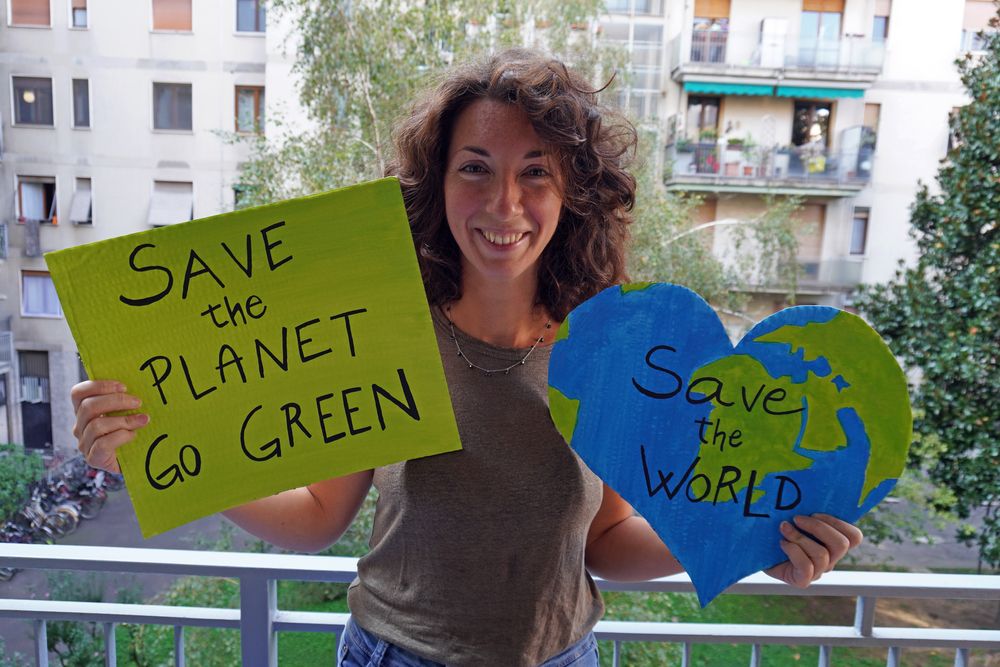
A woman with pro-environmental signs. Stock photo.
A study finds that moral values predict environmental action as well as or better than political party affiliation. US counties where residents prioritize purity and fairness report higher environmental concerns and lower carbon emissions. In PNAS Nexus: academic.oup.com/pnasnexus/ar...
18.02.2025 19:53 — 👍 14 🔁 4 💬 0 📌 1
I’m a reasonable man, get off my case.
sanjaysrivastava.com
Professor of Psychology, University of Minnesota. Sporadically writing stuff at http://getsyeducated.substack.com
Cultural evolution of the mind | Assistant Professor @ University of Chicago, Booth School of Business & Faculty Affiliate of UChicago Data Science Institute | He/his | https://joshuaconradjackson.com
Psychology prof at UniMelb, co-director of MetaMelb (interdisciplinary metascience lab).
Live (mostly) in Sydney.
Study credibility of science & how to improve it.
Professor of Psychology at NYU (jayvanbavel.com) | Author of The Power of Us Book (powerofus.online) | Director of NYU Center for Conflict & Cooperation | trying to write a new book about collective decisions
Psychologist who studies and writes about human nature—including morality, pleasure, and religion. Sustack: https://smallpotatoes.paulbloom.net/
Psychologist, but not the kind that can help you
Prof at Cornell studying how human-AI dialogues can correct inaccurate beliefs, why people share falsehoods, and ways to reduce political polarization and promote cooperation. Computational social science + cognitive psychology.
https://www.DaveRand.org/
Emerita Distinguished Professor, U of Illinois Chicago | Michigan & Cal-Berkeley Grad | Social, Political, and Moral Psychologist | Endlessly Curious | https://sites.google.com/view/lindaskitka
Psychology prof at the University of Toronto.
social/cultural psychologist at @Sussex_Psych, currently working on ERC-funded HONORLOGIC with 12 partners; mother of two kids who love travelling
Professor of Psychology at the University of British Columbia.
Prof. #LSE. Author: A Theory of Everyone. Researching & spreading the word on how humans evolved & what that means for us today. www.atheoryofeveryone.com
Chief Science Officer www.kindness.org | Research Affiliate https://www.anthro.ox.ac.uk | www.oliverscottcurry.com
Evolution, cooperation, morality & politics. All posts are hypotheses.
Social and cross-cultural psychology professor @Univ_Toulouse, @cnrs. Assistant director of ethics @Psychological Science Accelerator. She/her
Assistant professor of psychology @ USC studying social learning and decision making. Social psych/social neuroscience. hackellab.org
Social neuroscientist studying how people understand and predict each other. Assistant Professor at Dartmouth College. http://markallenthornton.com
Cognitive & social scientist. Studying morality, religion, punishment, institutions.
Research fellow at @iast.fr @tse-fr.eu. PhD ENS Paris.
Website: https://sites.google.com/view/leofitouchi/home
Social/Personality Psychology, Michigan State University | ♥ Burritos+Vinyl+ | if there aren’t typos, I didn’t write it