The original Clark electrode was made using plastic wrap from a record album
journals.lww.com/anesthesiacl...

@strandbergbio.bsky.social
Graduate student in the Needleman Lab at Harvard. Working on single-cell respirometry. strandberg.bio
The original Clark electrode was made using plastic wrap from a record album
journals.lww.com/anesthesiacl...

... cells within a given logarithmic size class contribute an equal fraction to the body’s total cellular biomass.
13.09.2025 11:25 — 👍 5 🔁 1 💬 1 📌 0RIP Elio, long live the nutrient growth law
16.08.2025 16:52 — 👍 1 🔁 0 💬 0 📌 0
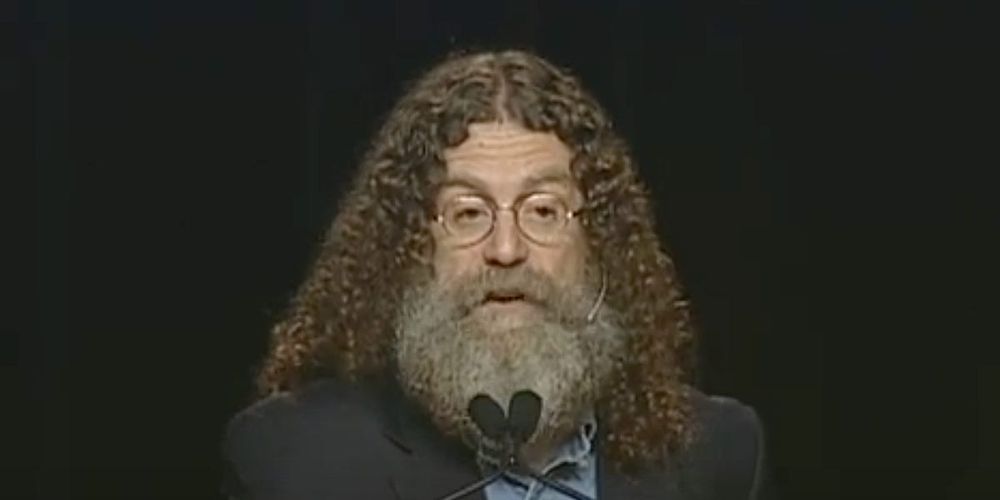
I work on metabolism and have some interest in neurons, so I have on several occasions run into the claim that chess grandmasters burn 6000 calories per day during tournaments. I found this implausible and decided to investigate where it came from. While I am not the first person on the internet to express skepticism of such a large number, nobody seems to have worked out the precise source of the claim. I assumed when I dug into it that I would find a specific methodological error. But while methods enter the story, the real problem is that the number was completely made up. As far as I can tell, the "patient zero" that caused this claim to become so widespread is this 2019 ESPN article: Thanks for reading! Subscribe for free to receive new posts and support my work. Robert Sapolsky, who studies stress in primates at Stanford University, says a chess player can burn up to 6,000 calories a day while playing in a tournament, three times what an average person consumes in a day. Based on breathing rates (which triple during competition), blood pressure (which elevates) and muscle contractions before, during and after major tournaments, Sapolsky suggests that grandmasters' stress responses to chess are on par with what elite athletes experience. This story was then picked up by many outlets, such as CNBC, Men's Health, Inc, GQ, Marginal Revolution, and Joe Rogan.

Notably, in the email linked above and in my correspondence with him, Sapolsky insisted that reporters had failed to report his caveats. This sounds reasonable at face value. ESPN and Joe Rogan are not typically considered careful arbiters of scientific truth, while Robert Sapolsky is a tenured professor at Stanford. However, the evidence demonstrates that the reporter was simply accurately reporting what Sapolsky told them. Indeed, the earliest reference I could find to the 6000 calories number was in Sapolsky's 2009 Class Day Speech at Stanford 10 years before the ESPN article, with no caveats: So you got two humans, and they're taking part in some human ritual, they're sitting there silently at a table, they make no eye contact, they're still, except every now and then, one of them does nothing more taxing than lifting an arm and pushing a little piece of wood, and if it's the right wood and the right chess grandmaster is in the middle of a tournament, they are going through six to seven thousand calories a day, thinking. Turning on a massive physiological stress response, simply with thought... To summarize: a grad student took physiological measurements of 11 ordinary chess players (not grandmasters). They reported in a summary in a chess magazine that the maximum chest movement rate they measured in a 10 second period was almost three times that of an average measurement from a different study. Robert Sapolsky then cited this thesis in his popular book, dropping the distinction between maximum and average to give a 3X breathing rate. He later took the 3X number and multiplied that by 2000 calories per day to get the number 6000, adding the "grandmaster" rhetorical fluorish along the way. He spread this fact through his own talks at Stanford and through interviews with journalists, who accurately repeated him. When questioned about the source of the number, he then claimed on multiple occasions that the number actually came from someone else, and that journal…
Come ON strandbergbio.substack.com/p/chess-gran...
01.07.2025 15:11 — 👍 16 🔁 2 💬 3 📌 1
“Suffice it to say this is unbecoming of such an esteemed professor.”
@strandbergbio.bsky.social gets to the bottom of the claim by Robert Sapolsky that chess grandmasters burn 6000 calories per day:
buff.ly/c22lONr
I looked into the claim that chess grandmasters burn 6000 calories a day and found it was made up by popular author Robert Sapolsky
open.substack.com/pub/strandbe...

"In extremely rare move, Harvard revokes tenure and cuts ties with star business professor" Francesca Gino
25.05.2025 21:07 — 👍 151 🔁 46 💬 5 📌 14
I don’t! Likely it would look a lot like normal Luria-Delbruck since the relative rate of spacer acquisition is significantly lower than receptor modifications.
But Manoshi Datta and Roy Kishony have a great perspective piece on this from 2018:
www.nature.com/articles/d41...
perhaps @baym.lol would know the answer here
12.01.2025 22:07 — 👍 1 🔁 0 💬 1 📌 0If it is Poisson, then there's an interesting alternate history you can write! Of course, you would still see random mutations for antibiotic resistance (Lederberg, for instance), but one wonders how strongly that might have affected the trajectory of the Phage Group
12.01.2025 22:06 — 👍 3 🔁 0 💬 1 📌 0The strain they used (E. coli strain B) lacks CRISPR.
I don't know what you get when you do a fluctuation test on a strain with CRISPR- is it still a jackpot distribution, or is it mostly Poisson? I've been unable to find literature on this and haven't had an opportunity to try it yet
Luria + Delbruck showed that phage resistance comes from pre-existing mutations rather than adaptation. But we now know that there exist mechanisms for adaptive resistance, namely CRISPR. Was it a historical accident that we didn't discover CRISPR in 1943?
12.01.2025 22:06 — 👍 15 🔁 2 💬 1 📌 0