2) Abandoning identity politics
Contrary to public beliefs, the centre-left has all but abandoned identity politics. Having become parties of incremental centrism and problem managers they have given up on shaping identities in the knowledge economy. What would a progressive working class identity
23.03.2025 14:11 — 👍 56 🔁 9 💬 1 📌 1
The US is often seen as an extreme case where polarization erodes democracy bc partisanship now permeates all everyday sociability and affects. But this is now being contradicted by a whole number of studies. Besides the really interesting new work by @jonadejong.bsky.social, there is... (quick 🧵)
04.02.2026 13:54 — 👍 42 🔁 16 💬 2 📌 3
I think it's best for everyone to understand that the unified class project of billionaires right now is to do to white collar workers what globalization and neoliberalism did to blue collar workers.
04.02.2026 19:41 — 👍 12935 🔁 3438 💬 239 📌 241
¯\_(ツ)_/¯
03.01.2026 09:28 — 👍 82 🔁 25 💬 4 📌 0
I feel like I haven’t even been properly lied to about the purposes of this war
03.01.2026 09:13 — 👍 22415 🔁 4725 💬 201 📌 170
“the principles of international law” rather prohibit bombing countries because their leaders “lack legitimacy”.
03.01.2026 11:47 — 👍 121 🔁 55 💬 2 📌 1

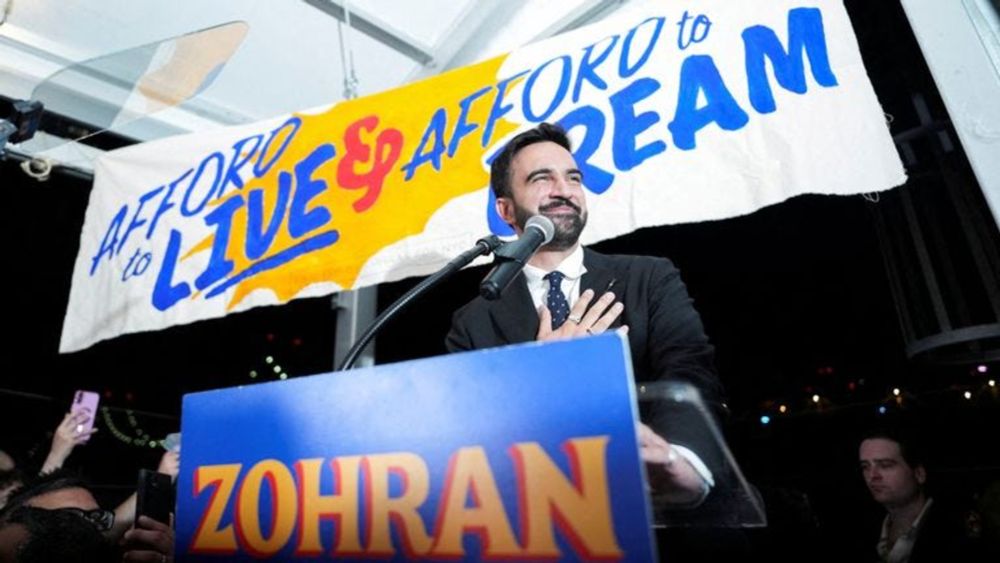
Crazy support numbers for Zohran Mamdani among young women: 84% (!) of women aged 18-29 voted for Mamdani in the NYC Mayoral Election.
But also important: young men voted MUCH MORE STRONGLY (67%) for Mamdani than old men (37%).
05.11.2025 20:49 — 👍 115 🔁 33 💬 5 📌 6

CDU-Politiker: Der schwarz-blaue Sehnsuchtssatz
"Die Mehrheit ist rechts, aber bekommt trotzdem linke Politik" – diese Formel wiederholen CDU-Politiker gerade auffällig oft. Dahinter steckt eine gefährliche Strategie.
"Die Mehrheit in diesem Land ist rechts, aber bekommt trotzdem eine linke Politik" – dieser Satz ist also nicht analytisch gemeint, sondern strategisch. Er ist nicht da, um etwas zu beschreiben, sondern um etwas zu planen.
www.zeit.de/politik/2025...
04.10.2025 11:47 — 👍 280 🔁 110 💬 16 📌 15
Real existierende linke Akademiker:innen mal wieder anders als manche denken:
„Radical left support increases for those who study more than their parents and do not achieve upward class mobility, as well as for those who experience upward class mobility but continue to struggle financially“
02.10.2025 14:54 — 👍 2 🔁 0 💬 0 📌 0
Lesenswert!
30.09.2025 19:17 — 👍 13 🔁 1 💬 0 📌 0
Nur zur Einordnung:
Kosten illegaler Grenzkontrollen: pro Quartal ca. 30 Millionen €
Kosten durch Jens Spahn verursacht: ca. 3,5 Milliarden €
Kosten durch Steuerbetrug CumCum: ca. 30 Milliarden €
Zusätzliche Gelder, die wir für das Deutschlandticket gebraucht hätten: 800 Millionen.
18.09.2025 17:14 — 👍 2223 🔁 809 💬 63 📌 25
OK, a🧵: Our new paper studies workers' political consciousness in times of class demobilization.
We show there's more to workers' politics than right-wing resentment. Listening to workers, we reconstruct their moral critiques of money, power & recognition.
Link journals.sagepub.com/doi/10.1177/...
09.09.2025 14:48 — 👍 338 🔁 123 💬 10 📌 13

The takeaway:
👉 Accommodating the radical right on immigration doesn’t win back voters.
👉 It alienates the progressive base.
👉 And it raises the salience of the very issue the radical right owns.
In short: it’s electoral self-harm.
05.09.2025 06:50 — 👍 769 🔁 289 💬 10 📌 44

✨Very happy to see my paper "Attitudinal ambivalence toward multiculturalism" out on @jeppjournal.bsky.social !
www.tandfonline.com/doi/full/10....
1/8 🧵
21.08.2025 12:37 — 👍 81 🔁 38 💬 3 📌 4
Kann man Autobahnen eigentlich wieder abreißen?
30.08.2025 11:24 — 👍 1 🔁 0 💬 0 📌 0

chart from Stata showing income groups on the X axis, pr(vv1) - which means probability of having cast a vote for president - on the Y axis. There are 4 lines, one for 2012, for 2016, 2020, and 2024. 2024 is by far the steepest, with a 30 point difference in predicted turnout between those earning over $100k and those earning under $30k.
Below are some of the key data points:
under $30k in 2024 = 38% predicted turnout
2020 = 48%, 2016 = 51%, 2012 = 58%
over $100k in 2024 = 73% predicted turnout
2020 & 2012 also about 73%
2016 = 60%

chart from Excel, X axis is year (2012 - 2024) and Y axis is % turnout.
6 lines: whites in families earning over $100k, white less than $30k, Black over $100k, Black under $30k, Hispanic over $100k, Hispanic under $30k.
All three lines for under $30k trend downward - declining turnout across these 4 elections.
All three over $100k lines are flat-ish, with a dip in 2016 and a rise back up in 2020.
Under $30k Black and Hispanic turnout in 2024 was about 25%, under $30k white turnout about 40%.
Over $100k white turnout in 2024 was nearly 80%, over $100k Black & Hispanic turnout both about 60%
Class and race gaps in voting are widening a lot.
I just got results from the CES and voter turnout among low-income people has been declining steadily since 2012 - across racial groups. Only 25% of Black and Hispanic people in households making less than $30k/year voted in 2024.
(small thread)
23.08.2025 04:34 — 👍 62 🔁 25 💬 2 📌 3
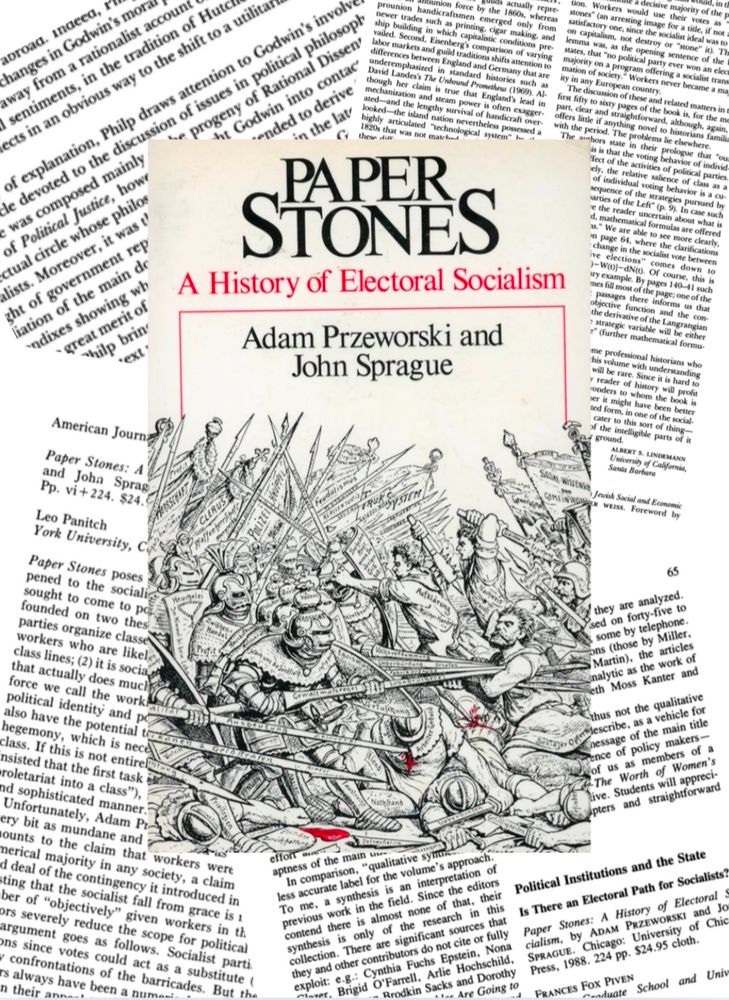
The cover of the book Paper Stones: A History of Electoral Socialism is on a background of multiple pages of text from digitally accessed journal articles.
In the 19th century as the socialist movement grew in Europe, it faced a choice: whether to participate in elections. The anarchists said no. The remaining socialists waded into electoral battle. This book analyzes that decision and its consequences #booksky
07.08.2025 20:46 — 👍 6 🔁 3 💬 1 📌 0

«Polarisierung. Über die Ordnung der Politik» - Rosa-Luxemburg-Stiftung
«linksbündig»-Buchpremiere. Nils C. Kumkar im Gespräch mit Matthias Ubl
Berlin! Am 19. August stelle ich mein neues Buch vor. Wer Fragen hat oder welche sucht oder einfach was klären will: kommt vorbei, das wird super!
www.rosalux.de/veranstaltun...
30.07.2025 08:18 — 👍 64 🔁 13 💬 3 📌 4
What Abou-Chadi et al. show here is not just that conservative migration positions won't help social-democrats to attract voters, but also that left positions on retirement (that is allowing for early retirement) make social-democrats most attractive (and right positions make them less attracitve).
07.07.2025 18:10 — 👍 34 🔁 15 💬 2 📌 0
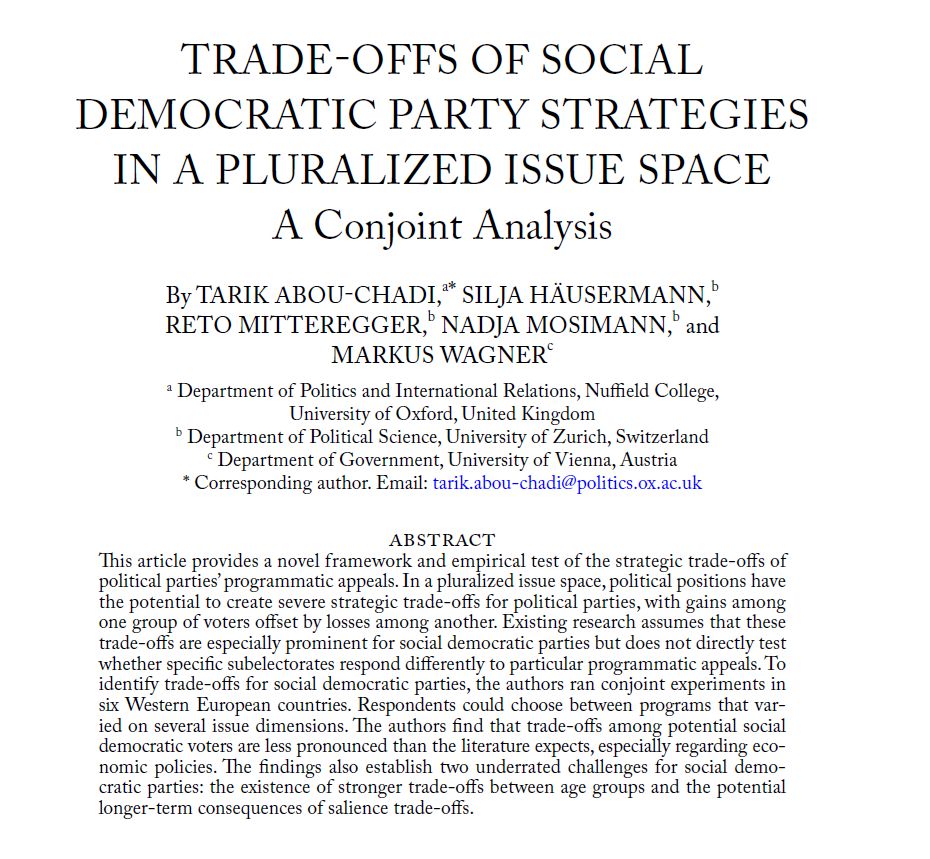
New article out in World Politcs. We analyze how different groups react to varying programs of social democratic parties. We find less trade-offs than often assumed. Generally, more left-progressive programs increase support among social democratic potentials
muse.jhu.edu/pub/1/articl...
07.07.2025 09:49 — 👍 666 🔁 255 💬 14 📌 33


Ich habe gestern beim DGB eine Keynote darüber gehalten, warum das beste Mittel gegen den Rechtsruck eine Erneuerung des demokratischen Klassenkampfs ist. Statt Defensivität braucht es ein vorwärtsgewandtes Projekt zur Vertiefung der sozialen Grundlagen der Demokratie.
25.06.2025 14:40 — 👍 32 🔁 3 💬 0 📌 0
Vorschlag zu Höhe des Mindestlohns von der Kommission:
Ab 2026: 13,90 €
Ab 2027: 14,60 €
Damit dürfte das nächste Wahlversprechen der SPD gebrochen werden, wenn es nicht zu einem politischen Eingriff kommt.
27.06.2025 08:05 — 👍 126 🔁 15 💬 11 📌 0
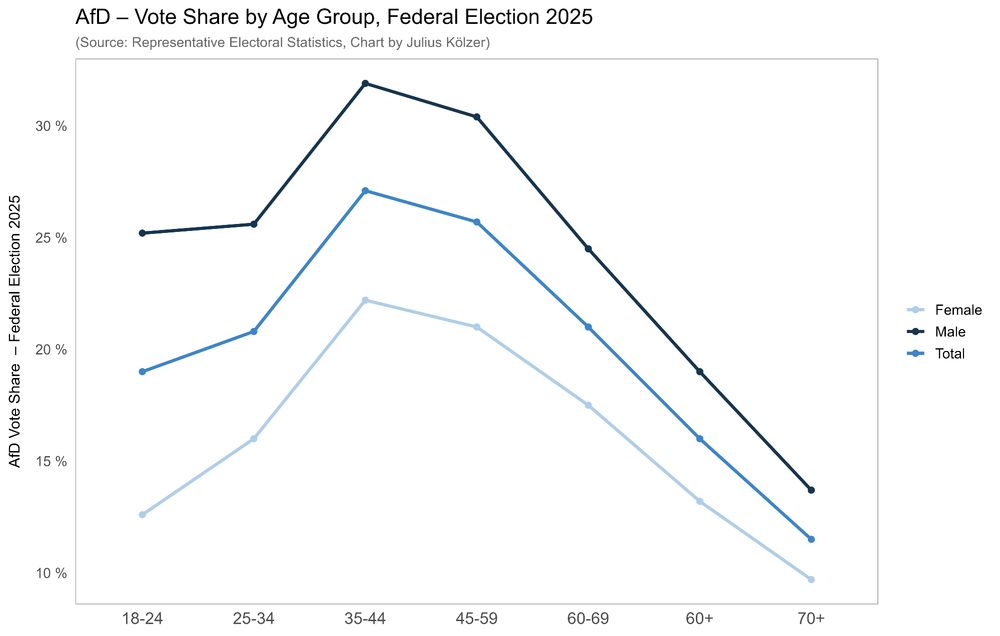
Today, the German Federal Election Officer released data on voting by age and gender for the 2025 election. Contrary to popular belief, AfD support is still not strongest among the youngest voters, but rather among the middle-aged (males). Support is also still much lower in older cohorts. (1/3) 🧵
27.06.2025 10:00 — 👍 239 🔁 93 💬 4 📌 10
Political scientist at Johns Hopkins, author of Uncivil Agreement and co-author of Radical American Partisanship
PoliSci/Comm @ UW-Madison via UMich. US politics, votes, violence, history, psych. 3📚+1 on the way: How WE Make American Democracy. Wide Awake. Views mine, ~90% right. Dad w/ jokes. 🧗🏼*🧙🏻*🥏⛳🏆 nathankalmoe.com
arbeitet zu Medical Gaslighting, Psychologisierung und Stigmatisierung von ME/CFS und PAIS sowie Psychosomatikkritik
@ UniLeipzig
sie/ihr, they/them
Ich bin studierter Sozialwissenschaftler. Wissenschaft und Gesellschaft🔎 Themen: Verwaltung & Politik
📌 Mehr von mir:
• Facebook: https://www.facebook.com/sergio.merz
• X: https://x.com/sergio_merz
• Instagram: https://www.instagram.com/herr_sergio_merz
Historian, researcher, and co-editor of @renewaljournal.bsky.social
Jurist und Doktorand im Parlamentsrecht (Uni Bonn) | Aktiv bei Die LINKE Berlin - Vorsitzender Landesschiedskommission
Let me not then die ingloriously and without a struggle, but let me first do some great thing that shall be told among men hereafter
📖 Kommunikationswissenschaftlerin und Publizistin („Medien zwischen Macht und Ohnmacht“)
✨ Medienkritik mit und für alle
🌐 Für mehr Vertrauen in Medien und Demokratie
📍 Like = berufl. Lesezeichen
MONITOR: is.gd/LeJyBZ
SUPPORT: paypal.me/medienanalysen
investigative reporter on climatechange, lobbyism and energy @correctiv_org & correspondant France @zeitonline
Self-sufficient farmer and mountainclimber on the weekend
Soziologe, Journalist, Filmvorführer.
Gesellschaftskritik auf dem Papier und auf der Bühne.
»Der Splitter in deinem Auge ist das beste Vergrößerungsglas«
Buch: https://unrast-verlag.de/produkt/rechts-wo-die-mitte-ist
Tour: https://www.vernunftwahn.de
critical theory, social & political philosophy @ fu berlin // center for social critique berlin
https://fu-berlin.academia.edu/RobinCelikates
https://criticaltheoryinberlin.de
https://read.dukeupress.edu/critical-times
https://criticaltheoryconsortium.org
💚 Real hope. Real change.
greenparty.org.uk
Promoted by Chris Williams on behalf of the Green Party, both at PO Box 78066, London SE16 9GQ.
This is a bot that posts a quote by Ursula K. Le Guin every 2 hours. Was ursulabot on twitter
Professor of Politics and Philosophy at the London School of Economics. Flas shqip.
INDIGNITY pre-orders: https://linktr.ee/leaypi
Autorin. Moderatorin. Podcast. Publizistin. Gesellschaftskritik und -Diagnose. Website: sabinenuss.de (Foto: Breustedt)
Author @Rowohlt, freelance journalist, senior correspondent Religion Dispatches, writes about Christian Nationalism & Right-Wing Extremism in the Europe & the US 1/2 of @femshelfcontrol.bsky.social
Agent: Landwehr & Cie
Events: Paula Döring, Kulturagentur
Sen. Sanders of Vermont, Ranking Member of the U.S. Senate Committee on Health, Education, Labor & Pensions, is the longest-serving independent in congressional history.
Hochton, Tiefton, Feuilleton
Journalist, mostly for @taz.de. Berlin/Leipzig
https://konstantin-nowotny.de
Autor, Berlin, liest bei Prunk & Prosa in Berlin und Sax Royal in Dresden, aktuelles Buch: "Deutsche im Wind" (Satyr Verlag), michaelbittner.info; Strategieberater bei Fraktion Die Linke Sachsen
PROKLA. Zeitschrift für kritische Sozialwissenschaft.
www.prokla.de
Wir beraten zum #Jobcenter, machen Schulungen, Aktionen und Kampagnen für eine bessere Welt.
Sei dabei, BASTA statt Mitwirken!
@BastaBerlin@kolektiva.social
@bastaberlin