Cover page of the article. "Affective States: Cultural and Affective Polarization in a Multilevel-Multiparty System" by Dylan Paltra, Marius Sältzer and Christian Stecker. "Affective Polarization—the growing mutual dislike among partisan groups—has been identified as a major concern in democracies. Although both economic and cultural ideological divides contribute to ideological polarization, their affective consequences can differ. This paper argues that cultural polarization becomes especially consequential when mobilized by far-right parties. Using data from 116 elections in Germany’s 16 states (1990-2023), we combine more than 550 state-level manifestos with more than 150,000 survey responses to examine how party polarization translates into voter affect. Our analyses show that both economic and cultural polarization increase affective divides, but cultural disagreements fuel hostility only in the presence of the Alternative for Germany (AfD). Acting as a cultural entrepreneur, the AfD amplifies the emotional impact of cultural divisions such as immigration, employing affective rhetoric and provoking strong rejection from other parties and voters. These findings highlight the catalytic role of far-right parties in transforming ideological competition into affective polarization."
🚨Publication Alert!
My first first-author publication with @msaeltzer.bsky.social and @pluggedchris.bsky.social is out in @polbehavior.bsky.social, which began as my bachelor's thesis. We study how party polarization shapes affective polarization—with a particularly important role of the AfD. (1/7)🧵
01.12.2025 12:07 — 👍 80 🔁 19 💬 7 📌 0
Research Associate (Postdoc) Political Science § 28 Subsection 2 HmbHG
We're looking for a colleague (postdoc) 📢 @politikuhh.bsky.social
3+3 years
Doing your own research while teaching 2.5 courses per semester
Research agenda with links to our team (democracy, digital politics, political competition/behaviour)
DL 🗓️ 05/01
stellen.uni-hamburg.de/jobposting/6...
01.12.2025 08:56 — 👍 50 🔁 70 💬 0 📌 0
I had a great time, got insightful feedback and met cool people this year. Can fully recommend sending an abstract. (there is an english CfP)
28.11.2025 15:31 — 👍 5 🔁 0 💬 0 📌 0

New Publication with @lhaffert.bsky.social in @ejprjournal.bsky.social!
We study the role of generations in the urban-rural divide, which is increasingly shaping the politics of many democracies.
Studying Switzerland, we show: The urban-rural divide is stronger among younger generations. (1/10) 🧵👇
24.11.2025 09:47 — 👍 112 🔁 44 💬 2 📌 3
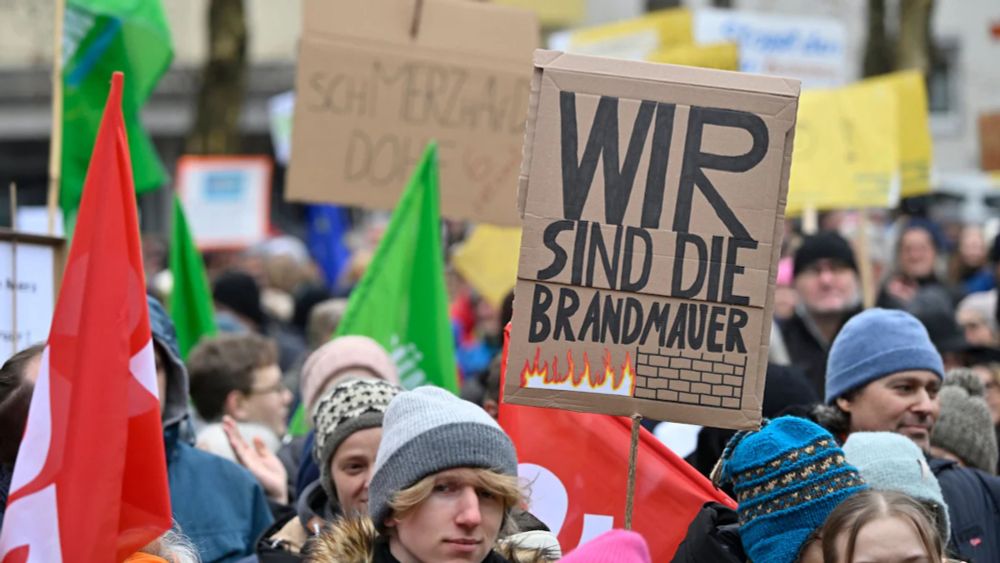
Demokratie: Wenn die Rechte mitregiert, wird sie nicht geschwächt – im Gegenteil
Eine Untersuchung von 57 Ländern zeigt: Wenn die Rechte in Verantwortung kommt, gewinnt sie dazu. Daraus lässt sich für Deutschland lernen.
📣 New op-ed in Süddeutsche Zeitung: What the data say about the “Brandmauer”
I summarize key findings from a study with @anninahermes.bsky.social across 57 democracies
➡️ Far-right parties don’t get weaker in government, they get stronger (~6 points by the next election)
tinyurl.com/4j6jaud2
18.11.2025 20:51 — 👍 183 🔁 76 💬 3 📌 11
Online Application: Graduate School of Economic and Social Sciences
📣 Apply Now: Be part of the GESS 📣
🎓 #ApplyNow to our fully funded doctoral programs beginning Fall 2026!
📊 #Business
📊 #Economics
📊 #SocialSciences
Application Deadlines:
📬 Early: 15 Jan 2026
📬 Final: 31 March 2026
🔗 Don’t miss your chance to apply via our Online Application Portal:
17.11.2025 08:48 — 👍 5 🔁 5 💬 1 📌 1

The Shocking Truth About Gen Z Voters Is That They’re Pretty Great
Stop panicking: They are the most progressive generation ever, especially on race. If that surprises you, you’ve been listening to the wrong story.
"The kids are alright. The real problem might be older generations projecting their own racial anxieties onto them. Instead of treating Gen Z as a lost cause, it’s time to heed what their significantly lower racial resentment signals: They’re moving forward."
newrepublic.com/article/2030...
16.11.2025 14:58 — 👍 10 🔁 3 💬 1 📌 0

Politisches Spektrum: Die große Sehnsucht nach der Mitte
Unser interaktives Tool zur politischen Mitte hat großes Interesse hervorgerufen – und wird leidenschaftlich diskutiert. Sieben Erkenntnisse
"Gehören Sie zur politischen Mitte?", fragte die @zeit.de und löste mit ihrem Tool eine hitzige Debatte aus.
@marcdebus.bsky.social ordnet das Tool und die zugrundeliegenden Daten der @gles.bsky.social ein.
Lesenswerter Beitrag von @cendt.de und @jalenz.bsky.social !
👉 www.zeit.de/politik/deut...
12.11.2025 09:23 — 👍 8 🔁 3 💬 0 📌 0
Just published in @bjpols.bsky.social: @sergipardos.bsky.social and I show that inter-regional moves in pursuit of employment security reduce individual worries about immigration—a mobility pattern that, in the aggregate, reinforces spatial polarization in anti-immigration sentiment. cup.org/3XiB6yD
10.11.2025 13:20 — 👍 90 🔁 38 💬 1 📌 3

Crazy support numbers for Zohran Mamdani among young women: 84% (!) of women aged 18-29 voted for Mamdani in the NYC Mayoral Election.
But also important: young men voted MUCH MORE STRONGLY (67%) for Mamdani than old men (37%).
05.11.2025 20:49 — 👍 116 🔁 33 💬 5 📌 6

Voting Intention of 18-34 year old Dutch voters

Voting Intention of total Dutch Population
@ipsosnl.bsky.social published an age breakdown of the results of the election polls regarding tomorrow's Dutch elections.
Young Dutch voters are leaning more towards the centre-left (D66, PvdA-GL, PvdD, Volt), and are less likely to vote for both the far-right and the center-right.
28.10.2025 14:28 — 👍 17 🔁 2 💬 1 📌 2
Ich habe mit @zeit.de über die Reaktionen etablierter Parteien auf den Erfolg der radikalen Rechten gesprochen – warum Anpassung und Einbindung riskant sind und wo Chancen jenseits reaktiver Strategien liegen.
27.10.2025 08:04 — 👍 52 🔁 18 💬 0 📌 0

ZDF
In meiner Wohngegend gibt es mit Geflüchteten Probleme
Polit Barometer
4% sehr große
14% große
37% nicht so große
37% keine
8% weiß nicht /keine Geflüchtete in der
Gegend
Quelle

ZDF
... An öffentlichen Orten und Plätzen fühle ich mich in der Regel sicher
<
20%
46%
25%
8%
sehr sicher
eher sicher
eher unsicher
sehr unsicher
Quelle: ZDF
>
Diese zwei Ergebnisse des #Politbarometer sollten nicht untergehen, doch genau das passiert gerade...
24.10.2025 19:20 — 👍 857 🔁 494 💬 18 📌 17
Happy to serve as the editor-in-chief of the Politische Vierteljahresschrift/German Political Science Quarterly (PVS/GPSQ) link.springer.com/journal/11615 @dvpw.bsky.social from January 2026 onwards. Thanks to Eric Linhart for his great work in the last six years! 1/3
23.10.2025 08:03 — 👍 84 🔁 14 💬 6 📌 0
To be clear: deportations to increase cultural homogeneity is the text book definition of ethnic cleansing. Demands that come even close to this are so far outside any democratic norm and the rule of law. What has happened to a country when this is not condemned in the strongest possible terms?
21.10.2025 10:47 — 👍 6049 🔁 1709 💬 5 📌 81
has this been done yet
15.10.2025 09:17 — 👍 15 🔁 7 💬 0 📌 0
Thank you Lena!
01.10.2025 10:16 — 👍 1 🔁 0 💬 0 📌 0

For the next 10 weeks, I will be a visiting PhD student at the University of Vienna, hosted by @chriswratil.bsky.social, discussing Representation etc.
If you are in Vienna, I would love to have coffee, so please reach out.
01.10.2025 09:24 — 👍 21 🔁 0 💬 2 📌 1
Causal evidence of historical religious landmarks on current day voting 🤯
29.09.2025 06:09 — 👍 6 🔁 0 💬 0 📌 0
Aww dankeschön ❤️
25.09.2025 09:26 — 👍 1 🔁 0 💬 0 📌 0
In addition to my wonderful students, I want to thank @chrisvsteinert.bsky.social and @sarahwagner.bsky.social for answering all my questions about how to be a good teacher two years ago.
25.09.2025 08:54 — 👍 5 🔁 0 💬 0 📌 0

I am super happy to have received this year’s CDSS teaching award for my seminar “democratic representation in parliament”. In addition to the positive feedback from students, this is a great valuation of the effort put into preparing courses and giving feedback.
25.09.2025 08:54 — 👍 37 🔁 0 💬 4 📌 1
Come visit us next year, we have good feedback and tasty food.
24.09.2025 08:44 — 👍 2 🔁 1 💬 0 📌 0
Wow, das sind wirklich tolle Neuigkeiten. Herzlichen Glückwunsch!!!
22.09.2025 15:25 — 👍 1 🔁 0 💬 0 📌 0
The innovation I have been waiting for the most
21.09.2025 18:23 — 👍 3 🔁 0 💬 0 📌 0

Cover page of the article:
"The sound of party competition: how applausereflects unity, disagreement, and the electoralcycle in parliamentsAndreas Küpfera , Jochen Müllerb and Christian Steckeraatechnical university of Darmstadt, Darmstadt, Germany; buniversität Greifswald, Greifswald,GermanyABSTRACTThis article studies how applause reflects the dynamics of party competitionduring parliamentary debates. While legislative scholars often emphasise theselection of speakers and content of debates, spontaneous reactions from fel-low MPs remain understudied. Analysing 750,000 instances of applause in thedebates of the German Bundestag (1976–2020), it was found that applausepatterns, although largely spontaneous and immediate by nature, systemati-cally reflect incentives from party competition such as signalling party andcoalition unity, ideological (dis)agreement, and ostracising specific parties.Applause also indicates issue emphasis, especially near elections. The findingssuggest that applause can serve as a nuanced and abundant indicator in thestudy of party competition, complementing more static measures derived frommanifestos and expert judgements. By analysing applause patterns over fourdecades, this study opens new avenues to explore nonverbal reactions asmarkers of party competition in other parliaments."
👏Applause offers a revealing lens on party competition! In a recent article @wepsocial.bsky.social (w/@jocmuel.bsky.social+@pluggedchris.bsky.social), we study how applause reflects party and coalition unity, ideological agreement, political exclusion, issue ownership, and the electoral cycle! (1/6)
13.09.2025 14:17 — 👍 42 🔁 11 💬 1 📌 2

Excited that my first PhD paper is published in Journal of Elections, Public Opinion and Parties!🎉
🧵 @wurthmann.bsky.social & I examine: Do They Know What They Represent? Parliamentary Candidates’ Perceptions of Their Own Party’s Positions
🔗 doi.org/10.1080/1745...
11.09.2025 11:35 — 👍 62 🔁 20 💬 3 📌 1
Political Scientist at University of Geneva 🇨🇭 & Vrije Universiteit Amsterdam 🇳🇱 🟥 | Researcher of the nccr - on the move | Interested in migration & EU politics 🇪🇺
Associate Prof, Department of Political Science, University of Copenhagen
Assistant Professor for Political Behavior @uni-konstanz.de || previously @lmumuenchen.bsky.social and @ethz.ch || https://www.lukas-rudolph.com
Assistant Professor, Political Science, University of Oslo. Political/electoral behaviour & party politics, cleavages and social class. https://sites.google.com/view/peterla/start
Postdoc at the University of Vienna. Researching polarization & democracy from a political psych perspective.
I do research and I run.
https://lucaversteegen.com
Postdoc @ Uni Siegen, Political Economy | Interested in all political sociology and political economy | before: Unis Duisburg, Oxford & Mannheim + Politics
Political scientist at the University of Glasgow | www.fredpaxton.com
We are the Archaea Biology and Ecogenomics group at the University of Vienna. This is a lab member-run account.
https://archaea.univie.ac.at/
PhD candidate in Political Science at Uppsala University.
Gender & Politics • Political Psychology • Group Identities • Experiments • Computational Methods • Digital Communication
Political Science PhD student at UCL. Working on housing and electoral politics. Long-term #itfc sufferer. 🏳️🌈
PhD candidate @LSEGovernment 📚 Interested in campaigns, applied data science and field experiments 💻 he/him
🌐 lenmetson.com
💚 Fractieleider Groen Brugge | 👨🎓 Postdoctoral researcher in local party politics Ghent University | 😍 Brugge | 🍰 Cake addict
Social and data science at the London School of Economics
Democracy, behaviour, meta-science, 🇿🇦🇺🇲
Won't interact with anon accounts.
www.ddekadt.com
Read, teach and write about comparative politics, political economy, and social science at UC-Merced: https://aditya-dasgupta.com
Professor of Data Science and Public Policy | Director @ Hertie School Data Science Lab | Elections, Public Opinion, Data
Professor of Comparative Democratic Institutions, Nuffield & University of Oxford, FBA. http://benansell.substack.com. BBC Reith Lecturer 2023. Host BBC Radio 4 Rethink. Columnist for Prospect. Director, Centre for Advanced Social Science Methods (CASSM).
- LSE Fellow in political behaviour at @lsegovernment.bsky.social
- PhD from Bocconi (2025)
- working on electoral accountability for illiberals & authoritarians + quant methods
- 🏳️🌈 he/they
https://sites.google.com/view/konstantin-bogatyrev/
Political Science major at Georgia State University | interested in China-Global South IPE, Development, Green Industrial Policy, State Capitalism, Regional Integration & BRI
Doctoral student at University of Cologne. Interested in electoral politics, fiscal policy, (historical) political economy.