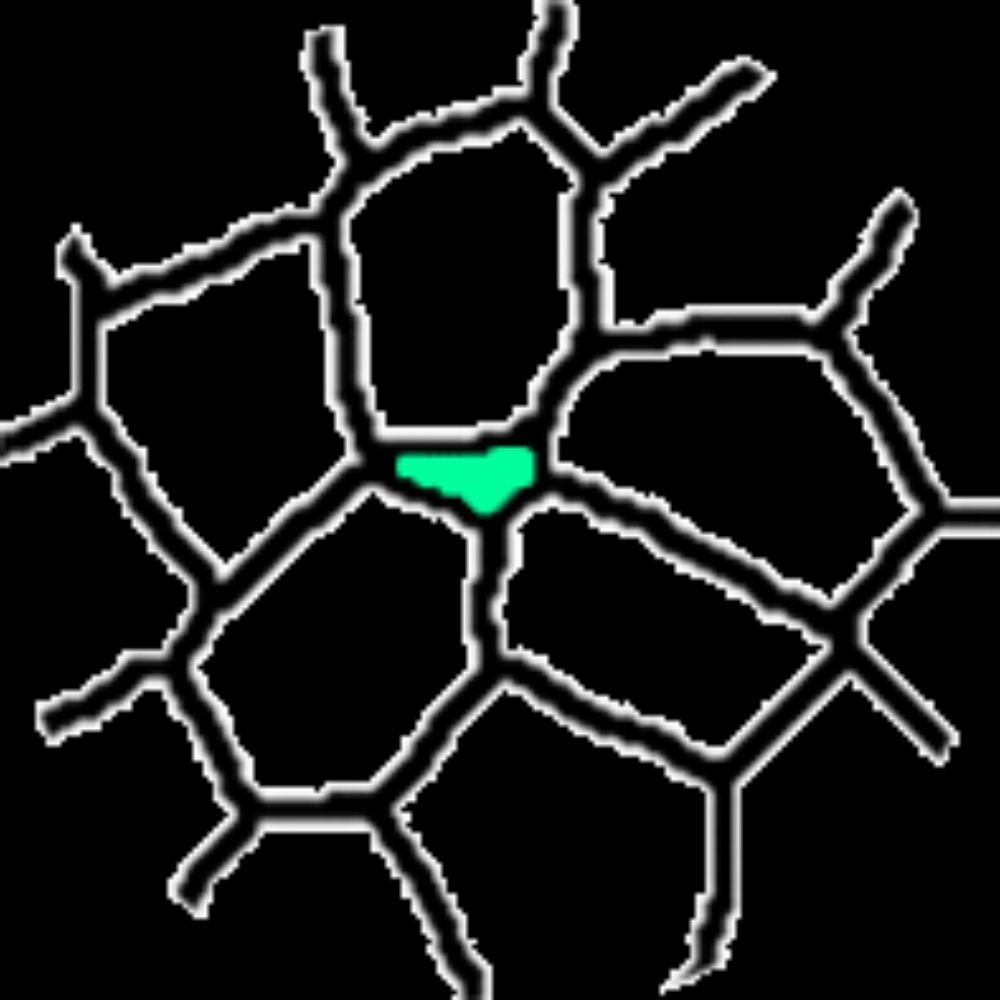
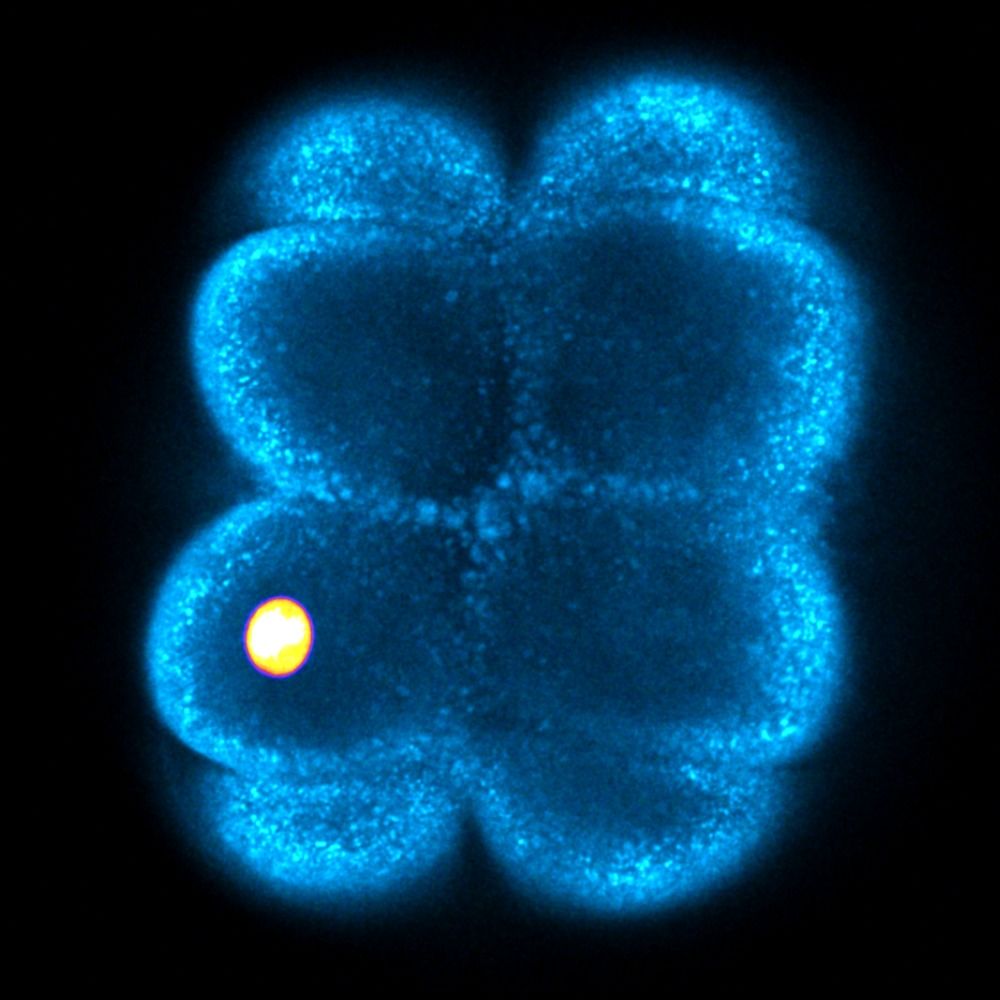
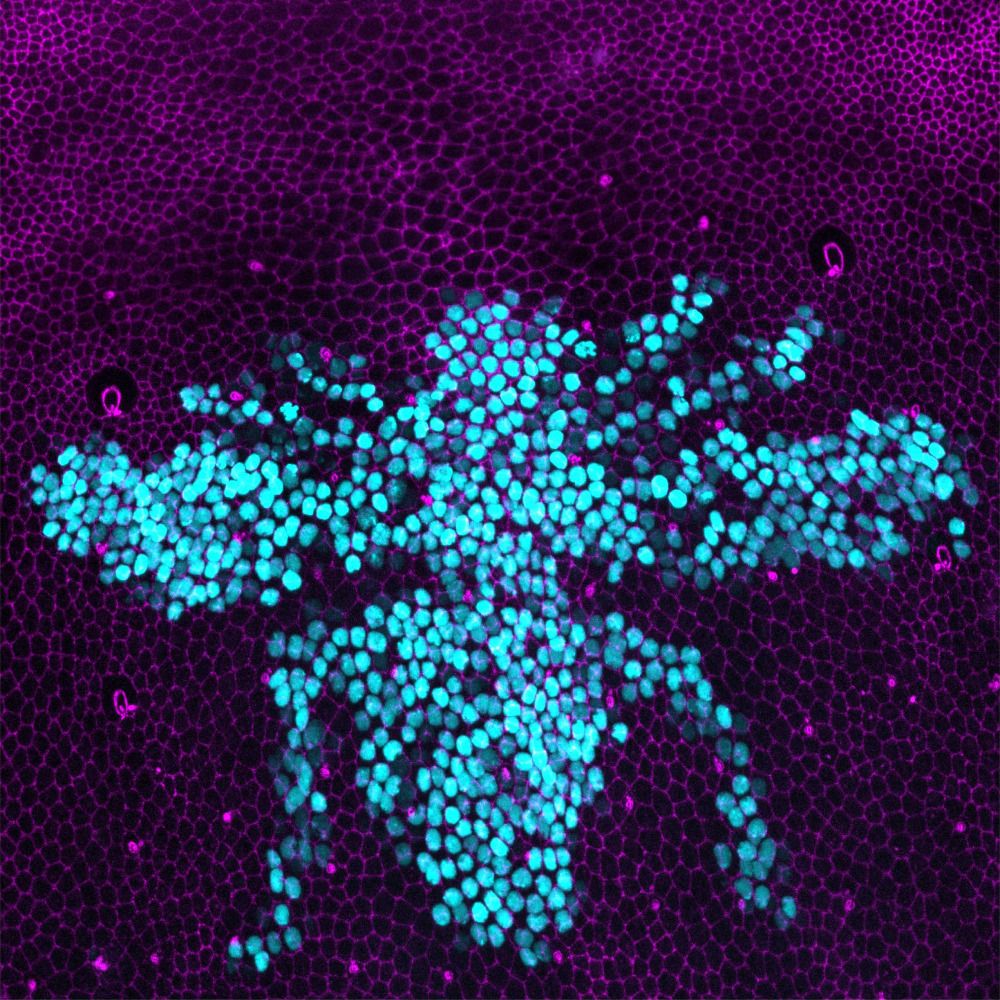
Epithelial cell death, cell extrusion, self-organisation, mechanotransduction and many other things
From embryos to equations and back.
We study how physical principles shape life, from collective DNA–protein interactions to mesoscale processes within cells and tissues.
Tweets by Grill Lab members.
https://grill-lab.org
We study the molecular and biophysical mechanisms underlying tissue morphogenesis @poldresden.bsky.social @tudresden.bsky.social @erc.europa.eu @embo.org
https://physics-of-life.tu-dresden.de/team/pol-groups/barriga
📍Boston, MA
💙 Where the world comes for answers
Cell adhesion, cytoskeletal regulation, Wnt signaling & wherever science leads us + wildflowers & my own idiosyncratic views. First gen college grad
Diversity, equity & Inclusion are core American Values
https://peiferlab.web.unc.edu
Valerie Horsley, Ph.D.• cell and tissue biologist & Educator @yale • human and doggie mom
Horsleylab.org
Developmental & cell biologist @IBDM and @Centuri in Marseille. Studying muscle making and maintenance in Drosophila and in culture.
Passionate cyclist.
How are biological forms encoded? Group leader at IBDM Marseille, director of Turing Center for living systems (CENTURI). Professor at Collège de France, Paris: Dynamics of living systems
Physics of Embryonic Self-Organization and Morphogenesis. Tweets by Otger Campàs (Professor, Chair of Tissue Dynamics and Director
at the Physics of Life Excellence Cluster of TU Dresden)
Our lab is exploring the morphogenesis of proliferative tissues.
Interested in how cells use genes to create shape, form and function in #embryos as well as in Societal Wellbeing
#NotInTheGenes #InNumbersWeTrust #gastruloids #gastrulation
Biophysicist interested in cell dynamics and tissue morphogenesis
at IBDM and Turing Center for Living Systems
Group: https://www.morphotiss.org/
https://www.ibdm.univ-mrs.fr/physical-approaches-to-cell-dynamics/
https://centuri-livingsystems.org
We take a holistic approach to understand health & disease and research cancer, immunity, nervous system, heart, blood vessels, bone and glycoproteomics. We are located in Vienna, Braunschweig and Vancouver.
cytoskeleton self-organization / shape, patterns and symmetry / minimal and artificial cells / biophysics teacher @ ESPCI ParisTech
www.cytomorpholab.com
Synthetic developmental biologist at PoL TU Dresden. Cross-species comparison and manipulation of the ORGANOID ZOO.
https://physics-of-life.tu-dresden.de/team/pol-groups/ebisuya
PostDoc in the Ladoux-Mège lab at Institute Jacques Monod in Paris. Interested in mechanobiology, epithelial dynamics, cell competition and differentiation
Biophysics / Cell Migration / Active matter / Mechanobiology
https://mpzpm.mpg.de/research/benoit-ladoux
https://ladoux-mege-lab.cnrs.fr