Read this inspiring perspectives coauthored by the Worm Resource directors and worm Nobel Laureates! 4 Nobel Prizes and how they were enabled by major NIH-supported research resources (the Caenorhabditis Genetics Center, WormBase, and WormAtlas) www.pnas.org/doi/10.1073/...
25.11.2025 06:18 — 👍 43 🔁 28 💬 2 📌 3

Switzerland is joining Horizon Europe!
We are uniting two research powerhouses.
For cutting-edge innovation that will boost our energy security, digital transformation, health and so much more.
Today is a good day for science, and for our EU-Switzerland partnership.
10.11.2025 14:58 — 👍 601 🔁 135 💬 11 📌 9
And we have another open position, this time with a focus on Genome Biology! Join a great community in Vienna to bring your research to the next level!
06.11.2025 04:35 — 👍 31 🔁 28 💬 1 📌 0

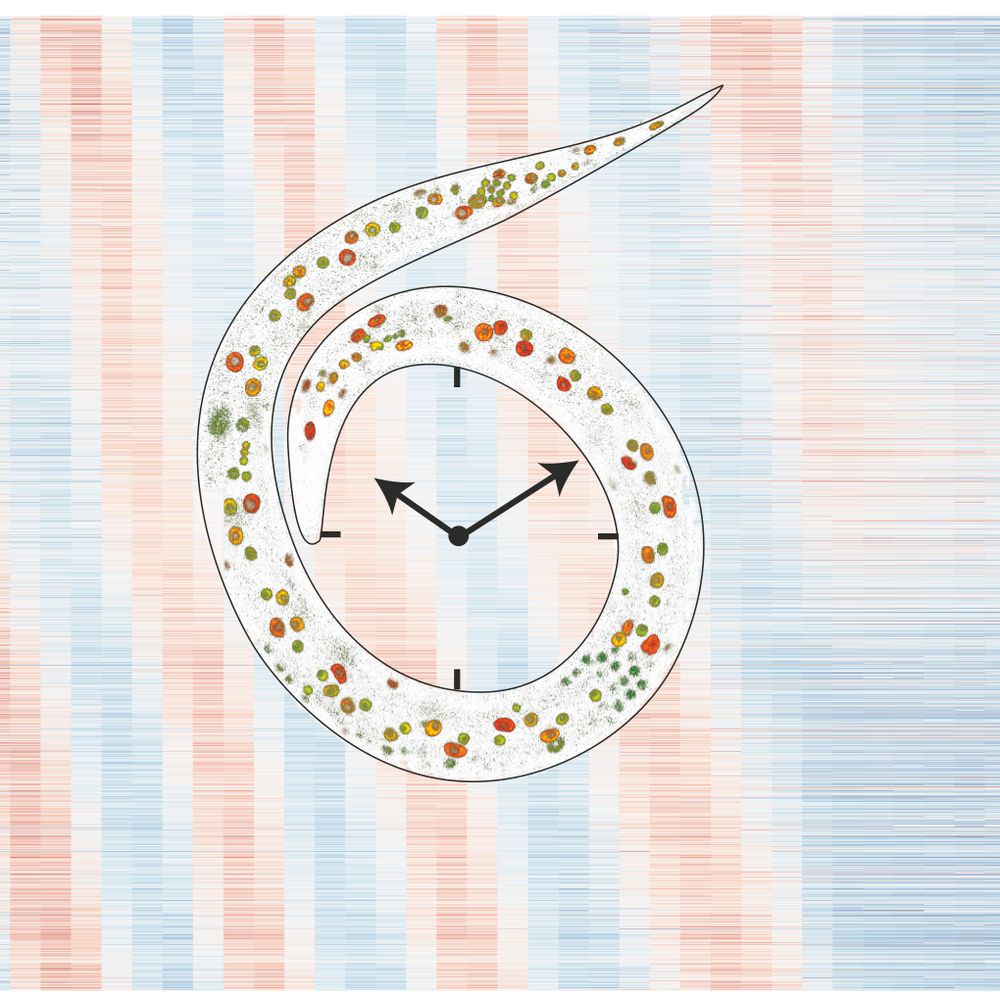
One clock, two functions: from daily rhythms to development
Scientists at the FMI and the University of California-Santa Cruz have found that similar molecular machineries control daily circadian rhythms and developmental timing. Their work in worms shows that...
Now in @embojournal.org: Researchers in @labgrosshans.bsky.social & UCSC found that similar molecular machineries control daily circadian rhythms & developmental timing—showing that evolution can repurpose core timing systems to coordinate both daily cycles & growth. www.fmi.ch/news-events/...
04.11.2025 08:28 — 👍 11 🔁 6 💬 0 📌 0

Programme of the upcoming TriRhena Gene Regulation Club in Basel on November 5, 2025
https://www.ie-freiburg.mpg.de/gene-regulation-club
Here is the schedule for the next TriRhena Gene Regulation Club at the FMI @fmiscience.bsky.social in Basel 🇨🇭 next week (5 Nov 2025; 14:00-18:45).
Exciting topics ahead & we are looking forward to the #newPI talks by @julianeg.bsky.social (MPI) & Anupama Hemalatha (FMI).
www.ie-freiburg.mpg.de/grc
30.10.2025 09:17 — 👍 13 🔁 7 💬 0 📌 0
"[In C. elegans] researchers uncovered key principles of cell death and RNA interference [that] paved the way for new therapies and technologies. These breakthroughs were made not because they were sought by design, but because a few scientists, supported by public grants, followed their curiosity"
29.10.2025 12:02 — 👍 4 🔁 0 💬 0 📌 0
🔬 Next in the NCCR RNA & Disease Seminar Series: Prof. Olivia Rissland (Univ. of Colorado School of Medicine, USA)!
📅 27.10. 16:30 – University of Bern, DCBP
📅 28.10. 15:00 – ETH Zurich, Hönggerberg
👉 More info: nccr-rna-and-disease.ch/education/nc...
@unibe.ch @ethz.ch @snf-fns.ch
24.10.2025 07:09 — 👍 2 🔁 1 💬 0 📌 0

For what it’s worth, The Wyoming Worm lab has funding for 5 years along with exciting projects with solid foundations. We are is still looking for capable, dedicated, and fun-to-work-with lab members at all career stages. davidfay@uwyo.edu
scholar.google.com/citations?us...
22.10.2025 13:28 — 👍 40 🔁 18 💬 3 📌 2
Fabulous @katb92.bsky.social was the lead on our side!
20.10.2025 14:22 — 👍 4 🔁 2 💬 0 📌 0

Old cogs, new clocks: a conserved protein complex controls developmental and circadian timing | The EMBO Journal
EMBO Press is an editorially independent publishing platform for the development of EMBO scientific publications.
This invites speculations about the evolution of circadian vs. developmental clocks and the features that make the PER/LIN-42:CK1/KIN-20 module so central to different timing mechanisms – as discussed in the accompanying News & Views article @embojournal.org doi.org/10.1038/s443... . 8/n
20.10.2025 13:25 — 👍 3 🔁 2 💬 1 📌 0
Intriguingly, this tango also appears to happen in circadian clocks: while CK1 licenses PER for degradation, PER also regulates CK1 activity and its targeting of the CLOCK protein in the nucleus. 7/n
20.10.2025 13:25 — 👍 1 🔁 2 💬 1 📌 0

Indeed, KIN-20 exhibits dynamic localization to the nucleus – dependent on LIN-42 binding. We speculate that this may provide KIN-20 to access to additional substrates. 6/n
20.10.2025 13:25 — 👍 2 🔁 2 💬 1 📌 0

Animals lacking CK1/KIN-20 or its enzymatic activity are highly arrhythmic – in fact much more so than animals only lacking the LIN-42_CK1BD. This made us wonder whether the key function of the complex is regulation of KIN-20 by LIN-42, rather than the other way around. 5/n
20.10.2025 13:25 — 👍 2 🔁 1 💬 1 📌 0

LIN-42 co-immunoprecipitates KIN-20 – an orthologue of Casein Kinase 1delta/epsilon that also occurs in a complex with PER in mammals. The LT/SYQ region forms a CK1-binding domain (CK1BD) that also regulates CK1 activity. CK1 phosphorylates LIN-42. 4/n
20.10.2025 13:25 — 👍 2 🔁 1 💬 1 📌 0
Its most conserved feature are the PAS (PER/ARNT/SIM) domains – but we find them to be dispensable for rhythmic molting. Instead, a less conserved region previously termed LT/SYQ for an amino acid signature is required. 3/n
20.10.2025 13:25 — 👍 2 🔁 1 💬 1 📌 0
The C. elegans LIN-42 protein is orthologous to fly/mammalian PERIOD – but during development, oscillates with a 7-hr rather than a 24-hr period. It affects temporal cell identity and promotes rhythmic molting – but how, was unclear 2/n
20.10.2025 13:25 — 👍 2 🔁 2 💬 1 📌 0

And the next one: dx.doi.org/10.1038/s44318-025-00585-z . Super-fun collaboration with @partchlab.bsky.social & @gotworms.bsky.social to find similarities between developmental and circadian clocks – supported by @fmiscience.bsky.social Facilities and, financially, @snsf.ch and @erc.europa.eu . 1/n
20.10.2025 13:25 — 👍 20 🔁 11 💬 1 📌 1

Despite the mess, we are grateful to be funded, have exciting science happening, and have an opening for a postdoc!
If you are interested in sensory biology and esp in cilia, thermosensation, or interoception, and would like to join an interactive & supportive group - please email.
Please RT 🙏
16.10.2025 17:29 — 👍 46 🔁 45 💬 0 📌 3
And here is a layperson video summary of parts of our recent paper👇
15.10.2025 10:39 — 👍 7 🔁 2 💬 0 📌 0
YouTube video by The Friedrich Miescher Institute for Biomedical Research
DNA rhythms orchestrate gene activity across development
🎥 FMI scientists discovered that thousands of C. elegans genes switch on and off in rhythmic patterns controlled by chromatin, revealing how gene timing shapes development & offering clues to human biological clocks. @labgrosshans.bsky.social www.youtube.com/watch?v=Dibw...
15.10.2025 06:58 — 👍 5 🔁 4 💬 0 📌 1
Thanks you, Xantha!
13.10.2025 14:52 — 👍 1 🔁 0 💬 0 📌 0
Watch Lucas' amazing artistic/musical rendition of C. elegans larval development and our work on developmental timing and molting here youtu.be/-hGHYRvw87w and read on his inspiration and challenges below
13.10.2025 07:59 — 👍 6 🔁 4 💬 1 📌 0
Model organisms as platforms for training scientific minds
www.nature.com/articles/s41...
12.10.2025 09:25 — 👍 60 🔁 31 💬 1 📌 4
Absolute fun project with lead authors Dimos Gaidatzis (@fmiscience.bsky.social Comp Bio), Maike Graf-Landua and @smethot.bsky.social - and many other wonderful collaborators @labgrosshans.bsky.social ky.social and @fmiscience.bsky.social. Thanks to @snsf.ch and @erc.europa.eu for funding! n/n
10.10.2025 14:17 — 👍 2 🔁 0 💬 0 📌 0
For >1,100 peaks, we could match their phase and amplitude to rhythmically expressing genes. The model also predicted the effects of GRH-1 depletion on the mRNA levels of those genes correctly. 10/n
10.10.2025 14:17 — 👍 0 🔁 0 💬 1 📌 0

We validated the model experimentally, by acutely depleting GRH-1. The model reliably predicted the resulting changes in chromatin opening, even in those cases where they were not caused by GRH-1 directly, but, indirectly, through GRH-1’s effect on other TFS. 9/n
10.10.2025 14:17 — 👍 0 🔁 0 💬 1 📌 0

In an extreme case, such additive activity can lead to a phenomenon of “destructive interference”, where the rhythmic activities of different TFs cancel each other out to cause non-rhythmic chromatin opening. 8/n
10.10.2025 14:17 — 👍 0 🔁 0 💬 1 📌 0

Using a model with only these 9 TFs, and considering their binding strengths, we could predict chromatin dynamics of any phase and amplitude. Since we used linear models without interaction terms, this reveals that new phases and amplitudes can be generated by adding up the activity of TFs. 7/n
10.10.2025 14:17 — 👍 2 🔁 0 💬 1 📌 0
Circadian Sleep Disorders Advocate. Raising awareness for Non24 in sighted people. #DSPD mom of a #Non24 teen. Former board member at https://csd-n.org.
Neuroscientist, geneticist, educator, mentor, loves C. elegans, puns, birds, sci-fi/fantasy and kinda nerdy. You get my personal opinions here! 🌈
Postdoc, firstgen, scientist, worm breeder, cats dad 🏳️🌈
EMBO and HFSP postdoctoral fellow in the Paul Nurse Lab @crick.ac.uk. Biophysicist studying biology from single molecules to the systems level. Alumnus of @reyes-lab.bsky.social @mcgill.ca 🇨🇦
Development, evolution, worms, gene name etymology. I log interesting papers, questions, and ideas.
Brandeis Bio/Neuro. We study multiple aspects of sensory biology. Mostly in worms. Lab appears to be powered by vast quantities of junk food. Opinions mine.
senguptalab.org
Basic Genomics specializes in advanced RNA sequencing technologies that enable precise detection and quantification of RNA molecules. Find out more at www.basic-genomics.com!
Science and fun from the lab of Tony Hyman at the MPI-CBG @mpicbg.bsky.social. Tweets by Hymanlab members.
https://hymanlab.org/
study small RNAs/APA/splicing/m6A/Notch. neural development+behavior; genomic conflict+evolution.
http://www.mskcc.org/lai
also, indie rock and glassblowing.
Biologist @hubrechtinstitute.bsky.social interested in signalling dynamics, development, tissue homeostasis and microfluidics | Formerly MPI Biochemistry, Biocenter Basel and Embl Heidelberg | Mother of 2 | Posts are my own.
Utrecht | sonnenlab.org
Scientist at IMP in Vienna. Excited about gene expression regulation and its encoding in our genomes - enhancers, transcription factors, co-factors, silencers, AI.
Associate Professor of Genetics
Harvard Medical School, Boston Children's Hospital
It should be fun, or what's the point?
http://heimanlab.com
Group Leader at @fmiscience.bsky.social
We study the genetic architecture of protein function to develop predictive and generative AI models
Incoming group leader @FMI, Basel
Postdoc @MPI-MG, Berlin | PhD @IMBA, Vienna
Investigating cell fate and loss in tissue dynamics
https://www.fmi.ch/research-groups/groupleader.html?group=150
Research group in the Biochemistry department @cambiochem.bsky.social at the University of Cambridge exploring the RNA Universe! 🧬✨ https://www.ericmiskalab.org/
Managed by lab members
Organisers of @cambridgerna.bsky.social
Assistant Professor @biozentrum.unibas.ch • Theoretical biophysics • Postdoc ISTAustria, PhD LMU Munich, MSc Cambridge University
www.biozentrum.unibas.ch/brueckner
(Small) RNA enthusiast at NIH, proud Mom to a wonderful daughter, 🇺🇸🇦🇹
Cell cycle / Developmental timing / polyploidy
Favorite model: C. elegans
Group leader @hubrechtinstitute.bsky.social