really good piece and I want to highlight this theme here, something I’ve become obsessed with: LLMs simply cannot evaluate the objective truth of any claim or the relative value of any information
27.02.2026 16:42 — 👍 310 🔁 110 💬 7 📌 8
Yup, LLMs are so woefully bad at history, so I'm never trusting them with anything else... but I keep meeting smart people who "ask ChatGPT" for so many things, and it's driving me to despair
27.02.2026 14:31 — 👍 213 🔁 35 💬 17 📌 2

IHR Internships
IHR Internships support new researchers to develop their skills and broaden their experience within and beyond the historical research community.
We have just launched our IHR 2026 internship with the Bibliography of British and Irish History (BBIH), focusing on environmental histories. For more information and to apply visit: buff.ly/Vzpz6G3 (application deadline 15 April 2026, 11:59 pm BST).
27.02.2026 10:30 — 👍 21 🔁 12 💬 0 📌 0

All of the information in the image is available via the web link.
New free online research training course 5 May 2026. Engaging Histories: Working with/in the Media as an Historian.
www.history.ac.uk/news-events/...
27.02.2026 12:03 — 👍 12 🔁 13 💬 1 📌 0
I would love to think along side any historians working on preserving historical memory, records, and archives in the age of AI.
When mass manipulation of info is possible, how do we make sure the records we have can be authenticated, traceable, and withstand multiple chain of custodies? 🗃️
26.02.2026 21:43 — 👍 47 🔁 14 💬 4 📌 2
Lovely colours!
24.02.2026 23:47 — 👍 1 🔁 0 💬 0 📌 0

The political effects of X's feed algorithm
https://doi.org/10.1038/s41586-026-10098-2
Received: 16 December 2024
Accepted: 4 January 2026
Published online: 18 February 2026
Open access
• Check for updates
Germain Gauthier,5, Roland Hodler?5, Philine Widmer35 & Ekaterina Zhuravskaya3,4,5 m
Feed algorithms are widely suspected to influence political attitudes. However, previous evidence from switching off the algorithm on Meta platforms found no political effects'. Here we present results from a 2023 field experiment on Elon Musk's platform X shedding light on this puzzle. We assigned active US-based users randomly to either an algorithmic or a chronological feed for 7 weeks, measuring political attitudes and online behaviour. Switching from a chronological to an algorithmic feed increased engagement and shifted political opinion towards more conservative positions, particularly regarding policy priorities, perceptions of criminal investigations into Donald Trump and views on the war in Ukraine. In contrast, switching from the algorithmic to the chronological feed had no comparable effects.
Neither switching the algorithm on nor switching it off significantly affected affective polarization or self-reported partisanship. To investigate the mechanism, we analysed users' feed content and behaviour. We found that the algorithm promotes conservative content and demotes posts by traditional media. Exposure to algorithmic content leads users to follow conservative political activist accounts, which they continue to follow even after switching off the algorithm, helping explain the asymmetry in effects. These results suggest that initial exposure to X's algorithm has persistent effects on users' current political attitudes and account-following behaviour, even in the absence of a detectable effect on partisanship.
A new paper shows that less than 2 months of exposure to Twitter’s algorithmic feed significantly shifts people’s political views to the right.
Moving from chronological feed to the algorithmic feed also increases engagement.
This is one of the most concerning papers I’ve read in awhile.
19.02.2026 18:57 — 👍 6361 🔁 3171 💬 159 📌 394

Amazing treasures of medieval legal history - the Catslechta ˙ (or Cat-sections) - an old Irish legal text on cats and part of an Old Irish legal compilation (the Senchas Már) #medievalsky
20.02.2026 16:00 — 👍 42 🔁 18 💬 0 📌 0
Lovely to see this review of our 'London in the Second World War' exhibition published on its last day. Huge thanks and congratulations to our staff who worked hard to curate it 🥳👏
Our next exhibition, 'Londoners on Trial' opens on the 9th March.... 👀
www.thelondonarchives.org/visit-us/exh...
20.02.2026 14:39 — 👍 6 🔁 4 💬 0 📌 0
Nelson, Jinty, 1942-2024
My Biographical Memoir of Jinty Nelson for the British Academy is now available on their website, open access on this link www.thebritishacademy.ac.uk/publishing/m...
20.02.2026 15:39 — 👍 27 🔁 11 💬 0 📌 2
This won’t give my management a second’s pause.
18.02.2026 22:21 — 👍 10 🔁 3 💬 0 📌 0
👌
18.02.2026 22:48 — 👍 2 🔁 1 💬 0 📌 0
Countries that don't eat crisps will die, says crisp salesman.
18.02.2026 22:50 — 👍 1 🔁 1 💬 0 📌 0
This is why archeologists don't like us ... Get it together historians.
15.02.2026 19:00 — 👍 40 🔁 5 💬 4 📌 0
Sobering quote from the article linked to in this thread:
"The danger of nostalgia is that it tends to confuse the actual home and the imaginary one. In extreme cases it can create a phantom homeland, for the sake of which one is ready to die or kill. Unreflective nostalgia can breed monsters."
/1
16.02.2026 21:03 — 👍 49 🔁 12 💬 1 📌 2
This is a good read
16.02.2026 18:01 — 👍 147 🔁 24 💬 5 📌 0
Yet again the fees regime - so eagerly embraced by university management - returns to bite us on the arse. Fees for HE are retrograde shite, universities should have fought this, not welcomed it, and the pain will end up - yet again - being borne by staff put, as usual, in an impossible position.
16.02.2026 21:56 — 👍 9 🔁 2 💬 1 📌 0

America's Richest People Are Not its Most Generous
Fascinating chart with one outlier: Warren Buffett.
At the low end, giving 0.06% of one's wealth is equivalent to:
Net worth -> Lifetime Giving
50K->$30
100K->$60
500K->$300
$1M->$600
Most folks give far more by % in a *single year*.
www.forbes.com/sites/forbes...
16.02.2026 19:54 — 👍 952 🔁 454 💬 60 📌 134
Practicing Early Modern History through (Re)Making Things
How can historians engage with hands-on research to better understand the embodied knowledge and sensorial experiences in historical practices? In what ways can creative works be implemented in order ...
Can historians benefit from creative works for historical research? In this @hsnatsci.bsky.social short piece, I share how I worked w/ different types of making to research and write my recent book on 17th-c. florilegia. Thank you @dominikhhh.bsky.social & @mbaldwin.bsky.social for the invitation!
16.02.2026 10:13 — 👍 45 🔁 22 💬 1 📌 1
I think the greatest gift college professors in the humanities can give to students right now is a seminar room where, for 80 minutes twice a week, nothing that happens to them is a sales pitch for an AI product.
11.02.2026 20:45 — 👍 902 🔁 199 💬 9 📌 24
Hey UK archaeology. Let's all just cash in our years of knowledge, understanding, professionalism, trust, integrity, stakeholder partnerships, land owner networks, Professorial privilege, university accreditation.
Buy a metal detector and make some (more) money. 🏺
15.02.2026 10:35 — 👍 128 🔁 36 💬 12 📌 2
If the finder were an archaeologist this would be an unthinkable story, our training teaches us that artefacts represent a shared past. His training is in documents, he sees objects as something to be auctioned, a source of 'reward'
Is this an anomaly? Historian friends, how do you feel about this?
15.02.2026 08:19 — 👍 94 🔁 28 💬 29 📌 6
We are just screaming into the void about how wrong this is when the BBC and all other media outlets consistently glorify and platform these stories along with how much money the people are making from this activity.
15.02.2026 11:21 — 👍 6 🔁 1 💬 1 📌 0

“Confusion” doesn’t begin to describe our emerging predicament. Seventy-two percent of American teens have turned to A.I. for companionship. A.I. therapists, coaches and lovers are also on the rise. Yet few people realize that some of the frontline technologists building this new world seem deeply ambivalent about what they’re doing. They are so torn, in fact, that some privately admit they don’t plan to use A.I. intimacy tools.
“Zero percent of my emotional needs are met by A.I.,” an executive who ran a team mitigating safety risks at a top lab told me. “I’m in it up to my eyeballs at work, and I’m careful.” Many others said the same thing: Even as they build A.I. tools, they hope they never feel the need to turn to machines for emotional support. As a researcher who develops cutting-edge capabilities for artificial emotion put it, “that would be a dark day.”

Developers I spoke to said the same incentives that make bots irresistible can stand in the way of reasonable safeguards, making outright abstention the only sure way to stay safe. Some described feeling stuck between protecting users and raising profits: They support guardrails in theory, but don’t want to compromise the product experience in practice. It’s little wonder the protections that do get built can seem largely symbolic — you have to squint to see the fine-print notice that “ChatGPT can make mistakes” or that Character.AI is “not a real person.” “I’ve seen the way people operate in this space,” said one engineer who worked at a number of tech companies. “They’re here to make money. It’s a business at the end of the day.”

But even if companies can curb serious dependence on A.I. companions — an open question — many of the developers I spoke with were troubled by even moderate use of these apps. That’s because people who manage to resist full-blown digital companions can still find themselves hooked on A.I.-mediated love. When machines draft texts, craft vows and tell people how to process their own emotions, every relationship turns into “a throuple,” a founder of a conversational A.I. business said. “We’re all polyamorous now. It’s you, me and the A.I.”
A genuinely alarming piece in the NYT about how the developers, scientists and assorted techbros behind "AI companions"/"synthetic care" do not even know or understand the potential harms of the tech they're developing but they're too greedy to stop themselves from developing it.
13.02.2026 14:58 — 👍 312 🔁 128 💬 18 📌 39
assholes like Suleyman and the rest of the techbros salivating over how AI is going to automate all white collar jobs from lawyers to educators and make them personally trillionaires have no conception of what the jobs they claim will be automated actually involve.
13.02.2026 22:18 — 👍 85 🔁 19 💬 6 📌 1
I'd like at add a few things to this. (1) humanists have not been able to convince any political party that curiosity-driven humanities research is a public good that should be funded using tax dollars. Republicans don't believe this, but neither do Democrats.
13.02.2026 14:57 — 👍 616 🔁 166 💬 5 📌 21
#EarlyModern 🗃️
Rosamund Oates is researching the history of early modern deafnes - see her P&P article, book out soon I think.
academic.oup.com/past/article...
11.02.2026 09:18 — 👍 175 🔁 74 💬 7 📌 3
Heritage, Archaeologist, solidarity, she/her - hoping for more kindness, often anxious and sharp. Professionally garrulous. Living in Cardiff. Ageless, so no DMs
English Lit prof based in Edinburgh. Bisexual English Scot - volatile organic compound - he/they. Roundhead in politics, Cavalier in spirit. Small room dj. Opinions expressed here entirely my personal own.
We are a seminar group on medievalism based at the Institute for Historical Research, Univ of London. Our sessions address the imaginings, re-imaginings and evocation of the Middle Ages in all reaches of post-medieval culture.
some lady.
she/her | sorayanadiamcdonald.com
Likes: medieval literature, sea swimming, plants, embroidery.
Dislikes: transphobes, bigots, jelly.
Leverhulme ECF at Oxford, researching identity and the sea in medieval romance.
An atheist #countingblessings for my #mentalhealth.
Likes tea, hot-water bottles, social justice, knitting, nuanced opinions, & sleeping.
Look North.
That's where I live.
Hence the hot-water bottles.
"He seemed a little embarrassed to be taken so seriously."
Historian curious about violence, the emotions, and what it means to be human. Currently writing a book on Women and Wine! See joannabourke.com
Historian. University of Essex, School of Philosophical, Historical and Interdisciplinary Studies. President of the Royal Historical Society
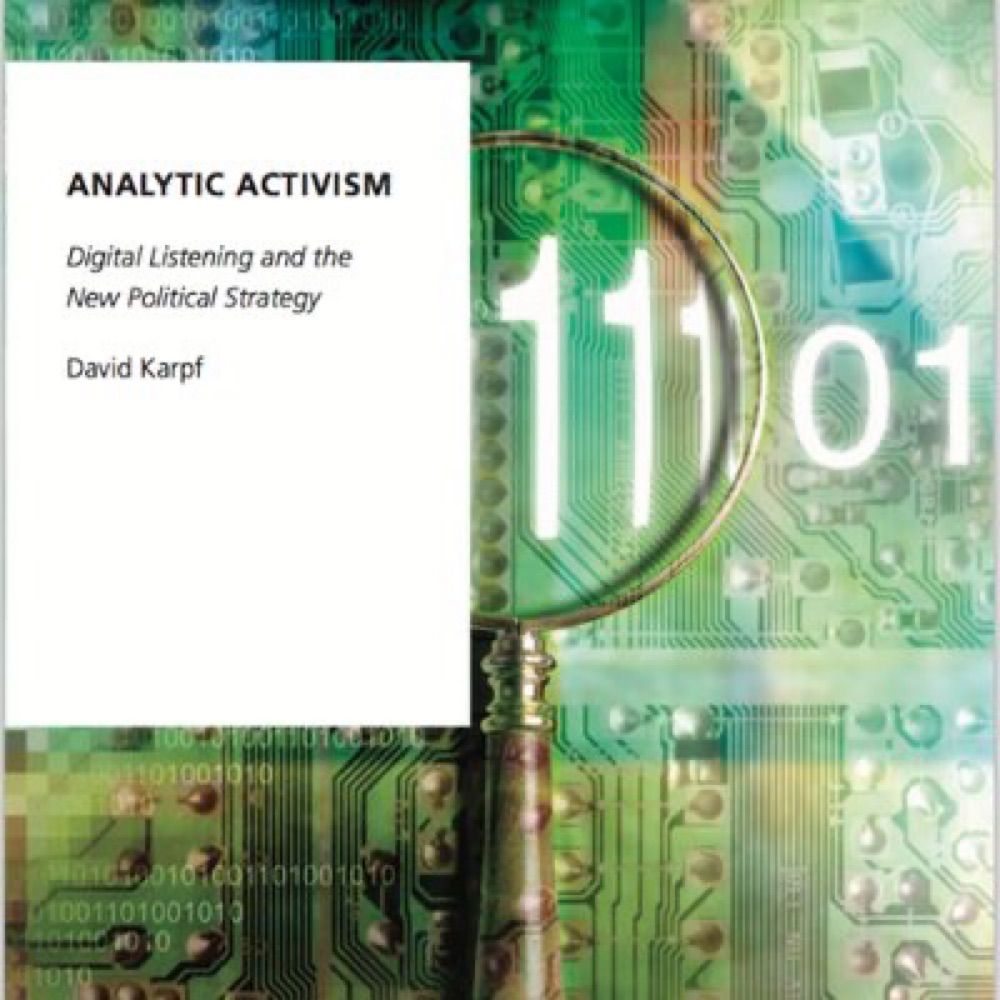
Political Communication Professor at GWU. I write a lot about the history and future of tech and politics. Best known for that one time I made fun of Bret Stephens.
Davekarpf.substack.com
PhD Humanities: Aerial Perspectives; Landscape Traditions; Operational Images; Critical AI; AI Slop & Visual Culture; Surveillance Studies; Also Art Criticism; Definitely Coffee. Professoring in the gig economy.
The University and College Union Scotland represents academic and professional support staff in Scotland’s universities
www.ucu.org.uk/scotland
@thinkuhi.bsky.social branch of @ucuscotland.bsky.social | FB - https://www.facebook.com/uhiucu | Insta - https://www.instagram.com/uhi_ucu/ | X - https://x.com/UHI_UCU | Linktree - https://linktr.ee/uhiucu | Join - www.ucu.org.uk/join |
Professor of history @uclhistory.bsky.social + co-convenor @anthropoceneucl.bsky.social. Editor at @enghistrev.bsky.social.
Institutions, rationalities, environments, mostly medieval.
https://tinyurl.com/2p8r9yeh + https://www.ucl.ac.uk/anthropocene/.
Medievalist, digital humanist, and wannabe booklicker.
I'm here to post memes and yell about manuscripts.
See also @sims-mss.bsky.social
I speak for myself and not for my employer
Writer, occasional talking head, Senior Lecturer in Medieval and Early Modern History at the University of Chichester. Autistic. Views own, etc. She/her.
People/Places; Spatial/Cultural Informatics; Arch/Heritage Sci; Data & Design. PhD - WIP. Views own. Digital Trustee: @DunollieOban. Advisory Board: @goodorgcic.bsky.social Director/Trustee: @archscot.bsky.social (she/her)