Don't miss the deadline!
05.01.2026 18:38 — 👍 0 🔁 1 💬 0 📌 0
🚨Our preprint is online!🚨
www.biorxiv.org/content/10.1...
How do #dopamine neurons perform the key calculations in reinforcement #learning?
Read on to find out more! 🧵
19.09.2025 13:05 — 👍 195 🔁 71 💬 11 📌 4
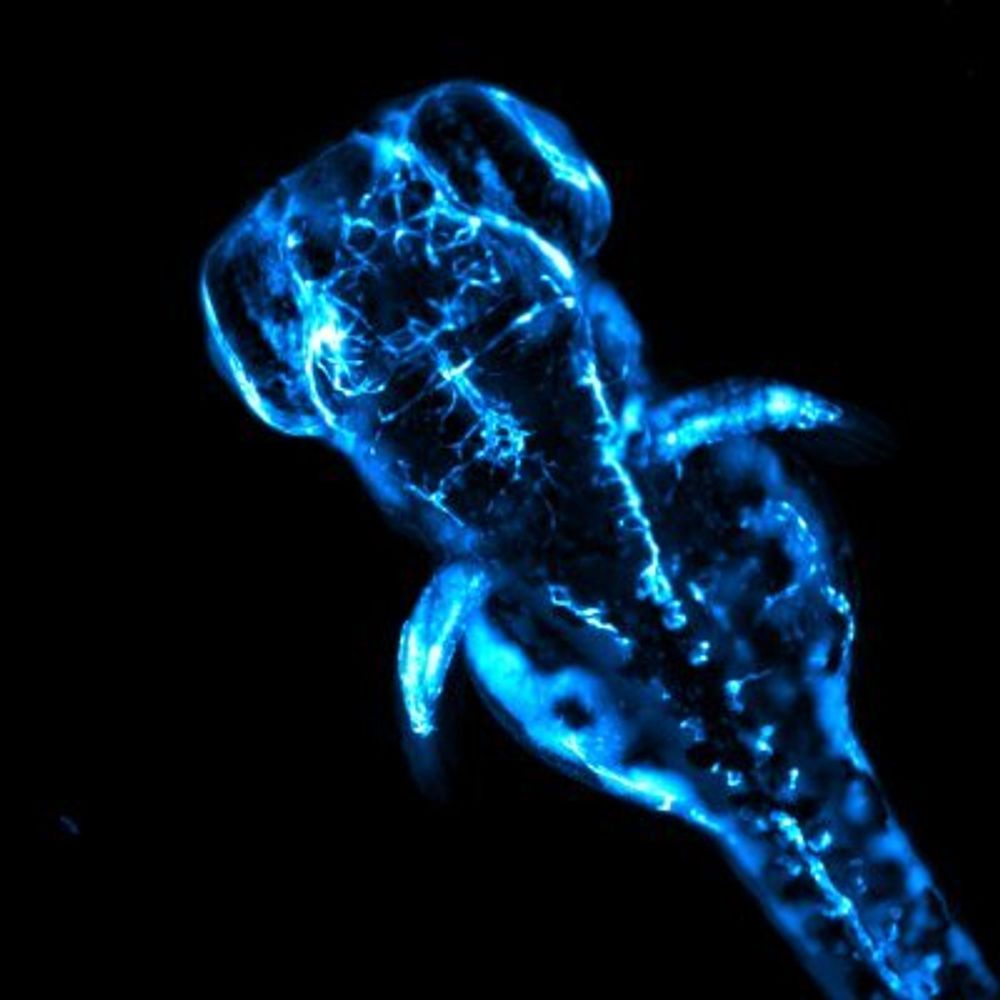
Latest from the lab. Fantastic work by talented Irene Fernández @irenefu.bsky.social Send us your feedback!
08.09.2025 05:47 — 👍 4 🔁 3 💬 1 📌 0
Interesting! Nice work
02.08.2025 16:25 — 👍 1 🔁 0 💬 0 📌 0
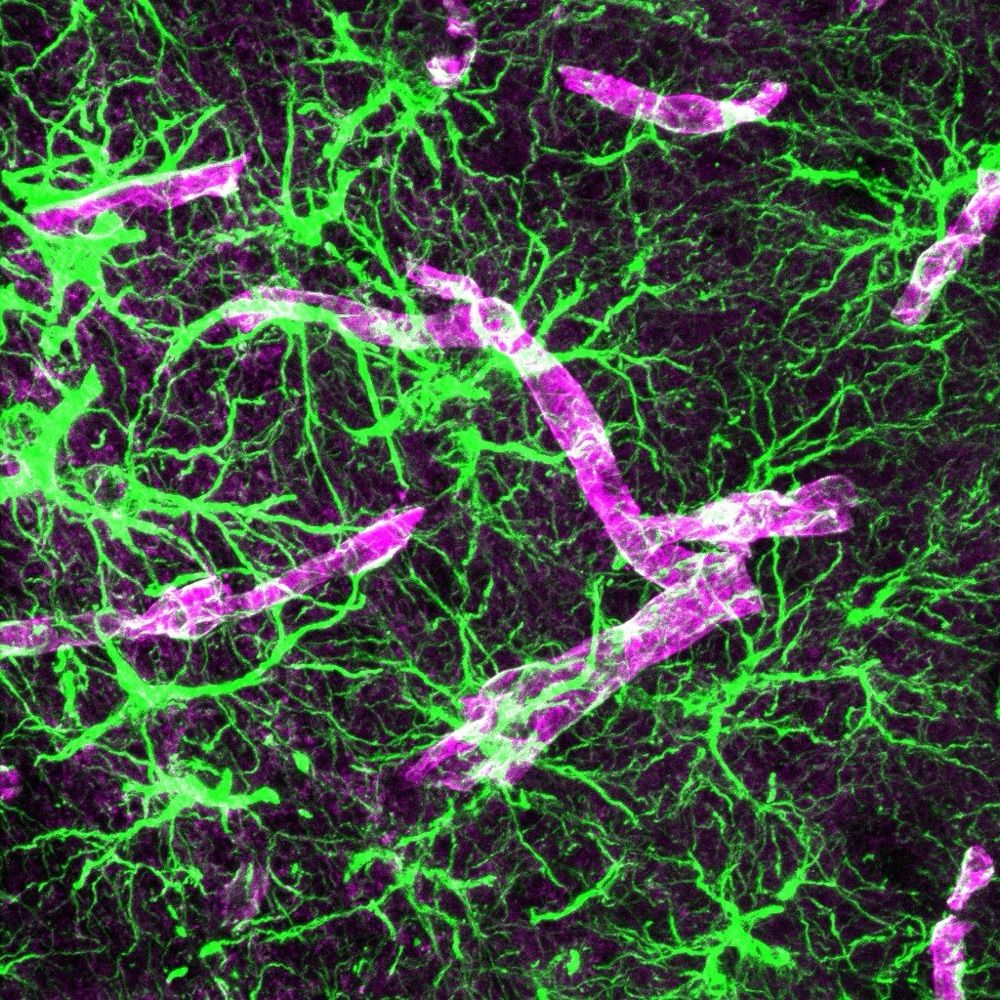
New preprint from collaboration with @sn-lab.bsky.social - 2p imaging of psilocybin's effects on neurovascular coupling 🧠🔬
We found that psilocybin prolongs the neurovascular response, independent of neural activity.
This would affect how we should interpret fMRI BOLD studies of psychedelics ‼️
01.08.2025 17:30 — 👍 38 🔁 12 💬 3 📌 1
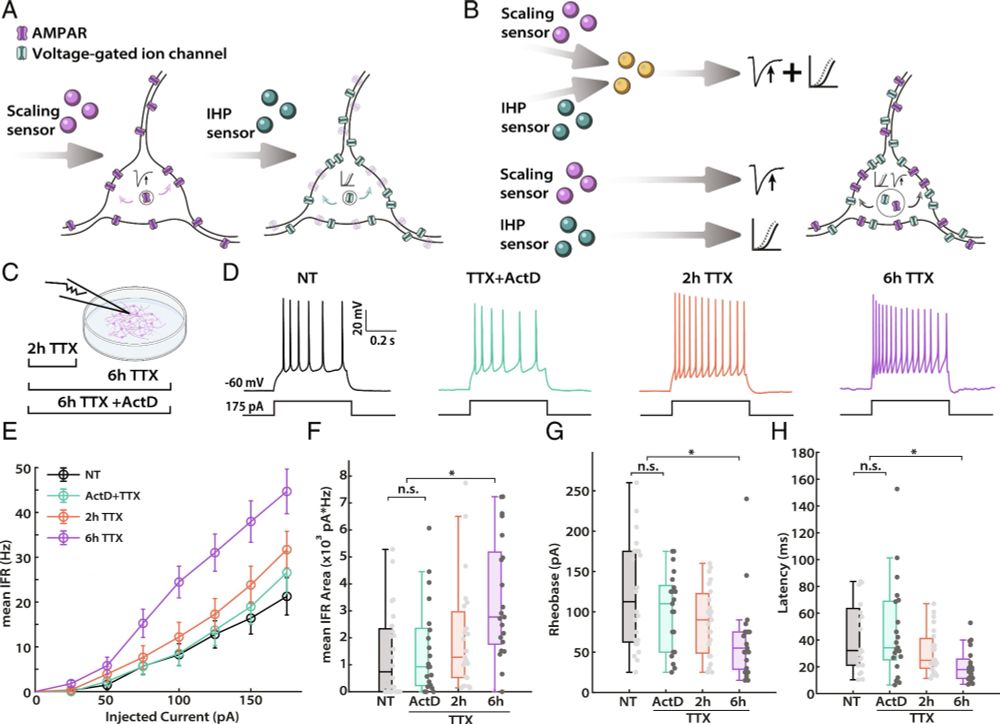
Modular arrangement of synaptic and intrinsic homeostatic plasticity within visual cortical circuits | PNAS
Neocortical circuits use synaptic and intrinsic forms of homeostatic plasticity to
stabilize key features of network activity, but whether these di...
Very happy that this work is finally out in @pnas.org! We show that synaptic and intrinsic forms of homeostatic plasticity sense distinct aspects of network activity, and can thus be independently recruited by distinct network functions. A thread:
www.pnas.org/doi/10.1073/...
31.05.2025 15:19 — 👍 68 🔁 20 💬 4 📌 1
Check out the latest updates on Zach Plumley's @plumley.bsky.social project and give us feedback before we submit! Kudos to him and the rest of the team, including Irene Fernandez Ugidos @irenefu.bsky.social and Jennifer Calvo-Iglesias.
27.05.2025 23:59 — 👍 4 🔁 1 💬 1 📌 0
Exclusive: NSF stops awarding new grants and funding existing ones
US science funder also plans to screen grant applications for compliance with ‘agency priorities’.
BREAKING: NSF has frozen all grant funding, as of yesterday. It's unclear when they will resume funding awards, or why the pause has been put in place. www.nature.com/articles/d41...
01.05.2025 22:58 — 👍 1317 🔁 972 💬 39 📌 171
Really nice paper demonstrating astrocytic control of amygdala-dependent fear memory!
23.04.2025 16:21 — 👍 5 🔁 5 💬 0 📌 0

Registration is open for a few more weeks but if you’re a trainee and want to be considered for one of the four talking slots please register before this weekend. We are selecting speakers on Monday.
www.eventbrite.ca/e/neural-cir...
17.04.2025 02:40 — 👍 11 🔁 11 💬 0 📌 0
Organizing a #SfN25 nano is a great opportunity to network and connect with others in your field.
Register today! bit.ly/4jA3aXr
14.04.2025 16:55 — 👍 4 🔁 4 💬 0 📌 0
Very nice work!
04.04.2025 11:43 — 👍 3 🔁 0 💬 0 📌 0
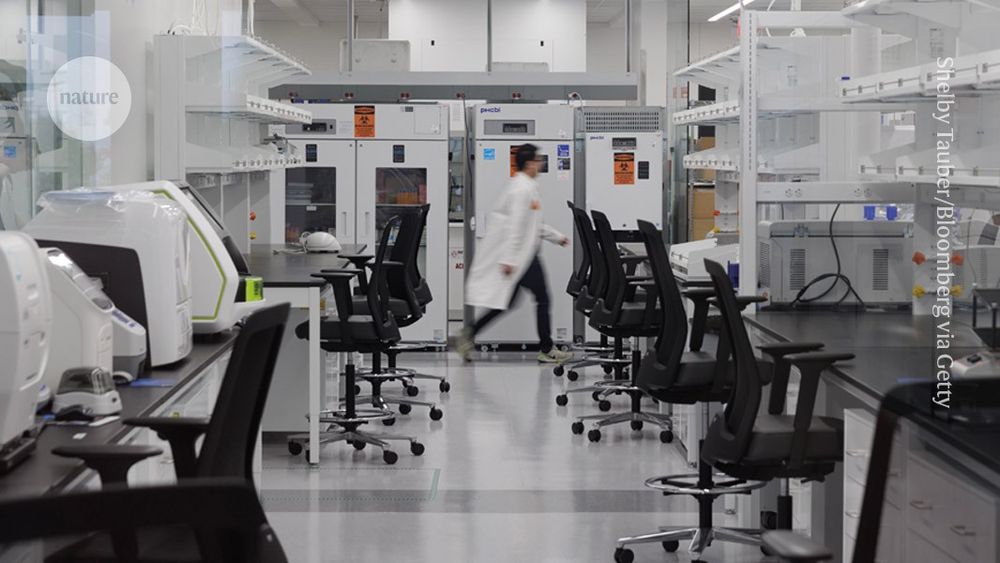
75% of US scientists who answered Nature poll consider leaving
More than 1,600 readers answered our poll; many said they were looking for jobs in Europe and Canada.
We polled Nature readers to ask if they were thinking of leaving the US for jobs abroad. Three-quarters of them (who said they were US-based scientists) said yes. 🧪
www.nature.com/articles/d41...
27.03.2025 14:19 — 👍 2336 🔁 1067 💬 65 📌 216
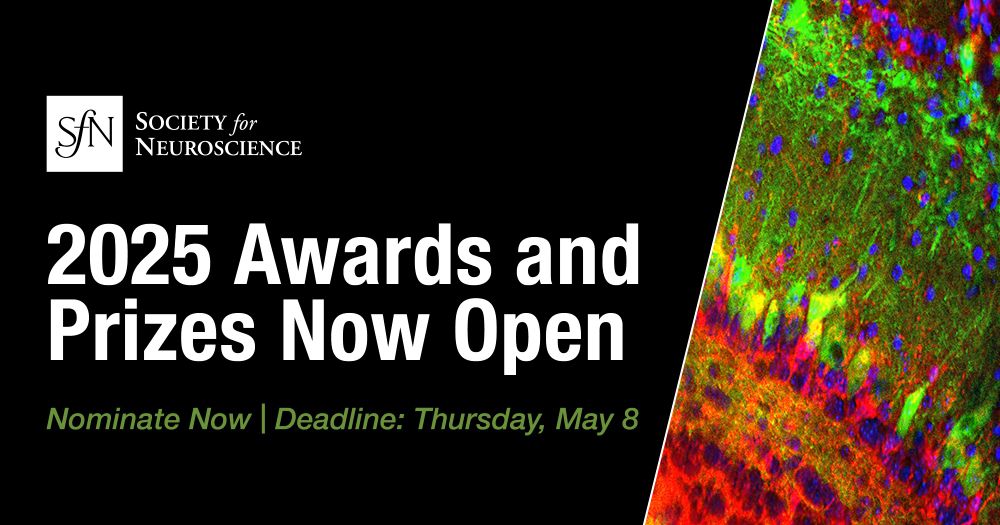
Recognizing excellence in neuroscience strengthens the entire field.
The 2025 SfN Awards and Prizes celebrate the researchers, educators, and mentors who drive neuroscience forward.
Nominate a colleague, friend, or peer by Thursday, May 8.
🔗 bit.ly/4iXFGLz
#Neurosky
24.03.2025 15:01 — 👍 19 🔁 13 💬 0 📌 1

Today: pottery
22.03.2025 14:25 — 👍 0 🔁 0 💬 0 📌 0
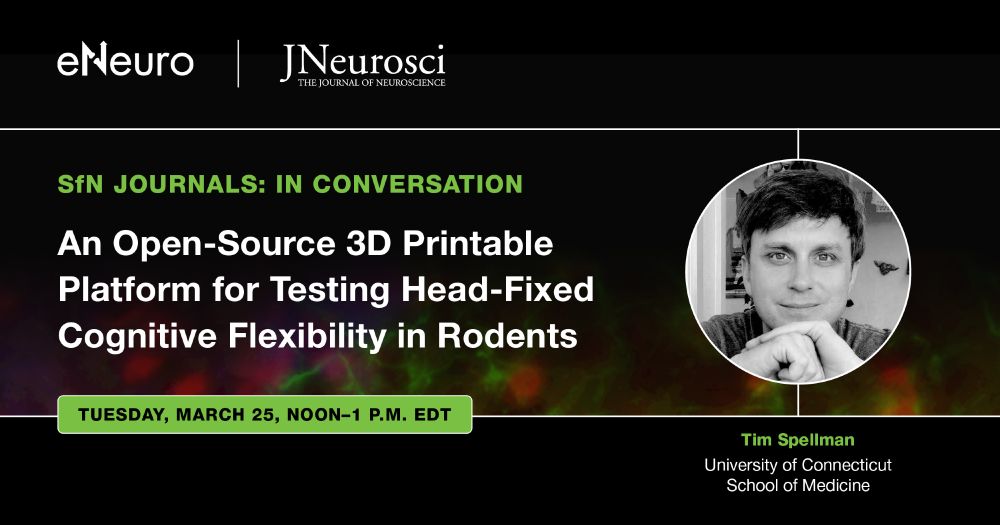
eNeuro logo. JNeurosci logo. SfN Journals: In Conversation. An Open-Source 3D-Printable Platform for Testing Head-Fixed Cognitive Flexibility in Rodents. Tuesday, March 25, noon– 1 p.m. EDT. Speaker: Tim Spellman (University of Connecticut School of Medicine)
Join Tim Spellman and #eNeuro Reviewing Editor Mark Laubach in the upcoming #ResearchInConversation webinar to discuss an innovative platform offering a new tool for neuroscience research w/ broad applications in translational neuroscience.
#NeuroSky
14.03.2025 18:02 — 👍 1 🔁 3 💬 1 📌 0
New in Bluesky! Interested in neuroscience, synaptic plasticity and dendritic spines 🔬Currently in Mostany Lab at Tulane working with two-photon and exciting plasticity projects. Ah, I also do ceramics 🏺
11.03.2025 04:19 — 👍 2 🔁 0 💬 1 📌 0
Neuroscientist at College de France in Paris🧠🔬👩🔬
Interested in neuron-glia interactions during behavior
Postdoc at @karalis-lab.bsky.social - @institutducerveau.bsky.social
Neuroscientist using computational methods to explain physiological mechanisms.
Philosophy of science aficionado
neuroscientist at Instituto de Neurociencias (https://in.umh-csic.es/en/grupos/neural-circuits-in-vision-for-action) co-owner at XAOΣ μbrewing co. (Chania)
Neuroscientist passionate about astrocytes and the brain vasculature. Group leader at @UKDRI - @EdinburghUni. (she/her)
https://www.diaz-castrolab.com
We study the genetic control and molecular regulation of brain development - and a little bit of function - in fly, mouse and human stem cell models
World citizen, Time and Variation in Brain Development, football, cheese, wine, single malt!
Fast learning preemie dad, fumbling skiff sailor, former cell watcher, endless dinghy builder, dabbling woodworker, budding star gazer.
Ph.D. | Ex-Neuro & Ephys | Microscopes & Lasers | Coherent Corp. | Opinions mine
Systems/computational neuroscience postdoc @ UCL in Carandini & Harris lab. Schmidt Science Fellow. Formerly Adesnik lab @ UC Berkeley.
Researching the neurobiology of stress and novel treatments for psychiatric disorders. Postdoc in the Kwan lab at Cornell. Mental health advocate and level 16 Orc Wizard. He/him.
Dopamine Society brings together international scientists studying dopamine in the healthy and diseased brain.
SAVE THE DATE: 🧠📍May 17-21, 2026 Sevilla, Spain!
🚨Registration & abstract submissions: https://dopaminesociety.org/
🔬 Super resolution Light microscopy & Nanoscopy (SLN) lab at the Institute of Photonic Sciences (@icfo.eu), led by Pablo Loza.
https://sln.icfo.eu/
Yale INP Director, SfN Pres, nicotinian and Iso’s mom
Researcher at CNIC, Madrid, Spain. Former Professor of Pharmacology at UCM. Professional interests: stroke, vascular dementia, neurovascular pathophysiology, cardiovascular risk factors and brain health, mentoring
Principal investigator | Neuroscientist | @UPorto FMUP, Portugal | Alumni @MIT | @mcgovernmit | Basal ganglia and ASD.
The brain trying to understand the brain.
Neuroscientist. 🧠
Professor at the University of Edinburgh
Past President of the British Neuroscience Association
FENS-Kavli Network Alumna
Mom to 2 teens, a cat, and a rescue dog. 🐈⬛🐕🐾
SciFi/fantasy nut - book recommendations welcome! 👽🚀🛸
Neuroscientist, molecular biologist at @NeuroAlc. Studying neuronal identity using C. elegans and rodent models. #SinCienciaNoHayFuturo
Research Professor at the CSIC. Developmental & Systems Neuroscience. lopezbenditolab.com
Researcher: The biological cause of mental illnesses, the pharmacological and neurobiological effects of treatments, including psychedelic drugs in both high and microdoses.
All posts are my own view and not a medical advice.