Theory At The Bargaining Table (Vandal Live at UIC)
with Dominique Baker & Anna Kornbluh
Here's a must-listen item from the folks at UIC UF. Covers lots of important labor organizing topics, and is especially informative on ways to push back against edtech and the imposition of AI and data mining across university systems @aaup.org
theamericanvandal.substack.com/p/theory-at-...
14.02.2026 15:35 — 👍 9 🔁 6 💬 0 📌 0

Text:
SUPPORT
THE STRIKERS
The Free Alabama Movement has announced a work strike, set to begin on Sunday, February 8. Incarcerated people across Alabama are answering the call and refusing to participate in their exploitation and oppression. "This nonviolent comes in response to decades of unconstitutional sentencing practices, forced prison labor, and the ongoing humanitarian crisis throughout Alabama's prison system," FAM leaders said in a statement.
Read the list of demands below and stand in solidarity with the strikers of the Free Alabama Movement.
DEMANDS
1. REPEAL ALABAMA'S HABITUAL FELONY OFFENDER ACT (HOA)
2. MAKE THE PRESUMPTIVE SENTENCING GUIDELINES RETROACTIVE
3. MAKE HJR 575 RETROACTIVE (DRIVE-BY-SHOOTING STATUE REFORM)
4. FIRST-TIME OFFENDER/CAPITAL MURDER
REFORM BILL
5. PAROLE BOARD REFORM AND CRITERIA
6. MEDICAL FURLOUGH/COMPASSIONATE
RELEASE EXPANSION
7. STATEWIDE CONVICTION REVIEW UNIT
8. ABOLISH FORCED PRISON LABOR
9. STRENGTHENING FAMILIES ACT (INCLUDING CONJUGAL VISITS)
🚨 Led by the Free Alabama Movement, incarcerated workers across Alabama are ON STRIKE to protest brutal labor exploitation and inhumane conditions behind the walls 🚨
Watch ‘The Alabama Solution” doc and read on for ways to support their strike:
docs.proton.me/doc?mode=ope...
11.02.2026 23:28 — 👍 334 🔁 165 💬 3 📌 3
Don't forget: our children are being abused in taxpayer funded immigrant prisons where medical care is deplorable, freedom is nonexistent, & trauma is rampant.
Imprisoned children are left with a lifetime of anxiety, depression, & PTSD.
They deserve to be as free as Liam is today.
03.02.2026 19:18 — 👍 63 🔁 32 💬 2 📌 0

Opinion | Democracy Dies by Database
“You need only know this: Whatever is happening with your data, it is important enough to the most egregiously lawless administration in American history that it be collected and consolidated.” Always read @tressiemcphd.bsky.social (gift link)
03.02.2026 12:19 — 👍 623 🔁 318 💬 8 📌 32
Worth reiterating:
All my respect and more to academic women, especially full professors who’ve put up with this their whole careers.
I am genuinely in awe of you.
01.02.2026 02:53 — 👍 370 🔁 43 💬 4 📌 3
I’m really looking forward to this, and especially to talking about some of our reporting on immigrant dairy workers which began just a few miles from Madison… please come if you can make it!
01.02.2026 02:05 — 👍 13 🔁 5 💬 0 📌 0

ICE is using two facial recognition programs in Minnesota, they said, including one made by the tech company Clearview AI and a newer program, Mobile Fortify. The agency is also using cellphone and social media tools to monitor people’s online activity and potentially hack into phones. And agents are tapping into a database, built by the data analytics company Palantir, that combines government and commercial data to identify real-time locations for individuals they are pursuing, the current and former officials said.
The government is using technology to identify protestors, and then using that information to track and intimidate them. The people using the devices are wearing masks, but we know the companies creating the technology.
www.nytimes.com/2026/01/30/t...
30.01.2026 13:46 — 👍 720 🔁 319 💬 18 📌 20
The @interruptcrim Block It! Don’t Build It! Don’t Fill It! Don’t Fuel It! toolkit is also a great source of actions you can take and organizing you can join or be inspired by to throw sand in ICE’s gears even if you can’t be in the streets
www.interruptingcriminalization.com/block-it
30.01.2026 13:15 — 👍 19 🔁 15 💬 0 📌 3
This article reports that Deloitte has been given nearly $100 million in contracts from ICE and CBP since January 2025.
I would love to see the states that have been targeted by federal immigration enforcement action relieve Deloitte of their human service and benefits system contracts.
29.01.2026 16:23 — 👍 40 🔁 13 💬 1 📌 1
Last week I wrote that ICE (& immigration judges) are increasingly openly defying courts. lpeproject.org/blog/immigra...
Now, a judge compiled 100 cases from ICE’s MN siege where ICE ignored court orders.
Yet what are dems offering? Basically—laws that ask ICE to please follow the law.
29.01.2026 13:11 — 👍 96 🔁 39 💬 3 📌 1
California School Dashboard (CA Dept of Education)
The California School Dashboard provides parents and educators with meaningful information on school and district progress so they can participate in decisions to improve student learning.
Does anyone know what's up with the California School Dashboard's growth measure? It doesn't *seem* to match the growth model that was approved by the state, though honest to god I'm not sure I know how it's even being calculated given the description. www.caschooldashboard.org/reports/0161...
26.01.2026 19:45 — 👍 3 🔁 2 💬 2 📌 0
My understanding only comes from skimming some details in the July 2025 SBE Item Word doc (where they also recommend using the type of language you quoted), so looking there might be most helpful!
26.01.2026 20:44 — 👍 1 🔁 0 💬 0 📌 0

A screenshot of a section of text in the linked FAQ. Two of the questions in the FAQ have been expanded in the screenshot. The text of those questions and answers is:
How are growth scores calculated?
First the expected growth score needs to be calculated. To do this, all students who completed the assessment in the current year are grouped together by grade level, with their current year scores on one single assessment along with their previous assessment scores in both ELA and math. For example, all students in Grade 4 who took the ELA assessment in 2024–25 would have their current year scores along with their 2023–24 Grade 3 ELA assessment and 2023–24 Grade 3 math assessment scores. All of that information is used to calculate the score expected of those students in 2024–25 in grade 4. We then compare their actual score on the 2024–25 Grade 4 ELA assessment to the expected score calculated using the growth model.
How many years of data are used to calculate average growth scores?
Individual student growth scores are calculated using two years of assessment data. For the 2025 Dashboard, assessment data from 2023–24 and 2024–25.
Average growth scores, however, are calculated using either one year or two years of student growth scores. A simple average growth score, using only one year of student growth (for the 2025 Dashboard, two years assessment results from 2023–24 and 2024–25), is valid and reliable when it’s based on many student scores. Therefore, a simple average is used to calculate average growth scores for student groups with more than 500 students in an LEA. However, low year-to-year stability was found when using just one year of growth at other aggregation levels. To increase the accuracy of these average growth scores, California uses a weighted average of two years of growth scores (that is, three years assessment results from 2022–23, 2023–24, and 2024–25) at the LEA, school, and school student group levels.
The Growth Data FAQ page from the Cal Dept of Ed provides more context about the data used to determine the growth measurements:
www.cde.ca.gov/ta/ac/growth...
26.01.2026 20:34 — 👍 0 🔁 0 💬 1 📌 0
Based on that same file, it seems like SBE decided to name the levels:
Level 1 – Minimal
Level 2 – Moderate
Level 3 – Average
Level 4 – Accelerated
Level 5 – Exceptional
as also used on the Washington Elementary Dashboard.
26.01.2026 20:28 — 👍 0 🔁 0 💬 1 📌 0
![Screenshot of Table 5 on p. 30 of linked document. The text above the table reads:
Based on the distributions for LEAs from the 2024 Dashboard, CDE recommends that the SBE adopt the Growth Performance cut scores for ELA and Math as shown in Table 5.
Table 5: Suggested Cut Scores for ELA and Math Growth Performance
Table 5 has two columns and six rows. The first column is labeled Status Level; the second labeled Status Cut Score. The following text summarizes the table in the format "Status Level" [dash] "Status Cut Score":
Level 1 - 20.1 points below or fewer
Level 2 - 20 points below to fewer than 5 points below
Level 3 - 5 points below to fewer than 5 points above
Level 4 - 4 points above to fewer than 20 points above
Level 5 - More than or equal to 20 points above](https://cdn.bsky.app/img/feed_thumbnail/plain/did:plc:zkzlgc2ck4h64y7sk7j5ljif/bafkreiaioo222nfrr7bpguzl5ii73h45hlqiubfbjikirydzmrhojemnaa@jpeg)
Screenshot of Table 5 on p. 30 of linked document. The text above the table reads:
Based on the distributions for LEAs from the 2024 Dashboard, CDE recommends that the SBE adopt the Growth Performance cut scores for ELA and Math as shown in Table 5.
Table 5: Suggested Cut Scores for ELA and Math Growth Performance
Table 5 has two columns and six rows. The first column is labeled Status Level; the second labeled Status Cut Score. The following text summarizes the table in the format "Status Level" [dash] "Status Cut Score":
Level 1 - 20.1 points below or fewer
Level 2 - 20 points below to fewer than 5 points below
Level 3 - 5 points below to fewer than 5 points above
Level 4 - 4 points above to fewer than 20 points above
Level 5 - More than or equal to 20 points above
The "Additional Resources" linked on that page are mostly State Board of Education items and memos. The July 2025 SBE Item describes how the SBE determines the cut scores for the various levels on the growth measurements for schools. Table on p. 30 of linked document.
www.cde.ca.gov/be/ag/ag/yr2...
26.01.2026 20:28 — 👍 0 🔁 0 💬 1 📌 0

Screenshot of a section of the linked website that reads:
How Do We Measure Student Growth in California on the Dashboard
California’s student growth methodology uses the statewide Smarter Balanced results from students in grades four through eight in both ELA and math. Students who take assessments outside of these grades, or those that take the California Alternate Assessments (CAAs) are not included in the measurement.
The first step in calculating individual student growth scores for a subject area (ELA or Math) is to determine the student’s expected test score. The expected test score is determined by looking at students who had similar test scores in the previous grade and then evaluating their typical test scores in the current year. Once expected test scores are determined for each student, the difference between student's expected test scores and their actual test scores are compared to arrive at their individual growth scores.
These individual scores are averaged for students at the district, school, and student group levels, using either a simple average—when there are large numbers of students, or a weighted average— when there are small numbers of students.
For a complete and in-depth technical review of the growth model methodology, please view the Additional Resources made available at the end of this web page.
Here is how the Cal Dept of Ed explains their growth model:
www.cde.ca.gov/ta/ac/acctgr...
26.01.2026 20:28 — 👍 0 🔁 0 💬 1 📌 0
Minneapolis is really laying a blueprint here that is telling a powerful story in organized, community resistance. Pay attention.
26.01.2026 16:33 — 👍 280 🔁 77 💬 4 📌 4
While this is for new organizers from @prisonculture.bsky.social it’s an excellent reminder to veteran organizers. In these times (see why I did there?) we must all be grounded in the hope of what’s possible so we can continue to work for it and build it.
25.01.2026 17:07 — 👍 113 🔁 66 💬 1 📌 2
So which politician is calling for the dismantling of the probably illegal database that ice & this government is collecting biometric data of protesters?
25.01.2026 17:42 — 👍 2658 🔁 710 💬 15 📌 37
Every member of congress has a duty & right to conduct oversight on DHS.
They should all come do rapid response. Come inspect the Twin Cities ICE HQ. Push in and do some oversight. Do not let the guards turn you away. Make them arrest you or beat you or let you in.
24.01.2026 21:31 — 👍 210 🔁 55 💬 5 📌 5
I am not being snarky. I need my colleagues who wrote on covid school lockdowns to engage with this. To be as loud as they have been about prior "learning loss." Hell, you can cite Tom & Mark's AERJ paper so you feel better that there's some econ somewhere in your argument.
23.01.2026 22:05 — 👍 3837 🔁 1228 💬 17 📌 16
Any Minnesotan teachers who can give me intel about ICE on school campuses? Will keep you anon.
Mrs.frazzled@gmail.com or text/leave a voicemail 202-847-6577
22.01.2026 16:41 — 👍 10 🔁 5 💬 0 📌 1
Reporter covering the far right. Words in Guardian, Zeteo, MSNBC. Formerly HuffPost. Contact: letsgomathias@protonmail.com. Buy my book about antifa here: https://www.simonandschuster.com/books/To-Catch-a-Fascist/Christopher-Mathias/9781668034767.
CUNY prof. Historian of, and advocate for, student organizing. @studentactivism from Twitter.
The Unflinching Philosophy of Audre Lorde, forthcoming 2026
Social and political philosophy, feminism, social change
Postdoc at Uni Hamburg
Photo by Frank Ward, 1999
https://www.calebward.xyz/
Advancing labor research and education for workplace justice via our units –– UCLA's Labor Center, UCLA LOSH, UCLA HAART and the UCLA Labor Studies Department.
Sign up to receive our weekly labor news digest: bit.ly/IRLE_LaborReads
Geraldine R. Segal Professor of American Social Thought. Ride or die Eagles fan, traveler and gin drinker. Comedic truth teller. Will not take your ish.
Professor @ University of Minnesota Law School. Teaching & writing about workers' rights; skeeting in my personal capacity, mostly about cats.
job fairy @ wordsofmouth.org // content + research @ civilla // civic design + info access + knowledge sharing + repair
rachelmeadesmith.com
UAlbany, SUNY Assistant Professor of American Politics. Researching Black Politics, Distrust, and Neighborhood Institutions.
Nonprofit magazine & book publisher dedicated to sustaining & strengthening public education through social justice teaching and education activism.
rethinkingschools.org
Higher education & African anticolonialism. Professor at Trinity College. Wrote "Making the World Global" and "Free Speech And Koch Money." Director of the Center for the Defense of Academic Freedom (AAUP). Views=my own.
Labor econ @upjohninstitute.bsky.social & @IZA.org. Formerly senior economist for labor at White House CEA, UMinn prof, union organizer, bike courier, house painter, dishwasher... Minneapolis. Views mine.
aaronsojourner.org
Be kind • Work hard • Have fun
Former HS math tchr
Ed Leadership & Policy Professor
Dad to 14 year old
Rsch: educator workforce issues in PA
Been in all major newspapers & on network news in Texas and PA
Cyclist
#EduSky #AcademicSky
My policy briefs: https://ceepablog.wordpress.com/
Here to listen. Investigative Reporter: @ProPublica. Past work:
@NYTMag @GQMagazine @NewYorker. Book: THE LAST WHALERS: http://amzn.to/2F8Eo1F. Movies based on my work at: @HBO; @Disney; @NatGeo; @PBSFrontline.
Executive director of @Documented.net, an investigative watchdog project 🔎 | Bylines at places like @propublica.org, @theguardian.com, @theintercept.com | Dad to 6yr old 🤟 | Tips: nick@documented.net or Signal: Nick.25
Professor @CUNY, scholar of Blackness, books & popular culture, leftist & left handed. 🇰🇳 🇺🇸 🇵🇸 🏳️⚧️
Not THAT Jonathan Gray
I maintain the Blackademics feed, the scholarly side of #Blacksky
https://bsky.app/profile/did:plc:w4xbfzo7kqfes5zb7
Personal account
political theologian at the ministry for the future
interests: classics, history, philosophy, conflict + IR, economics, foreign policy, climate change, east asia (korea + japan)
words: Foreign Policy + LiberalCurrents
Aggregator of Black Culture. James B. Duke Distinguished Professor of African & African American Studies at Duke University. Host of the Webby-nominated Left of Black. Author of several books, including forthcoming SAVE A SEAT FOR ME (on Black Fatherhood).
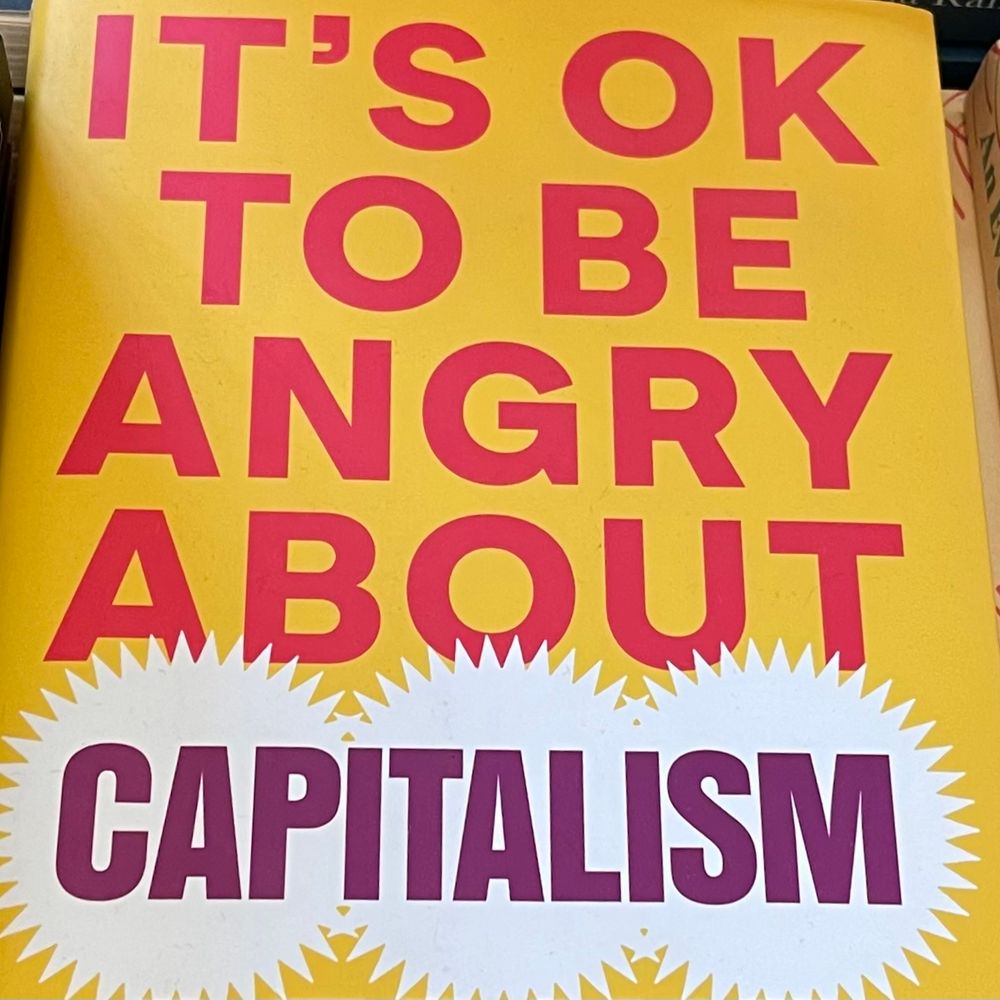
@TheNation. @CapTimes. @freepress. @theprogressive. Tom Paine. Quaker. Latest book (w/ Sen. Bernie Sanders): NYT bestseller: It’s OK to be Angry About Capitalism.
Union organizer, English teacher, horror dork, derby enforcer, book glutton, rabid Chicagoan, coffee junkie, metaphorical nazi-puncher