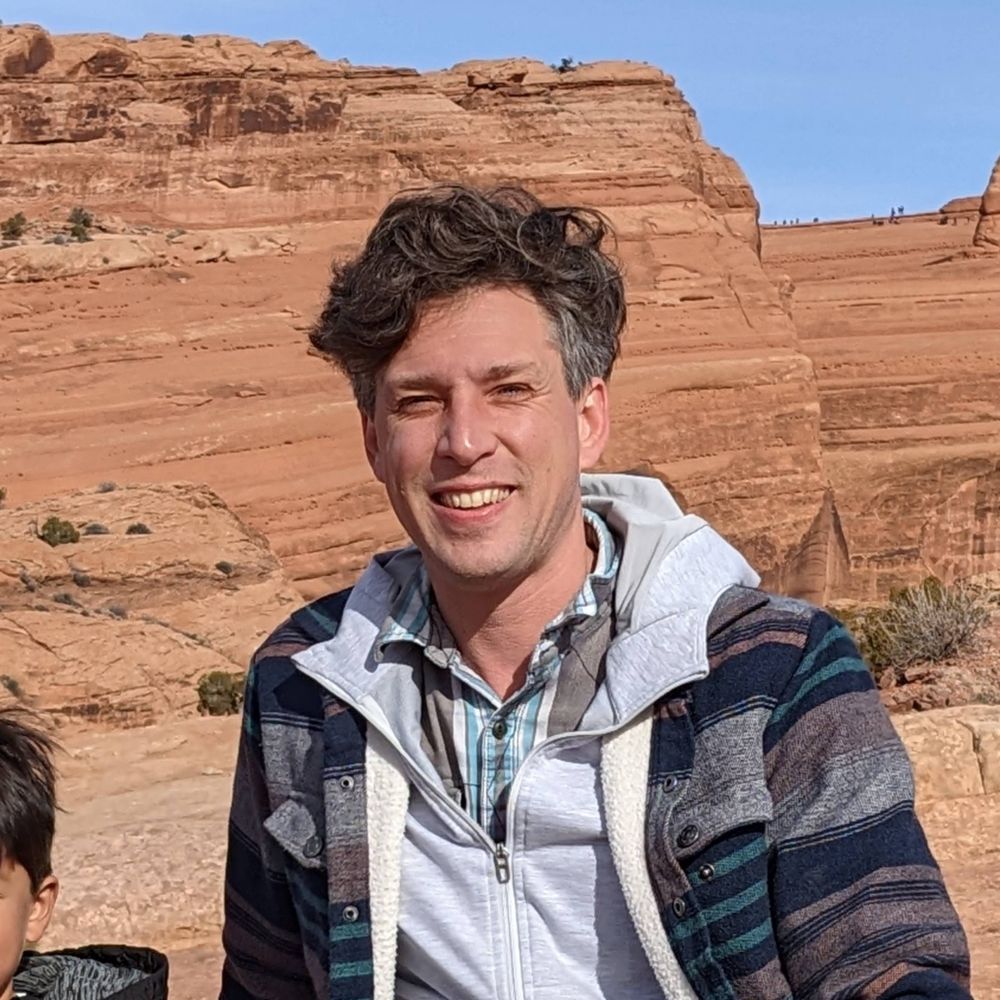
Happy to answer questions if you're interested. More about the lab and our research here: thenormanlab.com
04.02.2026 15:22 — 👍 0 🔁 0 💬 0 📌 0
Research Technician, Norman Lab
About Us: The people of Memorial Sloan Kettering Cancer Center (MSK) are united by a singular mission: ending cancer for life. Our specialized care teams provide personalized, compassionate, expert ca...
We're also hiring a research technician. This is an opportunity to learn CRISPR screening and single-cell genomics directly from the people who developed these approaches. Previous techs have gone on to great biotech roles and graduate programs.
msk.wd108.myworkdayjobs.com/MSKCC_Career...
04.02.2026 15:22 — 👍 0 🔁 0 💬 1 📌 0
We're looking for a postdoc with expertise in ECM biology, fibrosis, or mechanobiology who wants to apply functional genomics tools to their questions OR someone with a technology development background who wants to help build new methods.
msk.wd1.myworkdayjobs.com/MSKCC_Career...
04.02.2026 15:22 — 👍 0 🔁 0 💬 1 📌 0

My lab at MSKCC in New York is hiring for two positions. Join us at the frontier of functional genomics, studying fibroblast state transitions, combinatorial genetics, and ECM in disease. Please share with anyone who might be a good fit! (Mustache not required.)
04.02.2026 15:22 — 👍 7 🔁 2 💬 1 📌 0
bsky.app/profile/norm...
20.01.2026 15:07 — 👍 0 🔁 0 💬 0 📌 0
In my excitement I forgot to actually link the preprint!
www.biorxiv.org/content/10.6...
20.01.2026 15:06 — 👍 5 🔁 0 💬 0 📌 1
These technologies open several future directions in large-scale genetics.
The lab is actively recruiting postdoctoral fellows and technicians. If you’re interested in working at the frontiers of experimental genomics, please get in touch!
20.01.2026 13:42 — 👍 3 🔁 0 💬 1 📌 0
This project has been ongoing nearly since the start of my lab. Huge thanks to lead authors Anran (Angel) Tang and Rico Ardy for years of persistence, and to Rafaela Mendes for foundational early work during the height of COVID.
20.01.2026 13:42 — 👍 2 🔁 0 💬 1 📌 0
One key implication: we think comprehensive genetic interaction mapping among all human genes may be within reach. Scaling to ~10,000 expressed genes would require ~2.5 billion lineages—about 100× beyond what we show here.
20.01.2026 13:42 — 👍 2 🔁 0 💬 1 📌 0
Why AP-1? Our results show that it responds to diverse biological processes. So AP-1 activity provides a readout with fitness-like breadth without requiring large changes in cell growth or death, enabling interaction mapping at much larger scale.
20.01.2026 13:42 — 👍 1 🔁 0 💬 1 📌 0

Using PORTAL with an AP-1 reporter, we measured 665,856 pairwise perturbations across 612 genes and 46 million clonal lineages.
To our knowledge, this is the largest exhaustively measured GI map in human cells, and the first at this scale with a non-fitness phenotype.
20.01.2026 13:42 — 👍 2 🔁 0 💬 1 📌 0

Finally, we developed a dual-sgRNA PORTAL vector using compact “mini” Pol III promoters. These pieces together enable systematic genetic interaction mapping, our main application.
(P.S. The same cassette can also be used for dual-sgRNA CROP-seq experiments.)
20.01.2026 13:42 — 👍 1 🔁 0 💬 1 📌 0

Each clonal lineage thus becomes an independent replicate. (We show that single-cell resolution is also possible via combinatorial indexing.)
For example, here we see knockdown of KDM5C increasing AP-1 reporter activity across hundreds of lineages.
20.01.2026 13:42 — 👍 1 🔁 0 💬 1 📌 0

The PORTAL vector actually produces two transcripts:
• a pathway-responsive reporter
• a constitutive identity transcript for normalization
Both carry the sgRNA and a clonal barcode in their 3′ ends, linking phenotype to lineage.
20.01.2026 13:42 — 👍 1 🔁 0 💬 1 📌 0

To address the second bottleneck, we developed PORTAL (Perturbation Output via Reporter Transcriptional Activity in Lineages).
Instead of reading perturbation identity from genomic DNA, PORTAL encodes perturbation effects in expressed transcripts.
20.01.2026 13:42 — 👍 1 🔁 0 💬 1 📌 0
CAP cloning should be broadly useful wherever transformation is limiting, including lineage tracing, MPRAs, combinatorial protein or antibody engineering, toxic ORF libraries, synthetic biology circuits, and, as we show, new scales of functional genomic screens…
20.01.2026 13:42 — 👍 2 🔁 0 💬 1 📌 0

The result is extremely even, high-complexity libraries.
For example, we cloned a library of 812 × 812 guide pairs × 120,000 clonal barcodes (~80 billion elements), recovering 99.99% of guide pairs with near-Gaussian representation.
20.01.2026 13:42 — 👍 3 🔁 0 💬 1 📌 0

CAP cloning instead assembles and amplifies linear DNA in vitro, then uses TelN protelomerase to generate exonuclease-resistant, covalently closed molecules that package directly into lentivirus.
(Shoutout to Touchlight who pioneered this chemistry.)
20.01.2026 13:42 — 👍 3 🔁 0 💬 1 📌 0
In traditional cloning, you construct plasmids in vitro and then transform them into bacteria to amplify. That transformation step is where complexity dies, as anyone who has failed to clone a library has experienced firsthand.
20.01.2026 13:42 — 👍 0 🔁 0 💬 1 📌 0
The first and likely most broadly useful advance is CAP cloning (Covalently closed Assembly Products), a new approach for cloning ultracomplex lentiviral libraries by avoiding bacterial transformation.
20.01.2026 13:42 — 👍 1 🔁 0 💬 1 📌 0
Two bottlenecks limit scaling. First, even constructing very large perturbation libraries is hard. Second, most screens read out only a single molecule per cell—the sgRNA—which is an inefficient use of cells.
We address both with new technologies.
20.01.2026 13:42 — 👍 1 🔁 0 💬 1 📌 0
Genome-wide pooled CRISPR screens have been transformative tools. But many important problems lie beyond genome scale: mapping genetic interactions, interpreting variants, and perturbing regulatory elements all require far more perturbations than current methods support.
20.01.2026 13:42 — 👍 1 🔁 0 💬 1 📌 0

New preprint on technologies to scale up CRISPR screens.
We use them to map 665,856 pairwise genetic perturbations and outline a path to comprehensive interaction mapping in human cells.
We also introduce an approach for cloning lentiviral libraries with billions of elements.
20.01.2026 13:42 — 👍 88 🔁 41 💬 2 📌 3
A mouse organoid platform for modeling cerebral cortex development and cis-regulatory evolution in vitro: Developmental Cell www.cell.com/developmenta...
27.08.2025 15:09 — 👍 12 🔁 5 💬 0 📌 2
There’s more to come in this space, but I am thrilled to see this work finally published. Huge thanks to first authors Kaden Southard and Rico Ardy, and co-authors Anran Tang, Deirdre O'Sullivan, Eli Metzner, and Karthik Guruvayurappan.
06.08.2025 15:14 — 👍 2 🔁 0 💬 0 📌 0
We posit that this state antagonism can potentially be exploited therapeutically to ablate the disease-associated inflammatory state. More broadly, as perturbation atlases grow there may be an opportunity to map a regulatory graph of states defined by antagonistic interactions.
06.08.2025 15:14 — 👍 1 🔁 0 💬 1 📌 0

Inflammatory fibroblasts secrete collagen. This enabled a striking experiment visualizing “state antagonism.” The pro-inflammatory TF EGR3 increases collagen expression, while the pro-universal TF KLF4 decreases it. When both are activated together, the effects cancel out.
06.08.2025 15:14 — 👍 0 🔁 0 💬 1 📌 0
Takehome 4: There is a regulatory logic underlying transcriptional states. We noticed that TFs that promoted the universal fibroblast state often appeared to be repressors of the inflammatory state. What then happens if we try to drive cells into both states at the same time?
06.08.2025 15:14 — 👍 1 🔁 0 💬 1 📌 0

These comparisons let us identify TFs driving four fibroblast states described in the literature: universal, inflammatory, myofibroblast, and antigen presentation. Our in vitro signatures flag these subpopulations across four independent fibroblast atlases in a new main figure.
06.08.2025 15:14 — 👍 1 🔁 0 💬 1 📌 0
MD PhD student in Lareau Lab, MSKCC / Charité Berlin
Learning from algorithms that learn from data about gene regulation.
Assistant Professor at Baylor College of Medicine and Texas Children's Hospital. Houston, TX
Science: disorder, condensates, repeats, cell stress, neurodegeneration, drug discovery, synbio Non-science: art, fashion, cooking
www.boeynaemslab.org
postdoctoral researcher at the MPI for biological intelligence I development & evolution of the brain I interactions of transcription factors
faculty at NYU School of Medicine. We use advanced microscopy techniques to understand gene expression. Opinions my own. timotheelionnet.net
*The necessity and power of random, under-sampled experiments in biology...
*🍫-🐭, PERTURB-CAST, RUBIX...
Assistant Professor at Baylor College of Medicine & Texas Children's Hospital | Human genetics and single-cell genomics | Formerly Columbia Med & Duke
Instructor in Lymphoma at Memorial Sloan Kettering and postdoc in the Abdel-Wahab and Vinogradova labs | Big problems, small molecules 🏳️🌈
Group leader @crg.eu | Cell fate engineering and single-cell technology | A Taiwanese 🇹🇼
Scientist NRC, Prof. Associe, Universite de Montreal et
Affiliate member Goodman Cancer Institute McGill University. Functional genomic in cancer and immune cells, Cell engineering, gene editing, CRISPR/Cas. Views are my own
Cancer Research UK Career Development Fellow at the Wellcome Sanger Institute - gene editing - drug resistance - cancer
Decoding biology at the single-cell level @RelationRx 🧬 | ML + Genomics for drug discovery | Innovation Lab
Associate Professor at USC. Genetics/Stats/ML. Husband and father. GA➡️CA. He/him. Views are mine.
www.mancusolab.com
Assistant Professor at U of Kentucky Medicine 🐾
Functional Genomics of Neural Activity and Animal Behavior at the single cell level
🧬genes->🚥pathways->🧠circuits->🐭behavior
Assistant Professor
UAB Biochemistry & Molecular Genetics
Functional Genomics | Neuroepigeneticist, chromatin enthusiast | #epigenetics #singlecell Views/posts my own. She/her
Whitehead Career Development Professor at MIT Department of Biology and Koch Institute for Cancer Research. Building tools to understand and modulate regenerative capacity across tissues.
RNA biology lab studying cell fate and cell identity in the context of embryonic development and disease @Goethe University
#ribosome #translational_control #RBP #splicing #RNA_localizatilzon
https://kurianlab.com/
Alum:@salkinstitute @yeo lab, UCSD
LMCB Group Leader at UCL. Cis-regulatory control of cell fate choice in development.
https://delaslab.com/
PhD candidate in the Hornung Lab || Prev @Astrazeneca @GSK
Assistant Professor at Harvard HEB | Genetic basis of human evolution with a neuro focus | janetsonglab.com