Structural biologist Alexey Amunts launches new research lab in Shenzhen
‘Shenzhen adds another dimension; it is a place where ideas do not remain ideas for long,’ Amunts says of new position.
We're launching a research lab at SMART. Shenzhen Medical Academy for Research and Translation is a newly established institute with long-term funding mechanisms for internal and external investigators. At full capacity SMART aims to support up to 400 labs.
www.scmp.com/news/china/s...
06.02.2026 05:33 — 👍 66 🔁 18 💬 2 📌 2
3 - Builds on work from @hauryliuk.bsky.social & @wilsonlab.bsky.social.
Big thanks to our collaborators Liz Petfalski, Tamer Butto and Stefan Pastore, and huge kudos to main heroes from Winz lab: Max Müller and Lena Tittel, as well as @kaushikiyer.bsky.social, and Alina-Andrea Kraft!
01.02.2026 21:51 — 👍 1 🔁 1 💬 0 📌 0
Bacterial defense via RES-mediated NAD+ depletion is countered by phage phosphatases
Many bacterial defense systems restrict phage infection by breaking the molecule NAD+ to its constituents, adenosine diphosphate ribose (ADPR) and nicotinamide (Nam). To counter NAD+ depletion-mediated defense, phages evolved NAD+ reconstitution pathway 1 (NARP1), which uses ADPR and Nam to rebuild NAD+. Here we report a bacterial defense system called aRES, involving RES-domain proteins that degrade NAD+ into Nam and ADPR-1″-phosphate (ADPR-1P). This molecule cannot serve as a substrate for NARP1, so that NAD+ depletion by aRES defends against phages even if they encode NARP1. We further discover that some phages evolved an extended NARP1 pathway capable of overcoming aRES defense. In these phages, the NARP1 operon also includes a specialized phosphatase, which dephosphorylates ADPR-1P to form ADPR, a substrate from which NARP1 then reconstitutes NAD+. Other phages encode inhibitors that directly bind aRES proteins and physically block their active sites. Our study describes new layers in the NAD+-centric arms race between bacteria and phages and highlights the centrality of the NAD+ pool in cellular battles between viruses and their hosts. ### Competing Interest Statement The authors have declared no competing interest. European Research Council, ERC-AdG GA 101018520 Israel Science Foundation, MAPATS grant 2720/22 Deutsche Forschungsgemeinschaft, SPP 2330, grant 464312965 Minerva Foundation with funding from the Federal German Ministry for Education and Research research grant from Magnus Konow in honor of his mother Olga Konow Rappaport Ministry of Aliyah and Immigrant Absorption, https://ror.org/05aycsg86 Clore Scholars Program
🧬 Metabolic arms race continues!
We discovered a new NAD⁺-depleting bacterial immune system aRES and phage enzymes that overcome it.
Our preprint is out: www.biorxiv.org/content/10.6...
29.01.2026 11:20 — 👍 29 🔁 17 💬 1 📌 5
Have a look at our new structure of co translational folding in yeast. This is collaborative work initialized by the Rospert lab from the @uni-freiburg.de. Structural work has been done by the amazing @lgrundmann.bsky.social Stay tuned for the next ribosome paper from him, following very soon.
19.01.2026 11:09 — 👍 41 🔁 15 💬 1 📌 0
Bacterial defense via RES-mediated NAD+ depletion is countered by phage phosphatases
Many bacterial defense systems restrict phage infection by breaking the molecule NAD+ to its constituents, adenosine diphosphate ribose (ADPR) and nicotinamide (Nam). To counter NAD+ depletion-mediated defense, phages evolved NAD+ reconstitution pathway 1 (NARP1), which uses ADPR and Nam to rebuild NAD+. Here we report a bacterial defense system called aRES, involving RES-domain proteins that degrade NAD+ into Nam and ADPR-1″-phosphate (ADPR-1P). This molecule cannot serve as a substrate for NARP1, so that NAD+ depletion by aRES defends against phages even if they encode NARP1. We further discover that some phages evolved an extended NARP1 pathway capable of overcoming aRES defense. In these phages, the NARP1 operon also includes a specialized phosphatase, which dephosphorylates ADPR-1P to form ADPR, a substrate from which NARP1 then reconstitutes NAD+. Other phages encode inhibitors that directly bind aRES proteins and physically block their active sites. Our study describes new layers in the NAD+-centric arms race between bacteria and phages and highlights the centrality of the NAD+ pool in cellular battles between viruses and their hosts. ### Competing Interest Statement The authors have declared no competing interest. European Research Council, ERC-AdG GA 101018520 Israel Science Foundation, MAPATS grant 2720/22 Deutsche Forschungsgemeinschaft, SPP 2330, grant 464312965 Minerva Foundation with funding from the Federal German Ministry for Education and Research research grant from Magnus Konow in honor of his mother Olga Konow Rappaport Ministry of Aliyah and Immigrant Absorption, https://ror.org/05aycsg86 Clore Scholars Program
We found a new mode by which bacteria deplete NAD+ to protect from phages. And then we found how phages overcome this defense
Discovered by talented biochemist Dr Ilya Osterman, read the preprint: tinyurl.com/Narp-ap
A thread 🧵
29.01.2026 15:34 — 👍 44 🔁 15 💬 2 📌 0
Active transport of tRNAs facilitates distributed protein synthesis https://www.biorxiv.org/content/10.64898/2026.01.26.698744v1
27.01.2026 22:30 — 👍 10 🔁 9 💬 0 📌 0

🚀 CryoSPARC v5.0 BETA is here!
We’re excited to deploy another major #CryoSPARC release to help enable and accelerate #cryoEM data analysis. v5 has a redesigned underlying software system and many new features - highlights in thread!
Full changelog: cryosparc.com/updates/v5.0.0
27.01.2026 20:36 — 👍 63 🔁 31 💬 1 📌 1

New Preprint alert! Excited to share our latest work on the #MAPKinases from stellar PhD student Jill von Velsen. First structures of the MAP2K MEK1 activating its substrate MAPK between 2.9 and 3.6A - amazing resolutions for such a small and mobile complex! www.biorxiv.org/content/10.6...
22.01.2026 09:56 — 👍 21 🔁 8 💬 1 📌 0

🧪Scientists from our Haselbach lab captured how proteins begin to fold as they’re being made.
Using cryo-EM, they visualised chaperones guiding nascent proteins on the ribosome: https://www.nature.com/articles/s41467-025-67685-6
19.01.2026 09:40 — 👍 50 🔁 16 💬 1 📌 1
We’re thrilled to share our latest iTP-seq protocol for mapping bacterial translation landscapes in vitro — with a complete experimental workflow streamlined by Mélanie Gillard and an open source Python library for data analysis developed by Thibaud Renault.
17.01.2026 14:22 — 👍 12 🔁 9 💬 1 📌 0

Discovery and development of a new oxazolidinone with reduced toxicity for the treatment of tuberculosis @naturemedicine.bsky.social
www.nature.com/articles/s41...
15.01.2026 01:58 — 👍 14 🔁 8 💬 0 📌 0

Only in Shenzhen: Science Nature coffee bar. If you’ve published in @science.org or @nature.com, they give you coffee for free. 100% real!
10.01.2026 10:41 — 👍 95 🔁 21 💬 16 📌 6

Energy-landscape model of RF2 activation. Comparison of termination complexes (TC), wild-type ArfA-bound nonstop elongation complexes (nsECs), and loss-of-function ArfA mutant-bound nsECs reveals that wild-type ArfA promotes RF2 docking to nsECs by reshaping the conformational cascade.
Slightly overdue article highlight!
In PNAS, we use smFRET to reveal how polypeptide release factor 2 (RF2) undergoes a cascade of structural changes to catalyze polypeptide release during translation termination and ArfA-mediated ribosome rescue.
🧵⬇️
doi.org/10.1073/pnas...
05.01.2026 16:27 — 👍 19 🔁 11 💬 1 📌 0

Cryo-Electron Microscopy
Cold Spring Harbor Laboratory Meetings & Courses -- a private, non-profit institution with research programs in cancer, neuroscience, plant biology, genomics, bioinformatics.
Interested in learning or strengthening skills in #CryoEM single particle analysis? Apply for the CSHL cryo-EM course happening in March! This is a super intense 2 week course covering theory up through data deposition. Apps due Jan 9! Info here: meetings.cshl.edu/courses.aspx...
30.12.2025 16:16 — 👍 5 🔁 5 💬 0 📌 0

Happy Holidays from the Feaga Lab!
Strain credit to Kevin England @kevinengland.bsky.social and streaking/photo credit Katrina Callan.
25.12.2025 15:19 — 👍 22 🔁 1 💬 0 📌 0
In this study, we highlight the importance of the base composition of the first codons for protein expression. An increased abundance of adenine (A) and a decrease in guanine (G) enhance expression and improve mRNA stability. The mediator of this effect is the ribosome.
23.12.2025 10:31 — 👍 10 🔁 7 💬 0 📌 0

CryoEM folks, If you want to handle huge STAR file efficiently in Python, please try starfile-rs!
github.com/hanjinliu/star…
Reading a motion data of a particle from a 15 MB file is just like this ↓🤩
23.12.2025 14:52 — 👍 31 🔁 9 💬 4 📌 0
A 1.25 A!!! cryo EM structure of rubisco.
24.12.2025 11:15 — 👍 23 🔁 9 💬 0 📌 0

Mechanism of cotranslational modification of histones H2A and H4 by MetAP1 and NatD
NAC enables cotranslational N-terminal processing of histones H2A and H4 by recruiting MetAP1 and NatD at the ribosomal tunnel.
Last X-Mas, the ribosome gave you methionine,
but the very next day, MetAP took it away.
This year, to save histones from tears,
NatD gives you an acetyl group. ⭐️
Explore our latest paper with the Deuerling lab @uni-konstanz.de and Shu-ou Chan lab @caltech.edu!
www.science.org/doi/10.1126/...
20.12.2025 00:34 — 👍 46 🔁 17 💬 0 📌 0
We are a research lab located in Paris, France.
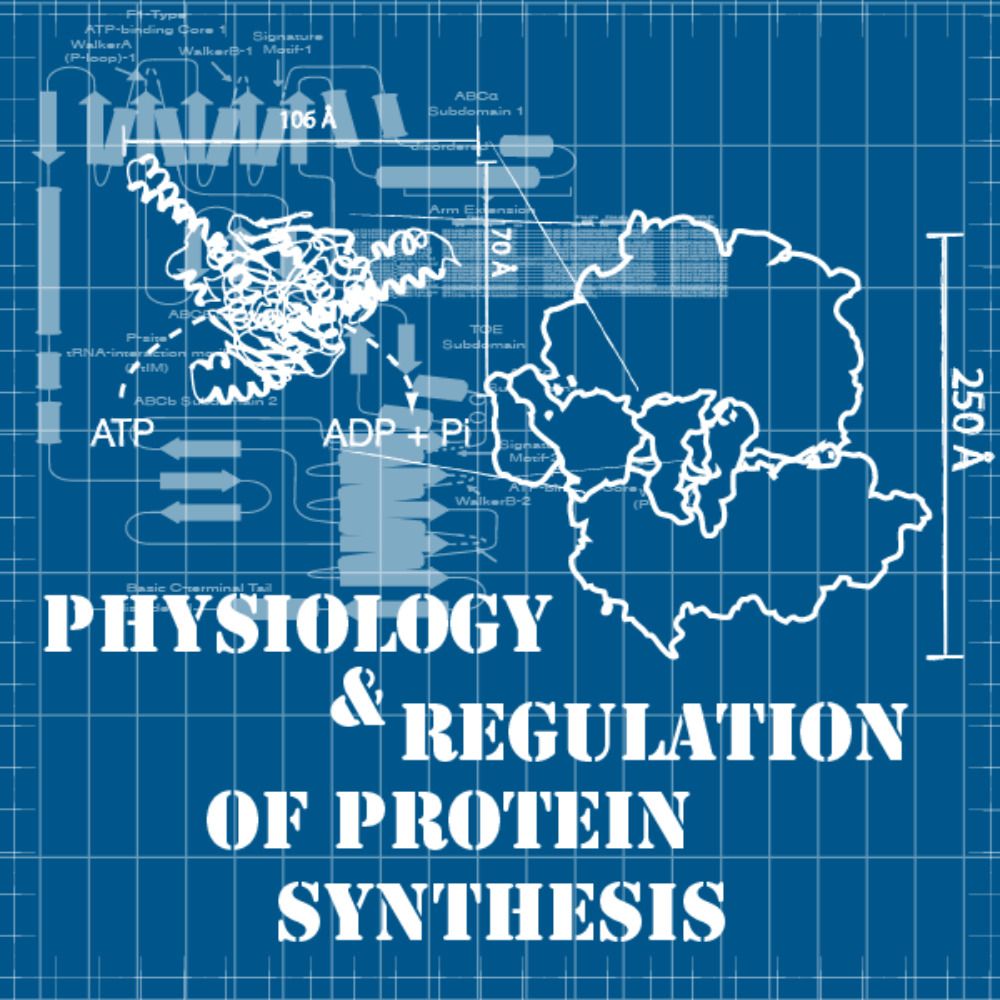
We work on the fundamental aspect of protein synthesis mechanisms and regulations.
Ribosome is life. Posts by grads/postdocs, approved (sometimes) by Rachel Green.
@Johns Hopkins Medical Institute
https://greenlabjhmi.org
Senior Research Associate, microbiologist, biochemist, The Sorek lab, Weizmann Institute of Science
Assistant Professor in structural biology (💎 & 🔬)
Structural Biology of the Cell - BIOC
École polytechnique - Institut Polytechnique de Paris - Palaiseau -France.
Prof for chemical biology at ETH Zurich
Interested in: genetic code expansion - chembio tools - bioorthogonal chemistries - PTMs - Ub in all its shades - protein engineering
Wellcome Sir Henry Dale Fellow and PI at the University of York, UK. He/him 🏳️🌈 Interested in #RNA, #ribosomes, #cryo-EM, #crystallography and #virus gene expression, 🔬🧬
https://www.hill-lab.co.uk
Also piano 🎹🎶
www.youtube.com/@chillzaa
Translation mechanisms team @BIOC @CNRS.bsky.social @Ecole Polytechnique @IP-Paris.bsky.social
Archaea Ribosome Evolution CryoEM
MSCA post-doctoral researcher at Förster lab, Utrecht university.
SPA guy trying to navigate Tomo.
Lover of big protein complexes and even bigger scopes.
I'm new here. #structuralbiology #cryoem
We are interested in #archaea,#regulation,#ncRNA,#smallproteins & novel biomolecules from nature, CAU Kiel
https://www.mikrobio.uni-kiel.de/de/ag-schmitz-streit
Views are our own
Dpt. for #MolecularSociology @mpibp.bsky.social
https://www.biophys.mpg.de/molecular-sociology
Director of Biology @ Interdict Bio | Previously @ Nogales Lab (Berkeley), Schwartz Lab (MIT), Green Lab (Johns Hopkins) | Drug discovery, ribosomes, protein & RNA biochemistry, cryo-EM, cryo-ET.
Assistant Professor @ ISTA
Using cryo-EM to understand how bacteria defend themselves
https://bravo-lab.org/
cryoEM, structural biology, ribosomes
https://www.genzentrum.uni-muenchen.de/research-groups/beckmann/index.html
We study proteostasis and cellular degradation machines in mycobacteria.
weber-ban-lab.ethz.ch
RNA enthusiast and allophone @ Université de Montréal
We use structural biology and biochemistry to study protein complexes involved in RNA metabolism
A lab of #RNA lovers, obsessed with #tRNA, #mRNA, #ribosomes, and #translational control in health and disease.
Briggs group at MPI Biochemistry
Department of Cell and Virus Structure
Cryo-EM, tomography, CLEM, coated vesicles, enveloped viruses.