Something a friend just pointed out that would make management of this species a bit unique: these “Panthers” probably lay clutches of eggs.
16.02.2026 03:19 — 👍 6 🔁 0 💬 0 📌 0

A black-and-white pencil sketch depicting a cross-section of the ground where a large Kerguelen “Panther” has been caught in a foothold trap. The trap is attached by a chain to two crossed pieces of metal rebar embedded in the ground, and surrounding these poles the ground has been worn down into a very shallow depression in what is called a “trap circle”. The large carnivore with its front paw held in the trap looks a bit like an earless big cat with large incisors, but is actually a carnivorous Tritylodont. A stick-figure person is standing just outside the trap circle to the left, looking at the “Panther”. As these traps are made to restrain rather than seriously injure caught animals, this individual may simply be relocated away from people and livestock.
Wildlife management is difficult, doubly so with large carnivores (partly because it’s also people management). No different when the “panther” in question is a 200+ pound non-mammalian Cynodont on a subantarctic island. A modern scene from my Kerguelen spec-evo project. #specevo #tritylodont
16.02.2026 03:04 — 👍 21 🔁 7 💬 1 📌 0
This past year was so epic in terms of Cenozoic discoveries
13.02.2026 19:41 — 👍 1 🔁 0 💬 0 📌 0

Scale chart of various Cenozoic animals described in 2025. Scale bar is 1 meter

Scale chart of various Cenozoic animals described in 2025. Scale bar is 1 meter

Scale chart of various Cenozoic animals described in 2025. Scale bar is 1 meter
Our belated #Cenozoicrewind2025 wrap up! As always thanks for following along, here's to a big 2026!
#paleoart #sciart #fossilfriday
13.02.2026 18:49 — 👍 69 🔁 25 💬 4 📌 0

Certified Little Guy™
13.02.2026 15:03 — 👍 34 🔁 11 💬 0 📌 0
HONSE
12.02.2026 19:30 — 👍 0 🔁 0 💬 0 📌 0

Horses of some familiar colors:
12.02.2026 19:27 — 👍 35 🔁 7 💬 1 📌 0

A photograph of a tiny, pale purple and white Field Pansy flower amongst smaller green plants and the tan, dry stems of bermudagrass. A close-up photo in a suburban lawn.

A close-up bird’s eye view of four Field Pansies growing next to each other in a suburban lawn, their pale purple flowers standing out amongst the tan and green foliage of other tiny forbs and grasses.
Something that brought me a smile recently, the Field Pansies in my yard have returned. In this little slice of suburbia, these native violets briefly appear and bloom each year as winter transitions to spring. #spring #flowers #botany #nativeplants
12.02.2026 19:03 — 👍 7 🔁 1 💬 0 📌 0
Oh wow
12.02.2026 17:06 — 👍 0 🔁 0 💬 0 📌 0
Indeed, these would be pretty prickly animals. They’re a mix of scales and osteoderms but I may experiment with other keratin bits.
11.02.2026 19:12 — 👍 2 🔁 0 💬 0 📌 0
This paper is an amazing overview of the population, and they’re fascinating!
11.02.2026 17:43 — 👍 0 🔁 0 💬 0 📌 0

A photograph of two pencil sketches on a piece of white paper, taken at a bit of a skewed angle. Both sketches are lateral-view depictions of armored herbivorous dinosaurs, with the sketch at the top of the photo depicting a small, slender, bipedal species while the sketch below it represents a massive, robust quadruped with elaborate horns. Both are fictional concepts for a speculative-evolution project focusing on an alternative natural history of the Kerguelen plateau.
How it started vs how it was when the French found it
Quick sketches of some thyreophorans for a WIP personal speculative-evolution project, focusing on the ecosystems of an un-sunken Kerguelen plateau. #specevo #dinosaurs
11.02.2026 17:42 — 👍 27 🔁 4 💬 1 📌 0
Beautiful!
07.02.2026 13:34 — 👍 1 🔁 0 💬 0 📌 0

A new species of scrub-ox joins North America's Ovibovine diversity during the Pleistocene!
Formerly classified as a species of Euceratherium, it is now known as Speleotherium logani.
05.02.2026 21:33 — 👍 49 🔁 18 💬 1 📌 0
This is gorgeous!
05.02.2026 22:59 — 👍 1 🔁 0 💬 0 📌 0

The ontogeny of Smilodon fatalis- illustrating the unique life history of a saber-toothed cat's development.
05.02.2026 21:43 — 👍 48 🔁 19 💬 1 📌 0
 04.02.2026 16:15 — 👍 31 🔁 11 💬 2 📌 0

A young chipmunk, its head slightly cocked to the side, poses on a moss-covered rock, bathed in the warm sunlight of late morning.
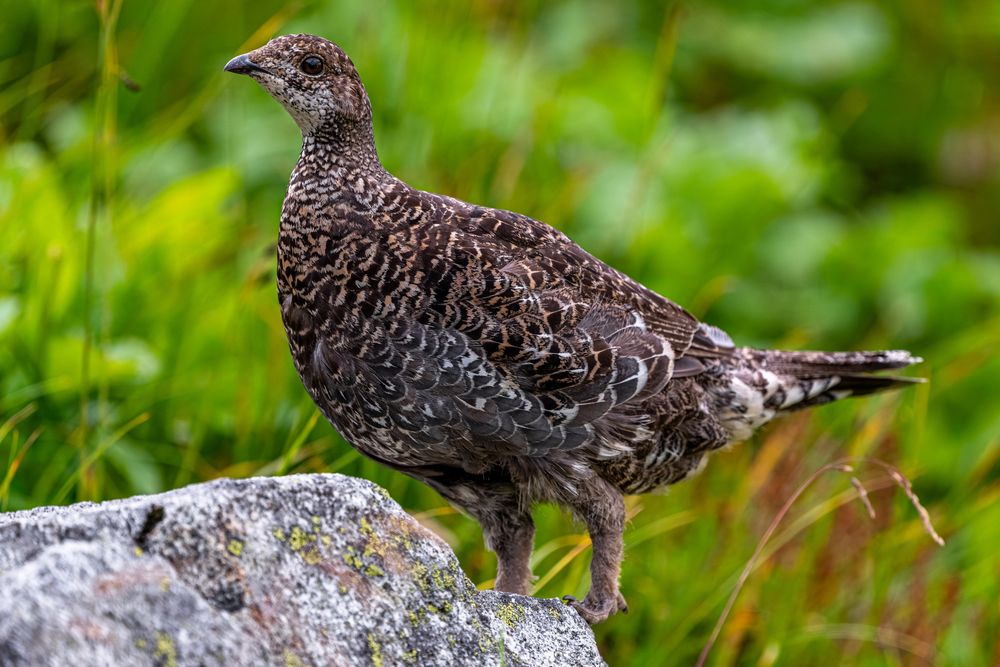
A sooty grouse, a wild bird reminiscent of a cross between a chicken and a dove, pauses briefly on a rock as it works its way up a hillside.

A young marmot stands on its back legs while grazing on the lush grass of an alpine meadow.

A pika caught mid-yawn, stretching its paw toward the camera and flashing its prominent front teeth.
More late summer gems from the North Cascades
28.08.2025 17:08 — 👍 1629 🔁 161 💬 16 📌 5

A pika sits on a mossy rock.

Tighter crop of the same pika, focusing on its head.

An even tighter crop, focusing more on the pika's eye.
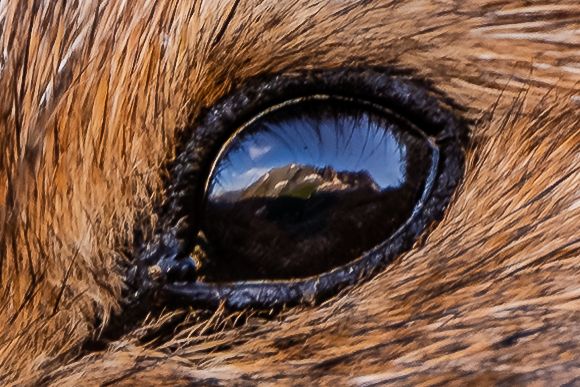
An extremely tight crop of the pika's eye, emphasizing their reflection of an early morning mountain scene.
"Pat, why do you carry that ridiculous 600mm lens on long hikes?"
Buddy, I can see mountains reflected in the eyes of a trailside pika.
28.08.2025 16:18 — 👍 43898 🔁 10992 💬 643 📌 450
YouTube video by Keenan Taylor's Tales of Kaimere
Year of the Horse Episode I: Natural History of Perissodactyls in Kaimere
An overview of perissodactyl natural history in the known world and beyond: www.youtube.com/watch?v=2BeM...
03.02.2026 16:19 — 👍 26 🔁 16 💬 1 📌 0
The tiny sample size of extant rhinos and horses that we have today are extremely derived from the basic ungulate condition in their own ways, and it’s not like manes leave a correlate on bones so stuff like that is a huge untapped well of speculation in artistic depictions.
03.02.2026 13:39 — 👍 2 🔁 0 💬 1 📌 0
Tapirs still retain a pretty large rhinarium and are closer to rhinos than horses are, so it’s reasonable that Rhinocerotids and Equus convergently lost it. Only one tapir (T. terrestris) has a tiny mane, and some large bovids convergently have manes, so it’s hardly ancestral to perissodactyls.
03.02.2026 13:37 — 👍 2 🔁 0 💬 2 📌 0

A rough black-and-white pencil sketch of the early equine Merychippus in a running pose with its head held high. Its snout is drawn to resemble that of a deer rather than a modern horse, it has no mane, and it has a duiker-like tail. An oval-shaped bulge on its snout between the eye and the nostril hints at the deep pocket (preorbital fossae) in nearly all non-Equus equid skulls, still mysterious in function but potentially housing a unique sort of scent gland.
Quick sketch of everyone’s beloved Merychippus, though not as it’s often depicted. These and other early Equines were far-removed in phylogeny, morphology, and ecology from the genus Equus, and thus, why give it a mane or rhinarium-less snout? #YearoftheHorse #miocene #paleoart #sciart
03.02.2026 03:17 — 👍 60 🔁 16 💬 2 📌 1
EQUUS OVODOVI OMG
29.01.2026 01:10 — 👍 2 🔁 0 💬 0 📌 0

A selection of Pleistocene Perissodactyls:
29.01.2026 01:05 — 👍 53 🔁 16 💬 2 📌 0

Morphological assessment of the Common Barn Owl Tyto alba (Strigiformes: Tytonidae) supports three species
| Zootaxa
Morphological assessment of the Common Barn Owl Tyto alba (Strigiformes: Tytonidae) supports three species: mapress.com/zt/article/v...
28.01.2026 18:23 — 👍 2 🔁 1 💬 0 📌 0
The UK's only free-ranging reindeer herd in their natural habitat, located in the Cairngorm Mountains.
Wildlife ecologist | Red wolves and coyotes
Wolf Conservation Center | Senior Research Scientist
The Wolf Conservation Center (WCC) is a non-profit organization that promotes wolf conservation by teaching about wolves and their role in our world.
nywolf.org
Artist, photographer, and author of 12 books from Yale University Press, on the natural history of the Atlantic coast. Latest book: "A Field Guide to the Connecticut River." More personal stuff on facebook.com/patrick.lynch1
The only combined zoo and aquarium in the Pacific Northwest.
https://linktr.ee/Carlosarty
20, deaf, and Texan
I’m not just your typical opossum guy… I am THE American marsupials guy!
🎨 I post lots of my works, photographs, 2D/3D artwork, and facts here (Mainly animal)
🧪ancient DNA sleuth, ex-Environmental Protection Agency (EPA) Scientist-Archive explorer. Fond of Museums, Madagascar, Mummies, Crocodiles & Conservation. #BeKind ❤️ posts mine (🌏🌍🌎)
Fighting for #Science and #STEM!
Follow for news and content surrounding #HumanOrigins, #RockArt!
Links - https://linktr.ee/worldofpaleoanthro
Father, Husband, Stoic, Animist, Paleoanthropologist, STEAM, Science Communicator, Book Lover, FUCK TRUMP!
Official page of the American Museum of Natural History in New York City. Open daily, 10 am–5:30 pm.
https://linktr.ee/amnh
Greetings!
18+
He/Him
South Asian-American
I'm an amateur writer and illustrator, seeking to tell ecological stories about how civilization and nature intersect. I especially love to draw an write about dragons, so you'll see a lot of them around here!
絵や図表を作るコミュ障、独特な鋏角類やラディオドンタ類を嗜む節足動物厨
Introvert illustrator and arthropod enjoyer. Mainly fond of unique chelicerates and radiodonts.
詳細/Details:http://twpf.jp/ni075
All images belong to their original owners. See http://possumeveryhour.io for more places where to find your poss fix.
🌳 The Scotland arm of the UK's largest woodland conservation charity.
💚 We create, protect & restore native woods & trees for people & wildlife, to combat climate change & build a greener future.
🌐 www.woodlandtrust.org.uk/scotland/
Political Ecology, Hominins, Art
I draw extinct and extant creatures, make clay minis, and post neat photos!
Instagram: @loam_lizzard
She/her
UConn 2025 B.S. Earth Science