The impact is a "textbook case of climate injustice."
90% of homes in some impacted areas are made of sun-dried earth - structures that simply cannot withstand rainfall of this intensity.
Vulnerable communities are paying the price for a crisis they didn't cause. (3/4)
29.01.2026 10:18 — 👍 2 🔁 2 💬 1 📌 0
The current weak La Niña phase naturally brings wetter conditions to the region, but it is now operating in a much warmer, moisture-rich world.
While still a rare 1-in-50 year event, climate change acted as a "force multiplier," turning a heavy rain event into a more deadly deluge. (2/4)
29.01.2026 10:18 — 👍 1 🔁 1 💬 1 📌 0

💡New Study: Southern Africa was hit by intense rainfall this month. Our analysis has found that downpours in the region are now 40% more intense than they were in pre-industrial times.
The resulting floods across Mozambique, South Africa, Zimbabwe, and Eswatini have been catastrophic. 🧵 (1/4)
29.01.2026 10:18 — 👍 25 🔁 19 💬 1 📌 1

A map of southeastern Australia showing the temperature anomalies during the heatwave.
While Australian heatwaves were some of the very first extreme events attributed to climate change, people still underestimate how much worse they got - killing more people than all other natural hazards combined. New @wwattribution.bsky.social study. www.worldweatherattribution.org/climate-chan...
22.01.2026 13:55 — 👍 188 🔁 118 💬 0 📌 6
Those with access to cooling relied heavily on solar - which met 60% of the peak demand during the heatwave - a major contrast from the fossil-fuel heavy responses to previous heatwaves. 5/6
22.01.2026 13:03 — 👍 15 🔁 0 💬 1 📌 0
That has a human cost: Melbourne’s airport saw temperatures top out at 44.4°C on Jan 9 and one hospital reported a 25% spike in emergency admissions. Heatwaves kill more Australians than all other natural hazards combined. 4/6
22.01.2026 13:03 — 👍 36 🔁 9 💬 2 📌 2
Yet the world continues to heat with 2.6°C of warming expected by the end of the century under current global policies. This would turn a once rare event into a normal part of the Australian summer. 3/6
22.01.2026 13:03 — 👍 10 🔁 0 💬 1 📌 0

Even with a weak La Niña - which typically brings cooler weather - fossil fuel emissions "far outweighed" natural cooling. This heatwave was 1.6°C hotter than it would have been in a world without human-caused warming. 2/6
22.01.2026 13:03 — 👍 12 🔁 0 💬 1 📌 0

🚨 NEW STUDY: As Australia prepares for another heatwave, our latest study found the early January heatwave which hit SE Australia was made 5x more likely due to climate change. What was once a relatively rare 1-in-25-year event is now expected about every 5 years. 🧵 1/6
22.01.2026 13:03 — 👍 92 🔁 53 💬 2 📌 4

Record temperatures linked to human-caused climate change
New research by climate scientists at Maynooth University in conjunction with Met Éireann has found Ireland's record summer night time temperatures this year were made 40 times more likely by human-ca...
Great to see coverage of our first full @wasitusie.bsky.social study on RTE (and elsewhere). Kudos @clairebergin.bsky.social and Lionel swan as well as met Éireann colleagues and thanks as ever to @wwattribution.bsky.social for the hugely valuable collaboration www.rte.ie/news/ireland...
24.09.2025 05:45 — 👍 16 🔁 11 💬 0 📌 1

Spain and Portugal wildfire weather made 40 times more likely by climate crisis, study finds
Wildfires were 30% more intense than would have been expected without global heating, scientists say
🚨 Wildfires in Spain & Portugal were made 40x more likely by climate breakdown, says @wwattribution.bsky.social
“The sheer size of these fires has been astonishing,” adds CEP’s Clair Barnes (@clairbarnes.bsky.social) 🌍🔥
#ClimateCrisis #Wildfires
05.09.2025 09:04 — 👍 23 🔁 13 💬 0 📌 3

⚠️Climate change made the hot, dry and windy weather that fueled the deadly July wildfires in Spain and Portugal 40 times more likely 🧵
📝 ow.ly/SoRo50WPvih
04.09.2025 09:34 — 👍 51 🔁 30 💬 1 📌 1
Extreme fire weather conditions in Spain and Portugal now common due to climate change – World Weather Attribution
The extremely hot, dry weather conditions that primed Spain and Portugal for this year's catastrophic wildfire season are no longer a rare occurrence thanks to human-caused warming. This probably shouldn't come as a surprise, but if it does, the full study is @wwattribution.bsky.social...
04.09.2025 10:19 — 👍 9 🔁 3 💬 0 📌 0
📣Job alert!
We're hiring a Media Relations Manager at Imperial College London. Applications are closing tomorrow.
www.jobs.ac.uk/job/DOK861/m...
04.09.2025 08:52 — 👍 8 🔁 5 💬 0 📌 0
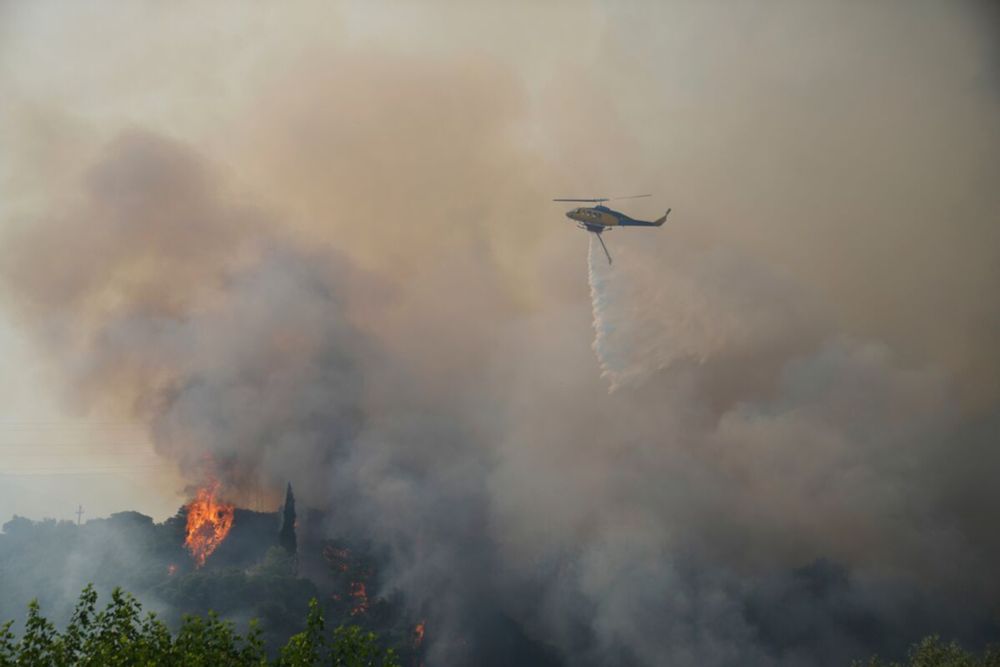
Climate Change Made Turkey, Greece Wildfires 10 Times More Likely
Hot, dry and windy conditions in the eastern Mediterranean will happen more often in a warmer world.
🌡️ Scientists from @wwattribution.bsky.social say this summer’s wildfires in Greece, Turkey & Cyprus were 22% more intense & 10x more likely due to climate change.
Events that were once 1-in-100-year now happen every 20 years. 🔥
#ClimateCrisis #Wildfires
29.08.2025 15:04 — 👍 7 🔁 6 💬 0 📌 0

How science links extreme weather disasters to climate change: Interview with WWA’s Clair Barnes
Human activities have been the major driver of climate change since the advent of the Industrial Revolution in the mid-1800s. As greenhouse gas levels, primarily carbon dioxide due to the burning of…
In an interview at @mongabay.com, @wwattribution.bsky.social researcher and environmental statistician @clairbarnes.bsky.social explains how attribution science, which helps scientists understand climate change’s impact on a particular extreme weather event, works.
31.08.2025 16:11 — 👍 16 🔁 5 💬 1 📌 1

map of the Aegean coast depicting change in vapour pressure deficit due to climate change
One of the strongest, clearest increases in likelihood & intensity, attributable to climate change, I've seen in a complex index like fire weather - the more intense & frequent events in Greece & Türkiye are already outpacing efforts to adapt.
www.worldweatherattribution.org/weather-cond...
28.08.2025 08:41 — 👍 119 🔁 74 💬 2 📌 6

🔥Climate change made the weather that drove deadly wildfires in Türkiye, Greece and Cyprus 22% more intense.
The study, by @wwattribution.bsky.social, examined weather conditions in the months and days leading up to and during the worst blazes in June and July this year 🧵
28.08.2025 09:23 — 👍 22 🔁 20 💬 3 📌 2

Climate Change Made Turkey, Greece Wildfires 10 Times More Likely
Hot, dry and windy conditions in the eastern Mediterranean will happen more often in a warmer world.
The wildfires that raged across Greece, Turkey and Cyprus this summer were 22% more intense and 10 times more likely than they would have been in a world without climate change, according to scientists at @wwattribution.bsky.social
FREE link via @bloomberg.com
www.bloomberg.com/news/article...
28.08.2025 08:36 — 👍 116 🔁 59 💬 2 📌 5

How science links extreme weather disasters to climate change: Interview with WWA’s Clair Barnes
Human activities have been the major driver of climate change since the advent of the Industrial Revolution in the mid-1800s. As greenhouse gas levels, primarily carbon dioxide due to the burning of f...
Attributing extreme weather events to #climatechange is tricky
But since 2014, the international network of researchers World Weather Attribution has pioneered methods that make it possible
My @mongabay.com colleague spoke w/ @wwattribution.bsky.social's @clairbarnes.bsky.social to learn more:
25.08.2025 17:13 — 👍 47 🔁 16 💬 0 📌 0

Imperial researchers take leading role in major IPCC climate report | Imperial News | Imperial College London
Imperial has more authors contributing to a crucial report on climate change than any other organisation in the world.
🌍 Leading the charge on climate action
@imperialcollegeldn.bsky.social has 11 IPCC AR7 authors - the most of any institution!
CEP’s Joeri Rogelj, Friederike Otto, Robin Lamboll & Jarmo Kikstra are shaping the science behind global policy.
#IPCC #ClimateAction
20.08.2025 11:01 — 👍 7 🔁 3 💬 0 📌 0

Sunset over the sea with a big rock in the sea, distorting the light reflecting from the setting sun
In July Fennoscandia was hit by a heatwave similar to one that hit the region in 2018. In just seven years, similar events have become almost twice as likely due to increased global temperatures from 1.1 to 1.3°C.
Every fraction of a degree matters! www.worldweatherattribution.org/intense-two-...
14.08.2025 19:19 — 👍 73 🔁 31 💬 0 📌 1
After the Texas floods, when is the right time to ask what went wrong?
The rare window to ask tough questions opens after a disaster. Too often, it closes before accurate answers can emerge.
“Even if climate change plays a big role in the weather event, what turns weather into a disaster is always strongly shaped by vulnerability and exposure".
Read @wwattribution.bsky.social Dr @frediotto.bsky.social's comments for @grist.org on the Texas Floods: grist.org/extreme-weat...
19.08.2025 09:43 — 👍 16 🔁 10 💬 0 📌 0
YouTube video by Climate Analytics
Flash floods kill more than 300 in Pakistan
Our Senior Scientist @fahadiii.bsky.social speaks to BBC News about how the fatal floods in Pakistan were made 15% more intense due to climate change.
"If you consider that Pakistan's role in total emissions is less than 1%, it's a big case of climate injustice," he says
@wwattribution.bsky.social
18.08.2025 11:18 — 👍 41 🔁 22 💬 0 📌 0

For the full study ▶️ www.worldweatherattribution.org/intense-two-...
📷: Amanda Nilsson
14.08.2025 16:59 — 👍 6 🔁 2 💬 0 📌 1
Indigenous Sámi have herded reindeer for more than 1000 years. But now, hotter summers cause reindeer to overheat and seek relief in urban areas. Warmer winters mean more snow falls as rain and alternating freeze and thaw creates layers of ice that prevent reindeer from digging for food.
14.08.2025 16:58 — 👍 7 🔁 4 💬 1 📌 0
Climate Comms. Former journalist.
📚Book award recognising the power of stories in shifting climate narratives
💡Inspiring writers to reimagine our future
Working on Climate Attribution Analysis for Ireland,
Climate scientist | Mathematics
Climate scientist, director ICARUS Climate Research Centre, Maynooth University, Ireland, author IPCC AR6, member Ireland's climate change advisory council, Chair GCOS AOPC. www.peter-thorne.net
Researcher at the Finnish Meteorological Institute. Climate change, extreme weather and attribution of extreme events. PhD in meteorology from the University of Helsinki.
ClimaMeter is a rapid framework for understanding extreme weather events in a changing climate based on looking at similar past weather situations. Follow our study on https://www.climameter.org
News and expert comment from the London School of Hygiene & Tropical Medicine (LSHTM) one of the world's leading #PublicHealth universities. https://linktr.ee/lshtm
Je suis Directeur de recherche CNRS en sciences du climat au laboratoire LSCE de l’Université Paris-Saclay, et auteur principal du 7eme rapport du GIEC. Mon expertise principale est l’attribution des événements météorologiques extrêmes
The #CopernicusClimate Change Service (#C3S) & #CopernicusAtmosphere Monitoring Service (CAMS), implemented by @ecmwf.int on behalf of the @ec.europa.eu.
Director of Programs at Red Cross Red Crescent Climate Centre; Sn. Advisor at American Red Cross; Visiting Researcher at University of Twente; Mng. Comm. Global Heat Health Information Network
Climate reporter @ Sky News, covering energy, climate change and the environment. Panel moderator and speaker.
https://news.sky.com/author/victoria-seabrook-795
Climate, extinction, and biodiversity scientist at the University of Maine researching Earth’s past for a better future. Writing and podcasting for the planet. Chaotic good professor. She/her.
Prof of Atmospheric Sciences & climate scientist @ Texas A&M; AGU and AAAS Fellow; Native Texan; find out what I think at https://www.theclimatebrink.com/
PhD, climate scientist @lsce-ipsl.bsky.social @CEAParisSaclay @IPSL_outreach @hc_climat. Was co-chair @ipcc.bsky.social (AR6 WGI). Member of French Academy of Technology and Academy of Sciences.
Climate policy scientist, cofounded NewClimate Institute, former professor at Wageningen, IPCC author since 2003. The views shared here are my own.
#Climate & #biodiversity emeritus scientist, professor of global #ecology, #CNRS, MedECC, #IPCC, Acad. d'Agriculture de France.
Occasional rail travel and bicycle geek. 🇩🇪 🇫🇷 🇬🇧 🇸🇪 🇳🇴 https://tinyurl.com/wcrame
Climate policy researcher at the Potsdam Institute for Climate Impact Research. I work on emissions trends, policy evaluation, carbon dioxide removal and climate obstruction. Scot in Deutschland. https://lambwf.github.io/
Scientist/Author/Speaker; Presidential Distinguished Prof/Director Center for Science, Sustainability & the Media, U. Penn; National Academy of Sciences; Royal Society; Tyler Prize
Macro-energy systems engineering, optimization & policy. Associate professor at Princeton University. Leads the ZERO Lab. Co-hosts SHIFT KEY podcast. Time100 Next & TIME100 Climate honoree. More at linkedin.com/in/jessedjenkins & zero.lab.princeton.edu