Nvm!
27.01.2026 22:50 — 👍 1 🔁 0 💬 0 📌 0
I’m confused, is this satire or real?
27.01.2026 22:48 — 👍 0 🔁 0 💬 1 📌 0
Very nice analysis. I may have missed it, but did this take into account the baseline 10% MYF that NIH has most years?
23.01.2026 01:08 — 👍 1 🔁 0 💬 1 📌 0
Where do you see 40%? I thought MYF was going to be limited to 2025 levels, which was about 25%
22.01.2026 15:36 — 👍 0 🔁 0 💬 0 📌 0
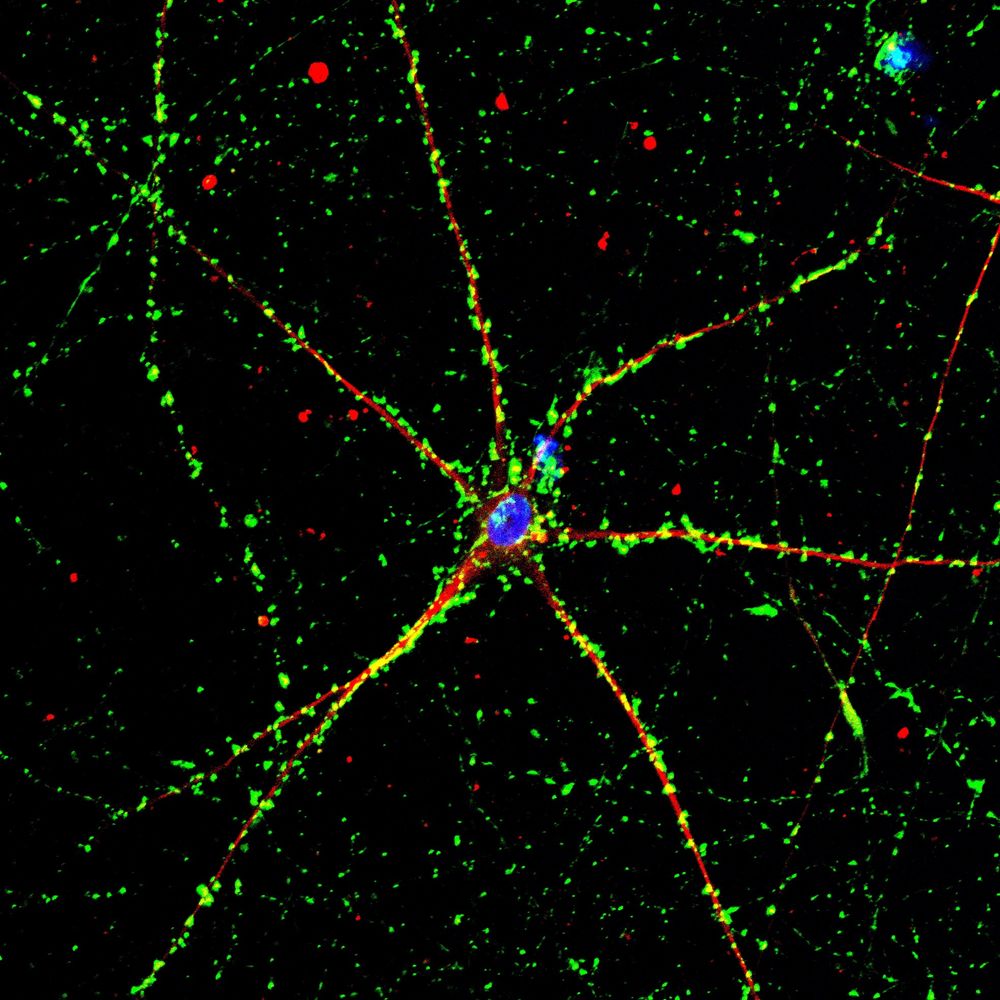
Looks like early neuro differentiation to me. Maybe SOX2 and TUJ1 or MAP2?
19.01.2026 13:33 — 👍 1 🔁 0 💬 1 📌 0
No it’s actually the overall acceptance rate. 65% of submissions get peer reviewed.
04.01.2026 19:12 — 👍 1 🔁 0 💬 1 📌 0
I’m surprised at the relatively high (35-45%) acceptance rate, given the quality of the journal! They must get very good submissions in general.
03.01.2026 23:52 — 👍 2 🔁 0 💬 1 📌 0
3/ also, in the context of PTA’s other films, I think it’s even less likely that this movie should be interpreted as anything other than artists trying to make interesting art.
29.12.2025 01:53 — 👍 0 🔁 0 💬 0 📌 0
2/ or go -100% and make up an entirely new universe with new laws of physics. My impression is the author thought this movie was something that it wasn’t, i.e. a vessel to promote (or disparage) specific political and cultural movements.
29.12.2025 01:51 — 👍 2 🔁 0 💬 1 📌 0
1/ I didn’t interpret the movie as making any attempt to do anything other than be a movie. I don’t think it was designed as political messaging, or to perfectly reflect any specifics about current or past American culture or politics. Movies can go documentary style with 100% adherence to real life
29.12.2025 01:49 — 👍 0 🔁 0 💬 1 📌 0
Help me, I don’t get it
21.12.2025 20:31 — 👍 0 🔁 0 💬 1 📌 0
Wow!
20.12.2025 01:07 — 👍 1 🔁 0 💬 0 📌 0
I think this is likely, at least in steady state. They may be more important in cell lineage or cell state changes, but overall they seem to do very little for gene expression. E/P interactions seem to form before, and independently from, TADs, after mitosis
19.12.2025 01:48 — 👍 2 🔁 1 💬 0 📌 0
2/ dynamic, doesn’t fuse or exhibit fission, and doesn’t exhibit concentration-dependent behavior, it can’t have formed through LLPS right?
01.12.2025 22:37 — 👍 0 🔁 0 💬 0 📌 0
1/ I think it’s falsifiable (in theory) to hypothesize that a specific body formed through LLPS, but not that LLPS exists *somewhere* in the cell. You can’t falsify the latter bc it’s not feasible, but you could falsify whether a specific body formed through LLPS, right? If it is not spherical,
01.12.2025 22:36 — 👍 0 🔁 0 💬 1 📌 0
Can LLPS exist in cells without scaffolds, as defined here? IOW is your critique about the proposed mechanism of LLPS, or LLPS in cells in general?
30.11.2025 15:24 — 👍 1 🔁 0 💬 1 📌 0
I’d appreciate a nomination
19.11.2025 19:12 — 👍 1 🔁 0 💬 0 📌 0
Is there any evidence that this is an academia problem, rather than a society problem? I find we academics tend to talk about academia like everything about it is "special" in some way, but 99% of the ppl I know well are non-academics, and all the bad stuff happens outside too, often more so
17.11.2025 21:49 — 👍 0 🔁 0 💬 0 📌 0
Great job market we scientists are in
05.11.2025 01:37 — 👍 0 🔁 0 💬 0 📌 0
20/ in summary, this "iPSC-Xon" system overcomes critical limitations in current transgene systems in hPSC-based work, and will benefit from additional improvements. I'm on the job market and would love to bring and improve this technology to other researchers!
02.11.2025 14:35 — 👍 0 🔁 0 💬 0 📌 0

19/ strangely, leaky SALL1 is not due to unwanted splicing in the absence of drug, but rather the unspliced pre-mRNA somehow escapes the nucleus and is translated in-frame to make the full-length protein. We still don't know how this works.
02.11.2025 14:35 — 👍 0 🔁 0 💬 1 📌 0
18/ we thought larger transgenes (Cas9 is ~4kb) might be more prone to disrupting the Xon splicing switch, so we tried the ~4kb SALL1 TF, a critical driver of microglia homeostatic function. In contrast with EGFP, Xon-SALL1 is fully leaky and shows aberrant splicing patterns.
02.11.2025 14:34 — 👍 0 🔁 0 💬 1 📌 0

17/ we also show that we can get inducible gene editing with Xon hPSCs, but only if sgRNAs are introduced transiently (panels C-E). Cas9 must have enough leakiness for maximal editing with constitutive lentiviral sgRNA introduced into hPSCs (A-B)
02.11.2025 14:32 — 👍 0 🔁 0 💬 1 📌 0

16/ what about other genes? Here we show Xon works for inducible control of GRN expression, and we can overexpress GRN in iPSC-derived microglia, which already express boatloads of it. P2A peptides improve both GRN and SMAD, and importantly reduce N-terminal tag to a single aa.
02.11.2025 14:31 — 👍 0 🔁 0 💬 1 📌 0
15/ a couple important points here: in addition to resisting silencing and being highly tunable, Xon adds only 24aa N-terminal tag (see below where we reduce it to 1aa) and needs only low nM drug doses, whereas degrons add ~500bp tags to BOTH termini to be effective, and need low uM drug doses.
02.11.2025 14:30 — 👍 0 🔁 0 💬 1 📌 0

14/ a note of caution is that while background EGFP is minor compared to even the lowest drug induced expression levels, this may need mitigation when using TFs or other strong cell state regulators
02.11.2025 14:30 — 👍 0 🔁 0 💬 1 📌 0

13/ Here's the commonly used H1 ESC background, differentiated into microglia with an embryoid body protocol (we used EB and monolayer)
02.11.2025 14:29 — 👍 1 🔁 0 💬 1 📌 0

12/ quantification shows how tunable this system really is! Below the 100nM dose, linear correlations between drug dose and EGFP is basically perfect both before and after differentiation
02.11.2025 14:29 — 👍 0 🔁 0 💬 1 📌 0

11/ again with AAVS1-targeted EGFP, what we saw was remarkable: first time we've ever seen robust inducibility after long differentiations, this time 4-7 weeks, across hPSC backgrounds and differentiation protocols!
02.11.2025 14:28 — 👍 0 🔁 0 💬 1 📌 0
Associate Professor, MIT
Still thinking about the 10^9 mutations generated in your microbiome today.
Website: http://lieberman.science
Functional genomicist & Assistant Professor at The University of Texas Medical Branch at Galveston. https://www.ward-lab.org/
Science and fun from the lab of Tony Hyman at the MPI-CBG @mpicbg.bsky.social. Tweets by Hymanlab members.
https://hymanlab.org/
Director, Dept. of Mechanistic Cell Biology, Max Planck Institute of Molecular Physiology, Dortmund (DE). Opinions my own
Created by @columbiauniversity.bsky.social to be the world's foremost neuroscience institute, we are deciphering the brain — how it develops, works, endures and recovers.
Penn Epigenetics Institute at The University of Pennsylvania Perelman School of Medicine, Philadelphia, PA
Neuroscience PhD student at UCSF
Mostly about grants. Some about education.
Scientist. Mother. Captain's wife. Loves numbers.
https://cncr.nl/ctg/
Immunology-focused research in cancer & aging | understanding immune evasion & resilience | improving health outcomes. 🔗 https://genelayinstitute.org/
#Brigham&WomensHospital #MassGeneralHospital @HarvardMed.bsky.social
Immunologist 👨🔬 studying genetic variation 🧬. Assistant prof at Benaroya Research Institute and affiliate faculty at UW Immunology. My views only.
Mourning the days when all we talked about was font choice, reference styles and glam humping.
Postdoc in @liganlab.bluesky.social at Weill Cornell Medicine interested in resilience and microglia in neurodegeneration • Vanderbilt Neuro PhD ‘22 • Kenyon College ‘17 • 1st gen Egyptian-American
Group of passionate scientists unraveling the mysteries of neurodegeneration at Weill Cornell Medicine 🧠 | Tackling Alzheimer’s, FTD, PD & related diseases 🧬 | Focused on tau, innate immunity, & targeted therapeutics using iPSC & transcriptomics🔬
The Haass lab account | 🇩🇪 @DZNE_de @SyNergy_Cluster Munich | 🔬AD, FTLD & microglia research | 🕵️ PI Christian Haass (signed -CH) | 💬 Posts by @lisdeweerd.bsky.social
Chief Scientific Officer, Lieber Institute and Professor, Johns Hopkins School of Medicine studying molecular regulation across species in circuits impacted in complex brain disorders. Native plants/flowers/wetland habitats. Own opinions.