Ben Wetherall's Avatar

Ben Wetherall

@wetherall.bsky.social

Fertility & Cell-Cycle scientist 🥚🔬 Research Associate with @SuzanneMadgwick.bsky.social NCL UK

69 Followers  |  135 Following  |  6 Posts  |  Joined: 13.12.2023  |  1.38

Latest posts by wetherall.bsky.social on Bluesky

Dear Sir Paul,

Re: Royal Society Code of Conduct

I am sure that many scientists have written to you about the specific question of Elon Musk’s Fellowship and whether, under the Royal Society’s Code of Conduct, his retaining that Fellowship is appropriate. I will not rehash these issues.  Instead, as a female scientist with extensive experience of activities aiming to increase equality, diversity and inclusion in the engineering and physical sciences sector, I am writing to you (in a personal capacity) to ask you to reconsider the statements you have recently made in this context to the UK press about the Royal Society’s Code of Conduct and how it is applied.  

A 2018 report  from the joint National Academies of the United States of America, concluded that “sexual harassment is common in academic science, engineering, and medicine” and that “greater than 50 percent of women faculty and staff and 20–50 percent of women students encounter or experience sexually harassing conduct in academia”.  This report described codes of conduct that make clear that sexual harassment is unethical and will not be tolerated as a “powerful incentive for change”. The authors also noted that sexual harassment can have significant and damaging effects on the integrity of research.  In my own praxis, I have found that clear and consistently-implemented codes of conduct that address these issues make female scientists and engineers safer, and allow them to focus more effectively on their research.  For codes of conduct to have such a positive effect, it is vital that sanctions for actions which transgress the code are meaningful and substantial.

Dear Sir Paul, Re: Royal Society Code of Conduct I am sure that many scientists have written to you about the specific question of Elon Musk’s Fellowship and whether, under the Royal Society’s Code of Conduct, his retaining that Fellowship is appropriate. I will not rehash these issues. Instead, as a female scientist with extensive experience of activities aiming to increase equality, diversity and inclusion in the engineering and physical sciences sector, I am writing to you (in a personal capacity) to ask you to reconsider the statements you have recently made in this context to the UK press about the Royal Society’s Code of Conduct and how it is applied. A 2018 report from the joint National Academies of the United States of America, concluded that “sexual harassment is common in academic science, engineering, and medicine” and that “greater than 50 percent of women faculty and staff and 20–50 percent of women students encounter or experience sexually harassing conduct in academia”. This report described codes of conduct that make clear that sexual harassment is unethical and will not be tolerated as a “powerful incentive for change”. The authors also noted that sexual harassment can have significant and damaging effects on the integrity of research. In my own praxis, I have found that clear and consistently-implemented codes of conduct that address these issues make female scientists and engineers safer, and allow them to focus more effectively on their research. For codes of conduct to have such a positive effect, it is vital that sanctions for actions which transgress the code are meaningful and substantial.

I was hence aghast to realise that in an interview with the Financial Times  published on 9/1/26, you appear to have suggested that the Royal Society “should only expel fellows if their science proved “faulty or fraudulent or highly defective””.  Moreover, in a further interview with the Guardian  on 11/1/26 you suggested that the code “may need to be looked at again”, with the implication that your aim would be to remove the option of sanctions on Fellows for reasons not strictly related to faults or defects in their research. 

I suggest that changing the Royal Society’s code of conduct so that the likelihood of serious sanctions for sexual harassment is reduced, would directly endanger women who interact with the Royal Society at events or otherwise, and would provide a licence to harass to the already powerful people on whom the Society bestows fellowship.  The implications of your words - that under your leadership the only infringements of the code which are likely to receive the sanction of the Fellowship being removed are those related to research misconduct - already risk empowering harassers.  You stated, in the Financial Times interview, that “there’s many bad people around, but they have made scientific advances”.  Given this awareness of the possibility of bad actors in our scientific community, it is wholly irresponsible to suggest that the Royal Society would not act to sanction these people if they harass more vulnerable scientists.

I am hence writing to request that you retract any suggestion that the Society’s Code of Conduct should be changed so that the only reason a Fellow might be sanctioned by the removal of their Fellowship is “faulty or fraudulent or highly defective” research.  This action is necessary to safeguard female scientists, a requirement placed on the Society by safeguarding legislation and UK statutory guidance. 

Yours sincerely,

Professor Rachel A. Oliver.

I was hence aghast to realise that in an interview with the Financial Times published on 9/1/26, you appear to have suggested that the Royal Society “should only expel fellows if their science proved “faulty or fraudulent or highly defective””. Moreover, in a further interview with the Guardian on 11/1/26 you suggested that the code “may need to be looked at again”, with the implication that your aim would be to remove the option of sanctions on Fellows for reasons not strictly related to faults or defects in their research. I suggest that changing the Royal Society’s code of conduct so that the likelihood of serious sanctions for sexual harassment is reduced, would directly endanger women who interact with the Royal Society at events or otherwise, and would provide a licence to harass to the already powerful people on whom the Society bestows fellowship. The implications of your words - that under your leadership the only infringements of the code which are likely to receive the sanction of the Fellowship being removed are those related to research misconduct - already risk empowering harassers. You stated, in the Financial Times interview, that “there’s many bad people around, but they have made scientific advances”. Given this awareness of the possibility of bad actors in our scientific community, it is wholly irresponsible to suggest that the Royal Society would not act to sanction these people if they harass more vulnerable scientists. I am hence writing to request that you retract any suggestion that the Society’s Code of Conduct should be changed so that the only reason a Fellow might be sanctioned by the removal of their Fellowship is “faulty or fraudulent or highly defective” research. This action is necessary to safeguard female scientists, a requirement placed on the Society by safeguarding legislation and UK statutory guidance. Yours sincerely, Professor Rachel A. Oliver.

Following coverage over the weekend of Sir Paul Nurse's comments that suggested that the only reason that a Fellow should be expelled from @royalsociety.org is scientific misconduct, I have written to him to explain the risks such an attitude poses of increasing sexual harassment in STEM.

12.01.2026 08:59 — 👍 812    🔁 298    💬 25    📌 29
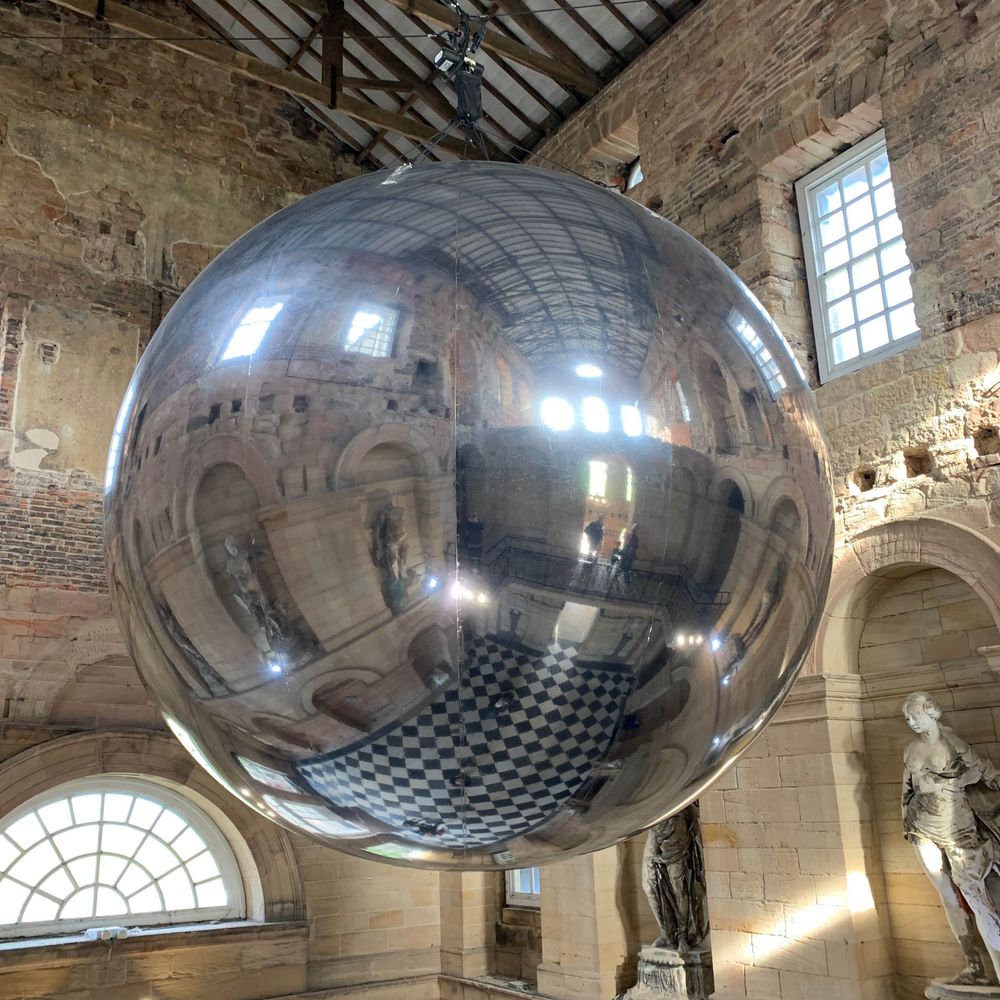
Post image Post image Post image

Capping off the year with some insane and impractical 6x17 photography using my recent obsession - a 3D printed medium format film camera.

17.12.2025 14:37 — 👍 4    🔁 1    💬 0    📌 0
Preview
The official home of the Python Programming Language

TLDR; The PSF has made the decision to put our community and our shared diversity, equity, and inclusion values ahead of seeking $1.5M in new revenue. Please read and share. pyfound.blogspot.com/2025/10/NSF-...
🧵

27.10.2025 14:47 — 👍 6424    🔁 2759    💬 125    📌 452
Post image

POV you're finally home after a week away

20.09.2025 11:27 — 👍 5    🔁 0    💬 0    📌 0
Post image Post image Post image Post image

After an intense week of learning, coding and playing with advanced methods on #BioimageAnalysis, a well deserved BBQ 🔥 to recover our strength 💪 for tomorrow, the last day of the course 😢

Enjoy!

18.09.2025 18:22 — 👍 7    🔁 2    💬 1    📌 1
LISTERS: A Glimpse Into Extreme Birdwatching
YouTube video by owen reiser LISTERS: A Glimpse Into Extreme Birdwatching

I am not a bird watcher. I have no interest in bird watching. But the best piece of media I think I've watched this year was a 2 hour, un-monetised, amateur documentary about extreme bird watching youtu.be/zl-wAqplQAo?...

31.08.2025 17:03 — 👍 1    🔁 0    💬 0    📌 0
Preview
Canonical and Non-canonical Roles of the Nucleolus in Relation to Nucleolar Function in Oocyte Meiosis The nucleolus is the most prominent nuclear organelle in almost all cells including mammalian oocytes and embryos. It is primarily responsible for ribosome biogenesis. However, non-canonical functions...

Excited to see my first book chapter is out with @suzannemadgwick.bsky.social 📖 edited by @binyammogessie.bsky.social

Ever wonder what that big weird nucleolus is up to in oocytes?🥚 No? Well. I think we make a good case for maybe you should! link.springer.com/chapter/10.1007/978-3-031-97173-0_6

22.08.2025 16:32 — 👍 1    🔁 1    💬 0    📌 0

A fantastic primer by Martin Anger highlighting our work on separase control in oocytes! 🥚✂️

@suzannemadgwick.bsky.social @wetherall.bsky.social @plosbiology.org

17.06.2025 10:19 — 👍 6    🔁 3    💬 0    📌 0
Preview
SGO2 does not play an essential role in separase inhibition during meiosis I in mouse oocytes The protease separase plays an important role in cleaving cohesin complexes that hold chromosomes together during cell division. This study analyses the temporal regulation of separase activity during...

Our latest paper in @plosbiology.org examines meiotic Separase regulation doi.org/10.1371/journal.pbio.3003131. We also have a preprint up on BioRxiv identifying a functional and crucial chromosome periphery compartment in oocytes doi.org/10.1101/2024.12.20.629576 with the Booth lab in Nottingham.

26.04.2025 08:27 — 👍 1    🔁 0    💬 0    📌 0
The chromosome periphery (Ki67) in a mammalian prophase oocyte.

The chromosome periphery (Ki67) in a mammalian prophase oocyte.

New paper out = time to actually introduce myself!

I'm Ben, a PDRA in the Egg Lab 🥚 with @suzannemadgwick.bsky.social @ Newcastle University.

I study how oocytes organise chromsomes, developing some cool new tools along the way 🔬 👨‍🔬

Let's talk #fertility, #imaging, and all things science.

25.04.2025 13:59 — 👍 3    🔁 1    💬 1    📌 0

Great collaboration with @suzannemadgwick.bsky.social, led by @wetherall.bsky.social! 🙌🏼🎉

25.04.2025 09:27 — 👍 9    🔁 3    💬 0    📌 0

@wetherall is following 20 prominent accounts