System-level regulation of hierarchical transitions in a tumour lineage
The fundamental principles defining how cell state transitions are regulated along a tumour lineage to determine its cellular composition remain unclear. Here, we investigate how such transitions are controlled in a reductionist hierarchical brain tumour model. Quantitative analysis of 3D transition maps revealed that the differentiation of cancer stem cells (CSCs) into transit amplifying progenitors (TAPs) depends on the identity of their immediate neighbours. This is embodied in a transition rule that quantitatively predicts the probability to differentiate as a function of the proportion of TAP neighbours. Integrated into 3D simulations of tumour growth, this rule spontaneously recapitulates spatial segregation of CSCs in clusters and their stable proportion. We further show in vivo that CSC clustering protects the CSC pool from depletion driven by TAPs. We identify an EGFR-mediated relay mechanism that propagates the CSC-to-TAP transition across CSC clusters. In CSCs, the LRIG1-like EGFR inhibitor Kekkon1 dampens this propagation, ensuring continuous replenishment of the CSC pool. Collectively, these findings show how local fate regulation drives emergent segregation which in turn constrains CSC differentiation dynamics. This provides a conceptual framework to understand and exploit the tumour’s intrinsic differentiation potential by manipulating the determinants of its system-level features. ### Competing Interest Statement The authors have declared no competing interest. Turing Centre for Living Systems (CENTURI) La Ligue Contre le Cancer, https://ror.org/00rkrv905, Equipe Labellisée LIGUE 2025 Fondation pour la Recherche Médicale, ANR-24-EXCI-0001, ANR-24-EXCI-0002, ANR-24-EXCI-0003, ANR-24-EXCI-0004, ANR-24-EXCI-0005 Agence Nationale de la Recherche under the France 2030 program, ANR-24-EXCI-0001, ANR-24-EXCI-0002, ANR-24-EXCI-0003, ANR-24-EXCI-0004, ANR-24-EXCI-0005 Centre South-ROCK, INCa-Cancer_18695
Tumours aren’t just a messy mix of cells—they’re highly organised and hierarchical societies!
Just like in all societies, small chats between individuals can drive collective emergent behaviours - we reveal how these sustain tumour growth and cellular heterogeneity. 🧵👇
28.01.2026 21:53 — 👍 14 🔁 6 💬 2 📌 0


#LivingArchitectures
We put cells and cytoskeleton filaments on the architecture of the musée d'Orsay.
www.musee-orsay.fr/fr/agenda/ev...
Scientists of the #CytoMorphoLab adapted their protocols to illustrate the questions that keep them awake at night.
-> Two shows on the 24th and 25th of January.
05.12.2025 16:11 — 👍 300 🔁 102 💬 19 📌 9

📣 Paper alert!
I am delighted that our paper exploring the impact of Neanderthal-derived variants on the activity of a disease-associated craniofacial enhancer has been published in Development today!
journals.biologists.com/dev/article/...
10.11.2025 11:11 — 👍 123 🔁 49 💬 7 📌 6

Huge congrats to the team of project "PatCorg" for the prestigious ERC Synergy grant dedicated to studying organoids to uncover mechanisms underlying cortical development: A Pierani (@ipnp.bsky.social), S Nedelec (Institut Monod), S Descroix and B Sorre (Institut Curie), and A Baffet (Inst Curie).
08.11.2025 15:47 — 👍 9 🔁 3 💬 0 📌 0
In Memoriam: Daniel Paul Perez - FSHD Society
Written by Howard Chabner, Board Vice Chair, and shared on behalf of the entire FSHD Society Board of Directors The Board of Directors of the FSHD Society is deeply saddened to announce that Dan Perez...
Dan Perez founded the #FSHD Society to foster research & help patients w this painful & debilitating muscular dystrophy. It was a privilege to have known this brave, caring, smart person who was instrumental in getting research money for FSHD, a strange epigenetics-related disease. Melanie Ehrlich
05.11.2025 14:02 — 👍 2 🔁 1 💬 0 📌 0
It was a privilege to have known Dan, a brave, caring, loving, & extremely smart person who was instrumental in getting research money for FSHD, a strange epigenetics-related disease. My deepest sympathy for his lovely and loving wife Sue & for his many devoted friends. Melanie Ehrlich #Epigenetics
04.11.2025 21:22 — 👍 3 🔁 1 💬 0 📌 0

BMP signaling-dependent dorsal-to-ventral gradient of PAX3/7 transcriptional activity revealed by the P34::tk::LacZ reporter. Left: expression patterns of neural progenitor (NP) and interneuron (IN) TF markers in the developing spinal cord. Right: Immunostaining for β-galactosidase (β-gal; red/grey), GFP (blue/grey) and either OLIG3 (green/grey) or pSMAD1/5/9 (green/grey) on transverse sections of E9.0 (bottom) and E9.5 (top) P34::tk::LacZ; Pax3+/GFP spinal cords at brachial level. Black and white panels show magnified views of the boxed region.
How do pleiotropic TFs generate organized diversity in developing tissues? @spinalorga.bsky.social shows that PAX3 & PAX7 organize #SpinalCord by acting as both repressors & pioneer activators, regulated by #morphogens to ensure precise neural subtype specification @plosbiology.org 🧪 plos.io/4qumsla
27.10.2025 17:25 — 👍 21 🔁 10 💬 0 📌 0
Intussusceptive angiogenesis: bridging in vivo and in vitro observations
link.springer.com/article/10.1...
Thanks, Dr. Steven Mentzer and Dr. Maximilian Ackermann🙏 for this insightful highlight of our recent PNAS paper on #IntussusceptiveAngiogenesis😁
www.pnas.org/doi/abs/10.1...
21.10.2025 15:58 — 👍 16 🔁 3 💬 0 📌 0

(Neuro)biologie et société
Voir l’article pour en savoir plus.
🎂 Mon blog (Neuro)biologie et société (neurobiologieetsociete.org) associé au @cafe-sciences.org a 10 ans en ce mois d'octobre 2025 !
neurobiologieetsociete.org
Les 5 billets les plus populaires au cours de ces 10 ans 👇 :
#CultureScientifique #vulgarisationscientifique
14.10.2025 07:23 — 👍 6 🔁 2 💬 1 📌 0

Figure 1 : Schematic representation of the overall study. (A) Spontaneously generated tumours from the Alb-R26Met mouse model were monitored by PC-CT using the PIXSCAN-FLI imaging system. Dissected tumours: 1) were characterized by Haematoxylin and Eosin staining (HES) histological analyses; 2) underwent both mechanical and enzymatical cell dissociation. (B) Dissociated cells were seeded in 2D culture conditions. Primary HCC cells were characterized morphologically and molecularly by RT-qPCR and Western Blots (WB), then used for drug testing. (C) Primary HCC cells were secondarily cultured in 3D condition into Matrigel after few passages in order to generate tumoroids, which were further characterized
Establishment of a mouse hepatocellular carcinoma tumoroid panel recapitulating inter- and intra- heterogeneity for disease modelling and combinatorial drug discovery
biosignaling.biomedcentral.com/articles/10....
another big milestone from the Maina lab @crcm.bsky.social ! Contratulations!
03.10.2025 10:21 — 👍 5 🔁 1 💬 0 📌 0
Ventricle position can be remodeled after heart looping!
In a model of heterotaxy we uncovered a new asymmetric morphogenesis process during which the heart reorients its chambers.
So grateful to all the authors for their expertise and input during this long (but fun) ride 💪
Read more here ⬇️
24.09.2025 19:53 — 👍 20 🔁 8 💬 3 📌 0
Portail Emploi CNRS - Offre d'emploi - Post-doctoral researcher in axon biology (M/F)
✨ Post-doc opportunity in axon biology, funded by #ATIP-Avenir!
👀 We are looking for an enthusiastic post-doc to join our team at @ibdm.bsky.social to explore translation dynamics in axon regrowth, using live imaging approaches.
Apply at: emploi.cnrs.fr/Offres/CDD/U...
Thank you for sharing! 👋 🙏
11.09.2025 12:24 — 👍 13 🔁 10 💬 0 📌 2

OpenEMMU: A versatile, open-source EdU multiplexing methodology for studying DNA replication and cell cycle dynamics
Biochemistry; Cell biology; Developmental biology; Computational bioinformatics
Thrilled to share our new paper: "OpenEMMU: A versatile, open-source EdU multiplexing methodology for studying DNA replication and cell cycle dynamics"!
We've developed a new resource that make this crucial research more accessible, accurate, powerful and low-cost.
www.cell.com/iscience/ful...
02.09.2025 21:44 — 👍 9 🔁 5 💬 2 📌 1
Congrats Osvaldo, very cool work, stunning images and super useful!
03.09.2025 09:52 — 👍 1 🔁 0 💬 1 📌 0
🧠 Position still opened! Don't hesitate to apply if you want to use human pluripotent stem cell based models to understand the evolution of human cerebellar neurons and disorders!
18.08.2025 08:58 — 👍 3 🔁 8 💬 0 📌 0
Neurotrophin-3 produced by motor neurons non-cell autonomously regulate the development of pre-motor interneurons in the developing spinal cord https://www.biorxiv.org/content/10.1101/2025.07.27.665825v1
30.07.2025 08:15 — 👍 1 🔁 1 💬 0 📌 0
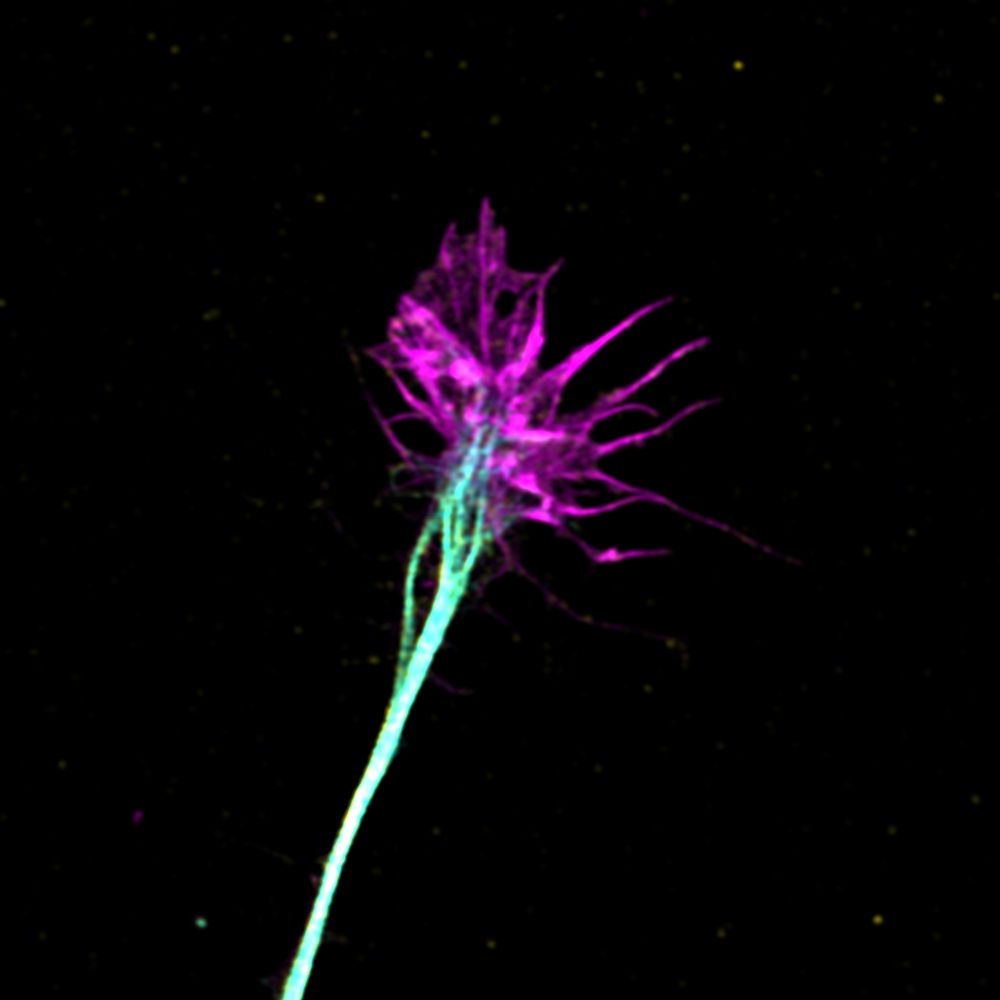
Kicking off the lab BlueSky with this picture of a happy hairy growing #axon!
Looking forward to connecting with science chats and to growing research ideas 🧠🔬✨
12.07.2025 10:05 — 👍 64 🔁 12 💬 0 📌 2
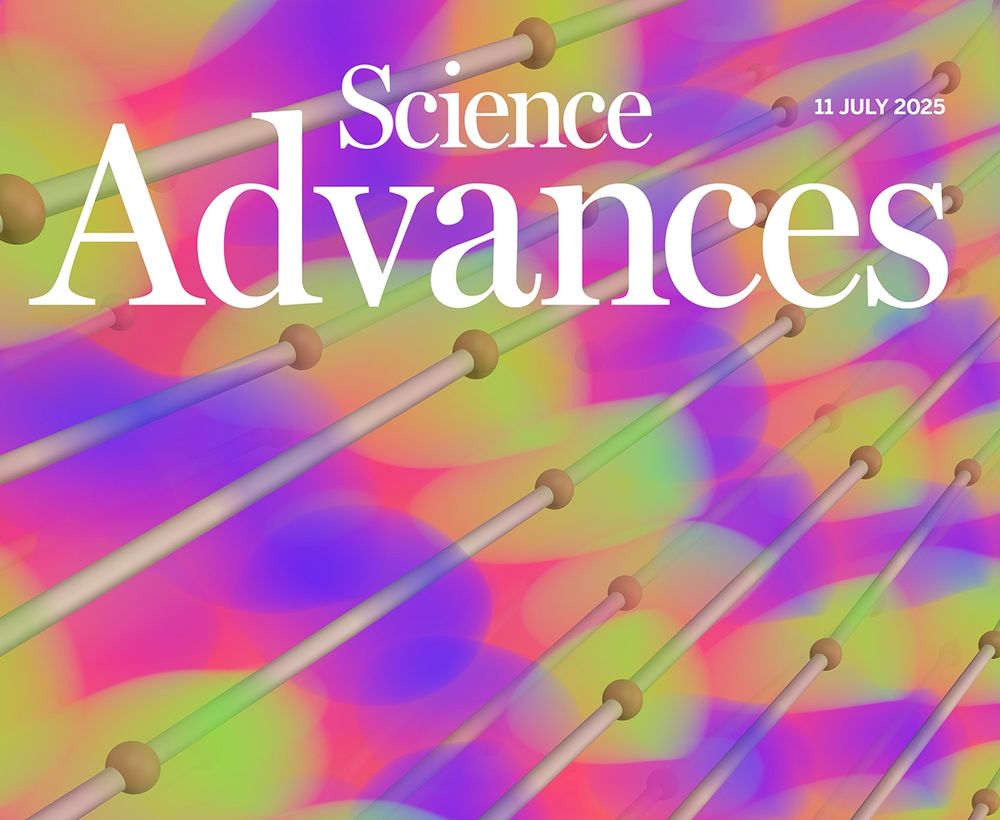
SARCOMERES divide! Mechanism how muscles grow while contracting - daughter sarcomeres appear everywhere. Seen live, registered on our cover. Pioneered by @clementrodier.bsky.social @friedrich-group.bsky.social Ian Estabrook @ibdm.bsky.social $ by @hfspo.bsky.social www.science.org/doi/10.1126/...
10.07.2025 10:16 — 👍 99 🔁 42 💬 5 📌 5
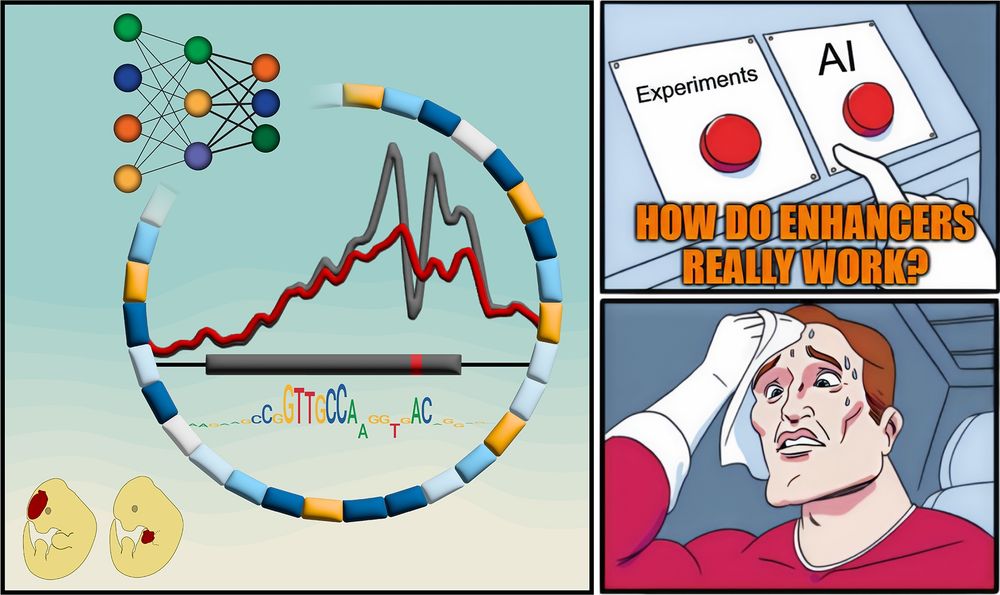
A meme-style comic panel with three parts. Left: A stylized enhancer with a mutation, surrounded by colored blocks representing functional motifs, a neural network diagram, chromatin accessibility signal traces, and a sequence motif. Two cartoon mouse embryos below show different LacZ reporter activity patterns. Top right: A hand hovers anxiously between two red buttons labeled “Experiments” and “AI,” with the caption “HOW DO ENHANCERS REALLY WORK?” Bottom right: A sweating superhero wipes his forehead, looking stressed about the difficult choice.
Textbooks: “Enhancers are just a bunch of TFBSs”
But how do they REALLY work?
New paper with many contributors here @berkeleylab.lbl.gov, @anshulkundaje.bsky.social, @anusri.bsky.social
A 🧵 (1/n)
Free access link: rdcu.be/erD22
18.06.2025 17:55 — 👍 165 🔁 80 💬 2 📌 5
This is so heartbreaking 💔! You are a model of courage and resilience that I sincerely admire. I hope the precious time ahead remains as enjoyable and happy as ever, with family and people who matter to you around you.
16.06.2025 18:27 — 👍 1 🔁 0 💬 0 📌 0
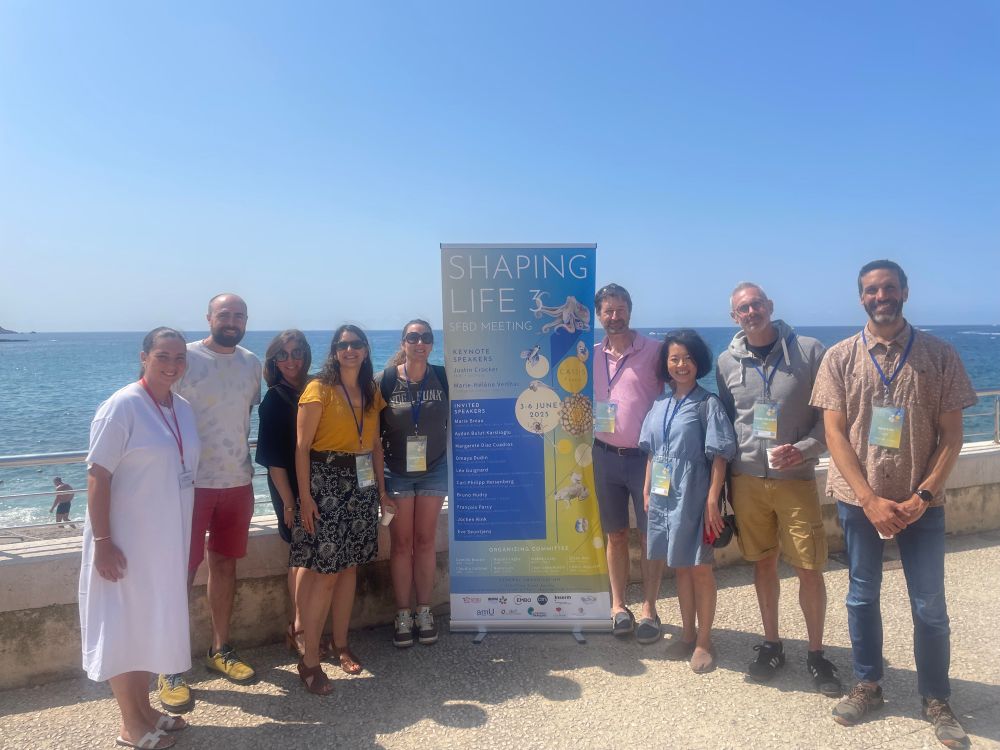
The amazing organization team of #ShapingLife3 meeting of @sfbd.bsky.social in sunny Cassis! Thanks to the great scientists for sharing their passion for embryos, and the beauty of life ! @maitrejl.bsky.social @cedricmaurange.bsky.social @maevalux.bsky.social @ibdm.bsky.social and others
07.06.2025 07:07 — 👍 36 🔁 6 💬 4 📌 1
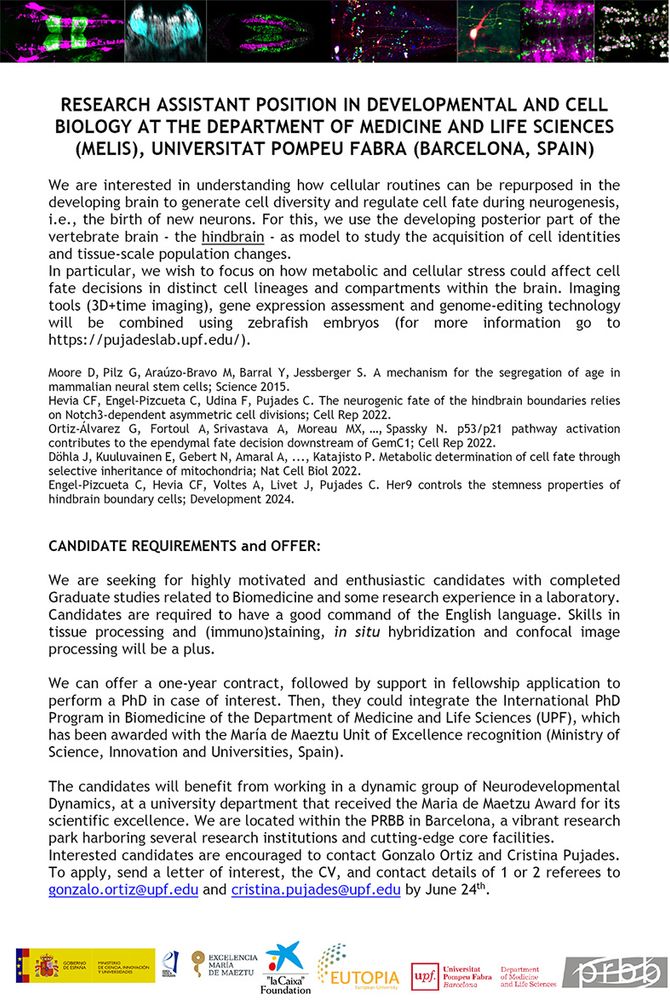
Do you want to join us to work in neurodevelopmental biology? Please apply 👇 #SEBD
04.06.2025 04:33 — 👍 21 🔁 18 💬 0 📌 1
Nucleic Acids Research (NAR), from Oxford University Press, publishes the results of leading-edge research into physical, chemical, biochemical and biological aspects of nucleic acids and proteins involved in nucleic acid metabolism and/or interactions
Embryologist interested in how organs grow, adapt and evolve 🫀🔬 Transition Fellow at IDRM, Oxford. Previously postdoc Francis Crick Institute, PhD Cambridge.
Pumped about hearts, microscopes and morphospaces.
Computational Biologist in the Narita Lab, CRUK CI and CRA at Homerton College, University of Cambridge. 🩷 🐈🐈⬛🧶🧮💻🧬🧪🧫🔭
The International Society for Developmental Neuroscience is now on Bluesky!
Evo-Devo neurobiologist | Associate Prof. at Institute of Genomics, University of Tartu | SFARI Fellow | EMBO Installation Grantee | Cerebellum development: how it evolved and how it goes wrong
Our research group is interested in the molecular and cellular origins and evolution of vertebrate organs. Tweets by Henrik, usually in the name of our group.
home.kaessmannlab.org
Lab of Jean-Christophe Andrau @IGMM, Montpellier
Immigrant | Researcher @MGH & HMS Wattrus Lab | Spinal Cord Injury, neuro-immune, regeneration, stem cell | like fancy microscope & spicy potato
Journaliste scientifique 🦖
Parle de sciences très (très) tôt le matin sur France Culture
Le midi dans le Mag de la Santé sur France 5
et parfois tard dans Scope sur le twitch d’Arte 🔬
The Ascona Meetings on Neuronal Circuits are a leading forum on neuronal circuit research worldwide.
Just being Mia. A postdoc in a world full of cilia, embryos, and microscopes. AP Giannini Postdoctoral Fellow. Stained glass artist and human to Nala the Great (Dane). Postdoc: Reiter Lab UCSF. Grad: Wallingford and Gray Labs UT Austin. 🖖🏾
Postdoc at IST Austria studying zebrafish development 🦓🐟, wondering how a "ball-shaped egg" ⚽🥚 becomes a "fish-shaped fish" 🐠?
Dev Bio, Biophysics, Soft Matter, Image Analysis🔬 🦠🧫 PhD in ChemE (Uni. Minnesota)
Scientist | former Postdoc at The University of North Carolina at Chapel Hill (USA) | now at UKM Münster (Germany) | Gene Therapy & Post-Transcriptional Gene Regulation & Molecular Genetics | she/her | 🇩🇪> 🇺🇲>🇩🇪
Junior research group leader in Tuebingen, bioengineer, infection biomechanics, host-pathogen interactions, fav bug: Listeria, quantitative biology, yoga, backpacking trips
Sharing what’s new in #microscopy for science & education. 🔬
Carl-Zeiss-Promenade 10, Jena 07745
zeiss.ly/i_bio
Biological algorithms of cell motility and pattern formation in active living matter, using theoretical physics https://physics-of-life.tu-dresden.de/friedrich
Studying cell cycle regulation during development at the University of Michigan. also at buttitta@drosophila.social
UIUC Assoc Prof, Drosophila genetics and tissue regeneration, Advocate for the Cystic Fibrosis Foundation, Dem PC, Champaign County Forest Preserve Friends Foundation board, mom of teenagers, etc. etc. etc.
Uncovering the mechanics of life, one cell at a time | https://sweng.wse.jhu.edu/
PhD student in the Fre lab at @institutcurie.bsky.social
Tissue morphogenesis & Fate specification in epithelia.
Organoid and live imaging.
Alumni AgroParisTech & ENS Ulm