Surprisingly Complex Assemblies from Low-Complexity Domains | New England Journal of Medicine www.nejm.org/doi/full/10....
12.09.2025 18:53 — 👍 2 🔁 0 💬 0 📌 0
@arohans.bsky.social
Physician-Scientist at the University of Pittsburgh. K+ 🥑🍌 | 🧂&💧 | WNKs 😉 | Crowding 🔆 | Condensate Physiology 🫧 https://www.subramanyalab.org/
Surprisingly Complex Assemblies from Low-Complexity Domains | New England Journal of Medicine www.nejm.org/doi/full/10....
12.09.2025 18:53 — 👍 2 🔁 0 💬 0 📌 0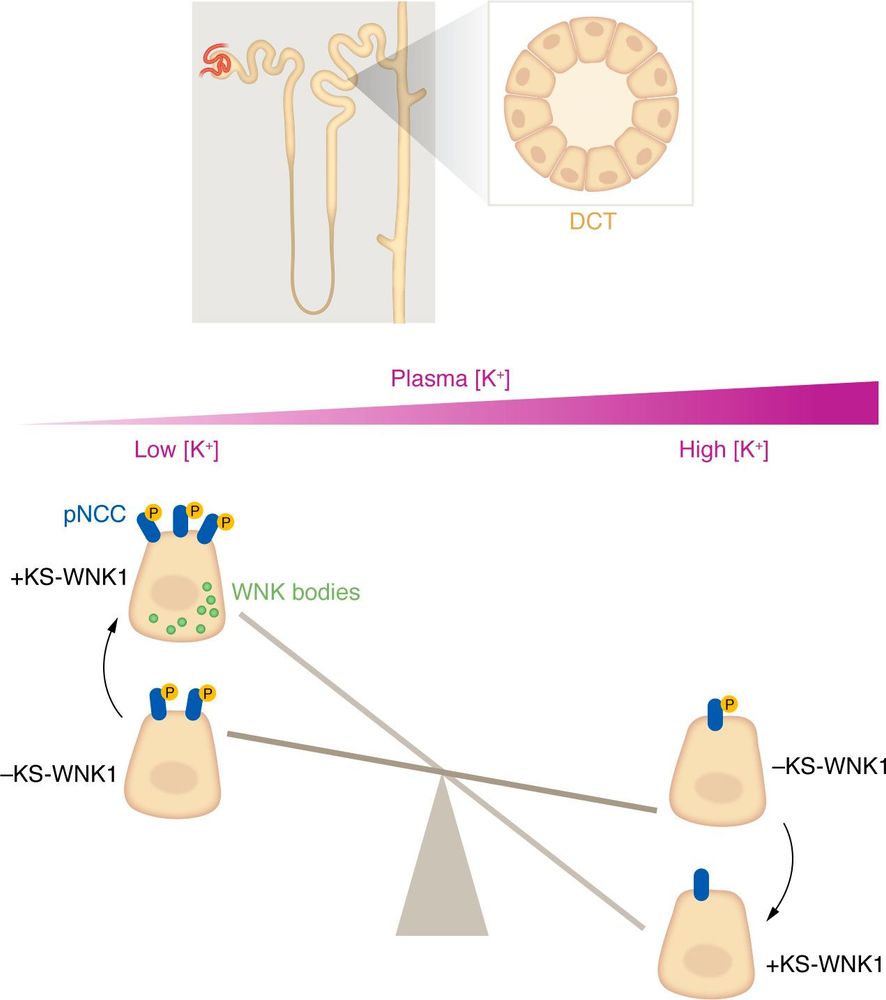
KS-WNK1 augments the effects of dietary potassium intake on renal sodium chloride reabsorption: buff.ly/bmp1w6L
Gerardo Gamba & David H. Ellison provide a Commentary on Cary R. Boyd-Shiwarski et al. (buff.ly/Cw7u7c1)
Thanks so much Pablo!
06.08.2025 02:22 — 👍 0 🔁 0 💬 0 📌 0So exciting to see WNK bodies making the cover of JCI! @pittdeptofmed.bsky.social @arohans.bsky.social @news.upmc.com
01.08.2025 18:00 — 👍 4 🔁 4 💬 0 📌 0
A nod and a wink to kidney-specific WNK1
This issue’s cover features work by Cary R. Boyd-Shiwarski et al. on kidney-specific WNK1 as a scaffolding protein that organizes WNK bodies — structures essential for maintaining blood potassium levels: buff.ly/Cw7u7c1
Congrats to Cary Boyd-Shiwarski @caryboyd.bsky.social , who expertly saw this through as corresponding author, lab members & alums; and to our collaborators including @simoncwatkins.bsky.social & the Kashlan, Rodan, Huang, and Stocker labs 🎉🥳🍾 /12
01.08.2025 22:59 — 👍 1 🔁 0 💬 0 📌 0More generally, this work extends beyond functional studies in cells to support the relevance of biomolecular #condensates in mammalian #physiology, while hinting @ intriguing connections between condensates & public health. 11/
01.08.2025 22:59 — 👍 0 🔁 0 💬 1 📌 0This is consistent w/ a population-scale metanalysis suggesting that a [K+] <4.0mmol/L is associated w/ increased CV mortality. Perhaps “destressing” the kidney via blood K+ titration could be leveraged to optimize health. Highlighted by Pitt SoM here 10/
www.medschool.pitt.edu/news/kidney-...
In human kidneys, WNK bodies accumulated as [K+] progressively fell below 4.0mmol/L. This suggests that the human DCT hyperactivates 🧂 reabsorption even when K+ is 3.5-4.0. Thus, a K+ in the low-normal range may not be ideal for CV 🫀 health, as it may predispose to salt-sensitive HTN 9/
01.08.2025 22:59 — 👍 0 🔁 0 💬 1 📌 0Compared to males, K+ restricted female mice were more dependent on WNK bodies for optimal electrolyte balance, indicating that WNK body condensates contribute to nephron sexual dimorphism. 8/
01.08.2025 22:59 — 👍 0 🔁 0 💬 1 📌 0
Using KO and transgenic mouse models, we show that KS-WNK1 activates NCC via WNK bodies during dietary K+ deficiency and inhibits NCC during K+ excess. KS-WNK1 therefore functions as a signal amplifier 📶 that expands the dynamic range of DCT reactivity to [K+] 7/
01.08.2025 22:59 — 👍 0 🔁 0 💬 1 📌 0
…This is because during hypokalemia, the DCT WNK signaling pathway forms specialized condensates termed WNK bodies. These assemblies require KS-WNK1, a truncated DCT-specific WNK1 isoform. KS-WNK1 encodes the large IDR that drives WNK1 phase behavior; basically, it’s a disordered scaffold 6/
01.08.2025 22:59 — 👍 1 🔁 0 💬 1 📌 0
In 2022, we reported that WNKs activate ion transport via IDR-mediated phase separation: www.cell.com/cell/fulltex... . WNK condensates emerged in unicellular species to control cell volume, but we hypothesized that they were repurposed by evolution to regulate kidney tubule ion transport... 5/
01.08.2025 22:59 — 👍 0 🔁 0 💬 1 📌 0Some background: The kidney regulates K+ homeostasis. The distal convoluted tubule (DCT) controls Na+ dependent kaliuresis by amplifying small changes in blood K+ into large effects on 🧂 reabsorption via the NaCl cotransporter NCC. WNK kinases mediate this but the details have been unclear 4/
01.08.2025 22:59 — 👍 1 🔁 0 💬 1 📌 0The paper was also paired with a lovely editorial penned by two masters of distal nephron physiology, Gerardo Gamba and David Ellison (thank you!) 🙏🏽: 3/
www.jci.org/articles/vie...
This paper integrates years of research that initially started in the kidney, dove into fundamental condensate biology in cells, and circled back to mouse models & a translational analysis in humans. Read the full article here www.jci.org/articles/vie... 2/
01.08.2025 22:59 — 👍 0 🔁 0 💬 1 📌 0
Our latest, now in print @jclinical-invest.bsky.social (w/ cover! 🎉) Led by @caryboyd.bsky.social , we identified a functional role for #WNK bodies in K+ homeostasis, highlighting a #condensate 🫧 that can influence kidney physiology & nephron sexual dimorphism, w/ implications for human health 1/
01.08.2025 22:59 — 👍 5 🔁 1 💬 2 📌 0
Hello to all of our friends and colleagues on Bluesky! The epithelial transport group (ETG) is new to the platform, so follow and share to help us grow our network. Don't forget to join us next Thursday morning in Baltimore for the ETG pre meeting, beginning at 8:00 AM!
14.04.2025 15:03 — 👍 2 🔁 2 💬 0 📌 0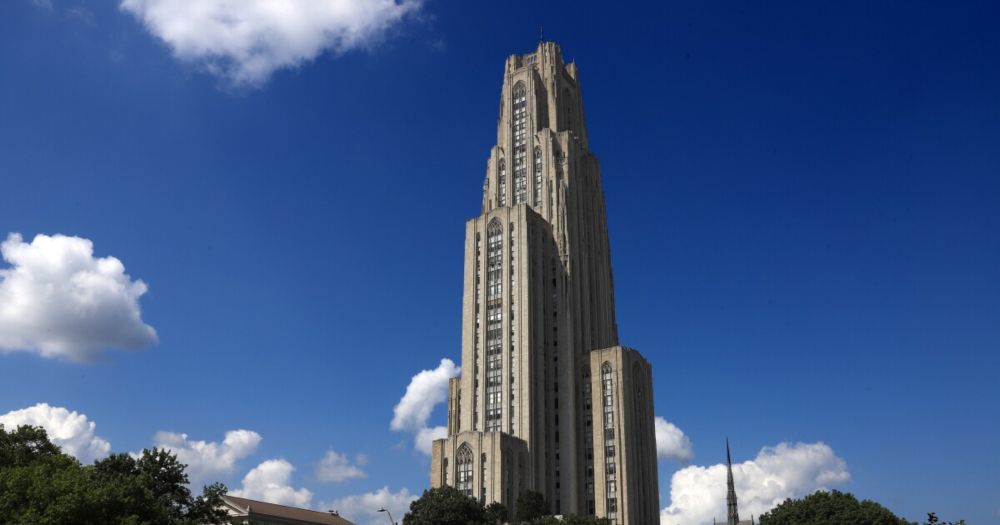
The University of Pittsburgh confirmed Friday that there would be no new Ph.D. offers of admission while Pitt works to understand how reduced federal aid could impact the institution.
21.02.2025 21:56 — 👍 1194 🔁 770 💬 55 📌 347
"Mysterious Blobs Found inside Cells Are Rewriting the Story of How Life Works"
Exciting times ahead!
www.scientificamerican.com/article/myst...