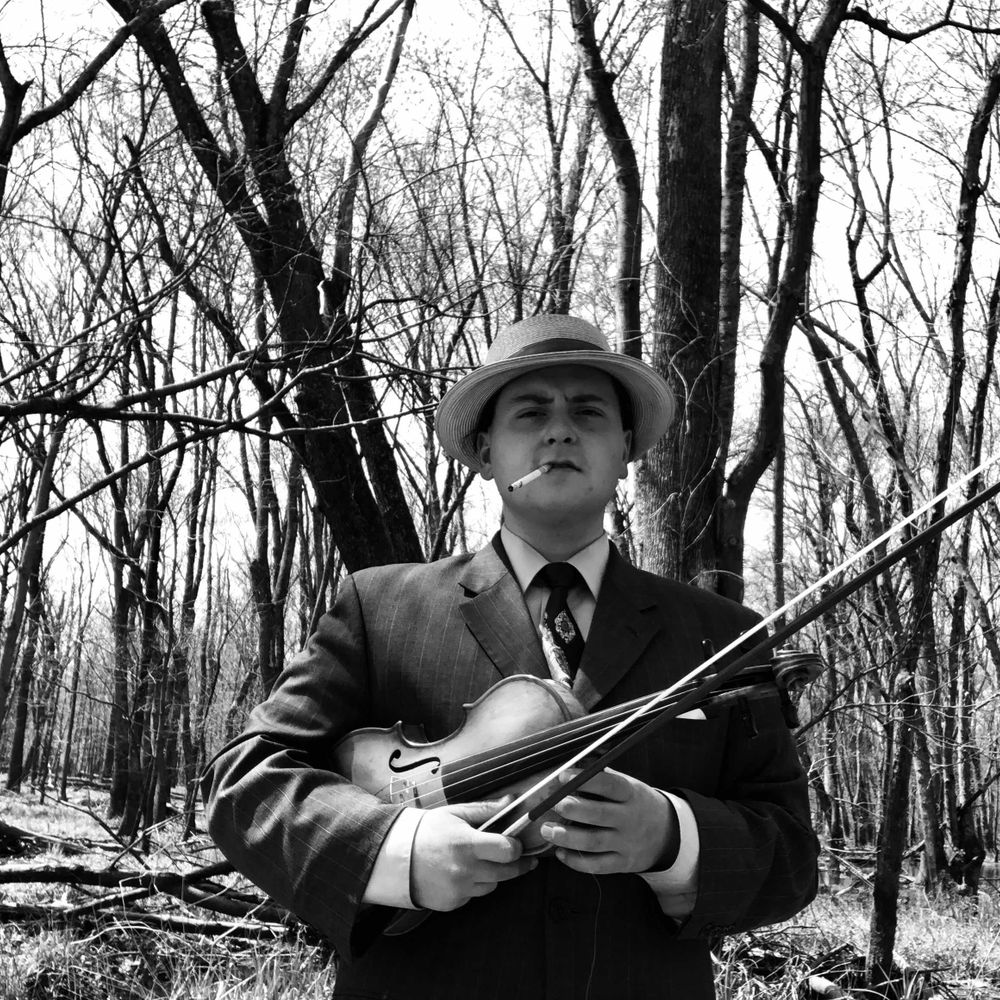
curling club curling not olympic curling but the best curling tune ever
youtu.be/xQF5xuLrjpY

@jamestaite.bsky.social
Stonemason in Ottawa, Canada.
curling club curling not olympic curling but the best curling tune ever
youtu.be/xQF5xuLrjpY
...and expense (like ornament) cheap and common doesn’t encourage it’s use? Maybe we don’t convince people to value something more by making it cheaper? Maybe ornament needs to be something more than a nice form to look at, related in a more meaningful way to the society that produces it?
16.02.2026 14:55 — 👍 4 🔁 1 💬 0 📌 0...contemptuous cosmopolitan elites (who don’t). Phrases like “the ancient will to ornament” raise flags.
Just on a basic level, Hughes’ logic is baffling: “we made ornament cheap and it disappeared. If we make it cheaper it will reappear.” Or maybe, just maybe, making a marker of prestige...
...of modernist architects who persuaded corporations and governments to adopt a new style, for... reasons.
I have no idea what his politics are, but the conspiracism is troubling; he frames it in terms of a struggle between pure common folk (who like ornament) v decadent...

Hughes has written a few versions of this piece. It’s a good summary of how and why ornament became cheap and ubiquitous by the early 20thc. It’s a terrible take on why it largely disappeared afterwards. He offers little explanation other than to blame a cabal...
worksinprogress.co/issue/the-be...
...common doesn’t encourage it’s use? Maybe we don’t convince people to value something more by making it cheaper? Maybe ornament needs to be something more than a nice thing to look at, related in a more meaningful way to the society that produces it?
16.02.2026 14:47 — 👍 2 🔁 0 💬 2 📌 0...don’t). Phrases like “the ancient will to ornament” raise red flags.
Just on a basic level, Hughes’ logic is baffling: “we made ornament cheap and it disappeared. If we make it cheaper it will reappear.” Or maybe, just maybe, making a marker of prestige and expense (like ornament) cheap and...
...corporations and governments to adopt a new style, for vague nefarious reasons.
I have no idea what his personal politics are, but the conspiracism is troubling; he frames it in terms of the opposition of pure common folk (who like ornament) v decadent contemptuous cosmopolitan elites (who...
Hughes has written a few versions of this piece. It’s a good summary of how & why ornament became cheap and ubiquitous by the early 20thc. It’s a terrible take on why it largely disappeared afterwards. He offers little explanation other than to blame a cabal of modernist architects who persuaded...
16.02.2026 14:47 — 👍 0 🔁 0 💬 1 📌 0
Text reading, in part: “The neo-Gothic offshoot, now the predominant trend, first appeared about fifty years ago and was first encouraged in Germany by Goethe and the poets of the romantic movement. Their first attempts were garden pavilions and small country churches that turned out wretched enough… it did not become really effective until interest in the preservation of the old Gothic monuments was roused and strongly supported. The restoration of buildings, undertaken as a result of this romantic-antiquarian movement, trained a number of craftsmen who have since had the opportunity to apply to new buildings their mastery of this style.” From Gottfried Semper, ‘Style in the Technical and Tectonic Arts’, in The Four Elements of Architecture and Other Writings, Cambridge University Press, 1989, 191.
Interesting bit here from Semper re the relation between stylistic development & the trades: the success of the Gothic-revival in the mid-19thc as a modern style depended on tradespeople working on the preservation of authentic medieval monuments and becoming proficient in craft-processes & forms
15.02.2026 20:30 — 👍 42 🔁 10 💬 1 📌 1
Acrise, Kent, St Martin. Chancel arch thirteenth century reusing Norman mouldings.
15.02.2026 14:06 — 👍 33 🔁 3 💬 2 📌 0


Netherlands Foto Museum. Excellent.
15.02.2026 14:23 — 👍 39 🔁 7 💬 0 📌 1A while back I asked a crab fisherman in Maryland what he uses for bait and he looked out over the river and whispered “horse lips on a trot line” as if he were proposing to a beautiful woman
14.02.2026 13:13 — 👍 84 🔁 22 💬 2 📌 0
A somewhat grotesque stone carving depicting a pair of lovers with bulbous heads and bulging eyes locked in an embrace and kiss.
Happy Valentine’s Day, to those who celebrate!
👇 Corbel, St. Mary & St. David, Kilpeck, ca. 1140.
#SculptureSaturday

First photo of a pointed Gothic-revival window with tracery in a state of partial dismantle; wood props hold the elements of the tracery stable as they are being disassembled.

second photo of a pointed Gothic-revival window with tracery in a state of partial dismantle; wood props hold the elements of the tracery stable as they are being disassembled.

third photo of a pointed Gothic-revival window with tracery in a state of partial dismantle; wood props hold the elements of the tracery stable as they are being disassembled.

Fourth photo of a pointed Gothic-revival window with tracery in a state of partial dismantle; wood props hold the elements of the tracery stable as they are being disassembled.
And the cusps and featherings of window tracery are a defining feature of medieval and Gothic-revival architecture. Fanciful, decorative, gratuitous. They also make it possible to build without centring the arch, substituting simple props. Participating in their own making.
14.02.2026 15:42 — 👍 19 🔁 1 💬 1 📌 0
photo of a doorway topped by a semi-elliptical arch in Maltese limestone; the arch has been recently constructed, centred on scrap blocks of stone supported by square-section steel bars that extend between the impost mouldings of the arch
Similarly, impost mouldings define the springing of an arch, the point at which the vertical jambs fall away into a curling intrados. They also offer a ledge on which the falsework necessary to raise that arch can be supported. The building takes a part in its own construction.
14.02.2026 15:42 — 👍 7 🔁 0 💬 1 📌 0
section axonometric drawing showing masonry cornice with wooden props bracing the larmier from a moulding below; from William Lowndes, ‘Stone Masonry’, 1919, p.61
And they also sometimes have a logic that refers to the method of building: the architecture anticipates the construction. It participates in construction. The bed-moulding below the corona presents a perfect place to seat the props with which it is braced.
14.02.2026 15:42 — 👍 7 🔁 0 💬 1 📌 0Classical mouldings have purpose. They look nice; they cast shadows, visually organize an elevation, make reference to their specific historical antecedents. But they also do things, function in ways important to the health and longevity of the building, like cast water clear of the wall below.
14.02.2026 15:42 — 👍 6 🔁 0 💬 1 📌 0
section drawing through masonry wall with cornice and blocking cornice above; text reads in part: “Blocking Course.—A course of stones built on top of a cornice, partly to tail the same down and partly to form a satisfactory finish to the roof”; from ICS Reference Library vol.40, ‘Masonry’, 1909, p.18
Even at the top of the wall a blocking-course or parapet is typical in classical architecture, as a counterweight to the projecting cornice. But until the blocking-course was laid the projection was unstable; it needed to be braced until weight was added. So props.
14.02.2026 15:42 — 👍 6 🔁 0 💬 1 📌 0
axonometric drawing showing construction of stone cornice on a steel-framed classical building, pulled apart so that the different components can be identified; from E.G. Warland, ‘Modern Practical Masonry’, 1929
In a steel-framed building the masonry is thinner; the wall doesn’t have the depth to bury enough mass for stability. Mechanical solutions were offered—metal fixings tying the stone back to the structure—but in stonemasonry the simplest remedy is to just add more stone above.
14.02.2026 15:42 — 👍 6 🔁 0 💬 1 📌 0
Photo of newly cut portion of cornice in Wallace sandstone standing vertically, rather than in the horizontal orientation it will have in the wall
The corona projects from the wall and is undercut with a drip or larmier to shed water. In a traditional masonry building a corbelled element like this will be tailed-in far enough to stay balanced. Two-thirds in the wall, one-third out is an old rule of thumb for corbels.
14.02.2026 15:42 — 👍 6 🔁 0 💬 1 📌 0
Photo of a classical building, steel-framed and stone-clad, nearing the end of construction; cranes sit on top of the building, scaffold surrounds the colonnades; photo from US National Archives
Archives Building, Washington, John Russell Pope arch., 1934
My eyes go immediately to the angled timber props at the corner, tucked up in the armpit of that part of the cornice called the corona and sitting on the bed-moulding below, just above the fascia of the colonnades.
Short 🧵:
That’s a gorgeous one thanks Tim
14.02.2026 00:13 — 👍 0 🔁 0 💬 0 📌 0
A church entrance from a one-story entrance block under a stone wall with a rose window that slopes sharply down to the left. Photo via Katholische Pfarreiengemeinschaft Bergisch Gladbach-West, https://gemeinden.erzbistum-koeln.de/pfarreiengemeinschaft-bergisch-gladbach-west/ueber_uns/kirchen/st._konradx_hand/#

A church interior. the space is gabled, with a row of wooden pews either side of a wide central aisle. The side walls are covered in white stucco; the wall behind the altar is stone. The cieling is faced in wood, with large beams beneath. To the right, close to the camera, are blueish stained glass windows that run from the floor to about head height. Photo by Marcel Buckan via Domradio, https://www.domradio.de/artikel/patronatsfest-der-sankt-sebastianus-schuetzenbruderschaft-festmesse-st-konrad-bergisch

A broader view of the church from a 1958 postcard showing a wide-open forecourt. To the left is the parish house. Photo via Katholische Pfarreiengemeinschaft Bergisch Gladbach-West, https://gemeinden.erzbistum-koeln.de/pfarreiengemeinschaft-bergisch-gladbach-west/ueber_uns/kirchen/st._konradx_hand/#

The church placed at the end of a settlement, with railroad tracks (?) running just behind. Photo from the same 1958 postcard via Katholische Pfarreiengemeinschaft Bergisch Gladbach-West, https://gemeinden.erzbistum-koeln.de/pfarreiengemeinschaft-bergisch-gladbach-west/ueber_uns/kirchen/st._konradx_hand/#
#210: Bernhard Rotterdam, St. Konrad, Bergisch Gladbach-Hand (1952-57)
12.02.2026 18:15 — 👍 23 🔁 4 💬 1 📌 0
The absolutely stunning 12thC Virtues triumphing over Vices font at St Peter's, Southrop.
In this scene patience is seen scourging wrath. I was particularly taken with the little buildings sitting on top of the arcade, the detail throughout is jaw dropping.
#FontsOnFriday

#streetphotography #photography #photo #montreal #fuji
12.02.2026 22:40 — 👍 91 🔁 13 💬 0 📌 2Incredible woman. Lived in Toronto briefly while persona non grata in the US, in a house on Spadina. Hated it.
12.02.2026 22:27 — 👍 7 🔁 0 💬 1 📌 0On the subject of renewing public spaces!
This is such a beautiful project by STUDIOARTEC and @brunotonelli.bsky.social - loved this detail about the repaving technique used:
about: archello.com/de/project/r...
lots of pictures in thread below
👇
My actual favourite class test is one that David Reed gave me:
“Did the roof of your school come to a point?”
fascinated by the idea of fabric formwork, would love to know more about what you’re working on
12.02.2026 10:48 — 👍 1 🔁 0 💬 1 📌 0