Thanks, Rachel!
11.02.2026 13:10 — 👍 0 🔁 0 💬 0 📌 0
Link to the preprint here: www.biorxiv.org/content/10.6...
11.02.2026 03:33 — 👍 1 🔁 0 💬 0 📌 0
Thanks for catching that. Here it is! www.biorxiv.org/content/10.6...
11.02.2026 03:32 — 👍 1 🔁 0 💬 0 📌 0
10/ Check out the preprint for much more! Huge thanks to Yi-Hung, John, Krupa, and all other co-authors for their dedication to the project! We appreciate funders NIH, CPRIT, Alex’s Lemonade Stand, and @thewelchfoundation.bsky.social for supporting this work!
11.02.2026 03:21 — 👍 1 🔁 0 💬 2 📌 0
9/ By combining chromatin structural analyses in fusion-positive and fusion-negative cells, we uncover NSD3 as an adaptor protein for chromatin contacts. Our approach highlights how studies of chromosome misfolding in a rare cancer informs upon chromosome folding more broadly.
11.02.2026 03:21 — 👍 0 🔁 0 💬 1 📌 0

8/ Surprisingly, inactivating the PWWP domain also caused NSD3short to redistribute on chromatin, forming large domains. We find no evidence of interactions between these domains. This identifies a separation-of-function mutant that uncouples chromatin occupancy from chromatin interactions.
11.02.2026 03:21 — 👍 0 🔁 0 💬 1 📌 0

7/ Inactivating the PWWP domain with a point mutation (W284A) impairs NSD3short’s ability to promote chromatin contacts.
11.02.2026 03:21 — 👍 0 🔁 0 💬 1 📌 0

6/ Does NSD3 have an analogous role in fusion-naïve cells? Yes! The short isoform of NSD3, NSD3short (HiBiT-tagged), promotes chromatin contacts when expressed in fusion-negative cells. NSD3short contacts are longer than CTCF-CTCF loops and form in the A compartment.
11.02.2026 03:21 — 👍 0 🔁 0 💬 1 📌 0

5/ NSD3 also stabilizes chromatin contacts between BRD4-NUT chromatin domains. Depletion of NSD3 decreases chromatin contacts both in cis and in trans.
11.02.2026 03:21 — 👍 0 🔁 0 💬 1 📌 0

4/ Depletion of NSD3 shows that NSD3 deposits H3K36me2 at BRD4-NUT-bound loci, stabilizes BRD4-NUT on chromatin, and stabilizes BRD4-NUT condensates.
11.02.2026 03:21 — 👍 0 🔁 0 💬 1 📌 0

3/ Based on proteomics data, NSD3, itself a NUT fusion partner, interacts with BRD4-NUT. NSD3 is a histone H3K36 methyltransferase. Consistent with this, NSD3 and H3K36me2 are enriched with BRD4-NUT on chromatin and NSD3 is enriched in BRD4-NUT condensates.
11.02.2026 03:21 — 👍 0 🔁 0 💬 1 📌 0

2/ Previously, we discovered that the BRD4-NUT fusion oncoprotein drives distant chromatin interactions between oncogenes. We wondered, what are the cofactors of BRD4-NUT-driven chromatin regulation? And, do such factors have analogous functions in fusion-naïve cells?
11.02.2026 03:21 — 👍 0 🔁 0 💬 1 📌 0
1/ Excited to share a new preprint from the lab! We identify NSD3 as a novel regulator of chromatin 3D structure. 🧵
11.02.2026 03:21 — 👍 12 🔁 4 💬 2 📌 0
Congrats Josh, Peggy, Gandhar, Elmira, and team!!!
05.11.2025 01:26 — 👍 3 🔁 0 💬 1 📌 0
Our new preprint 🧬🔗 www.biorxiv.org/content/10.1...
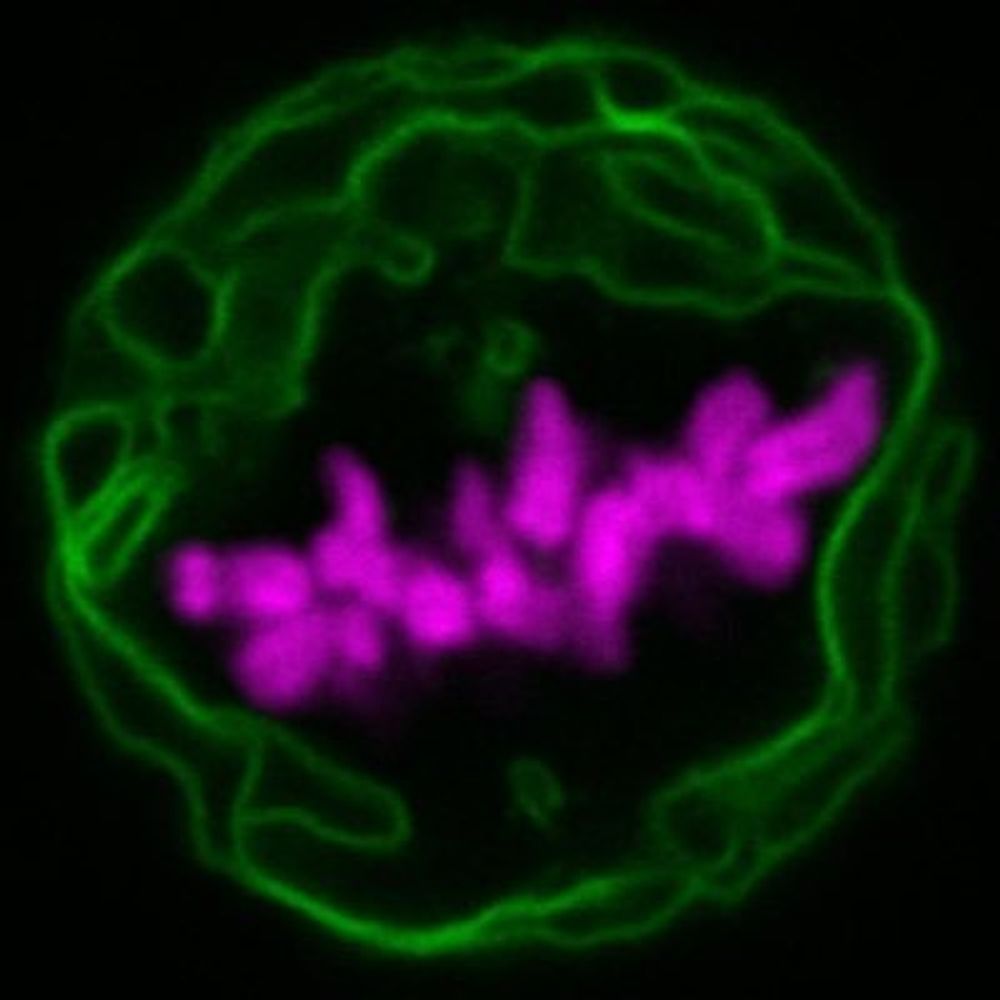
BRD4-NUT forms liquid-like condensates that locally constrain nucleosomes via BRD4-mediated crosslinking— physical control of #chromatin by #LLPS transcription condensates. @semeigazin.bsky.social @katsuminami.bsky.social @masaashimazoe.bsky.social
10.07.2025 04:21 — 👍 50 🔁 25 💬 1 📌 0
Congrats, Bruno!
03.07.2025 14:30 — 👍 1 🔁 0 💬 0 📌 0
Congratulations, Liling! A very exciting project!
21.05.2025 21:29 — 👍 1 🔁 0 💬 0 📌 0
Thrilled to share our new work on #aging in the murine hematopoietic system! There is a lot here- stem cell numbers, self-renewal rates, mutation rates, mutation signatures, clonal fitness, environmental effects...
06.03.2025 18:12 — 👍 37 🔁 8 💬 1 📌 0
In lab’s #FIRSTPREPRINT, we present methods to measure nanometer-scale organization around & between specific proteins in condensates in live cells. We uncover unexpected heterogeneity for a liquid-like phase with local meshwork spanning 10-50nm, stemming from ribosome biogenesis in the nucleolus.
28.02.2025 12:52 — 👍 48 🔁 13 💬 2 📌 1
I am a physician-scientist and sarcoma medical oncologist. My lab studies how alterations in the epigenome influence cancer biology. Our goal is to use that knowledge to find better ways to help patients. nacevlab.com
keep your wits about you, stick together, discover how things work
Chief panhandler, trichelab.vai.org
Posts may contain trace quantities of blood🩸, chromatin 🧬 & stats 🧮
https://scholar.google.com/citations?user=AOoIO74AAAAJ
Views expressed are my own (but for the right price they can be yours!)
Director, Dept. of Mechanistic Cell Biology, Max Planck Institute of Molecular Physiology, Dortmund (DE). Opinions my own
Assistant Professor of Genetics at Stanford | centromeres, heterochromatin, and long-read sequencing | 🇺🇸🇧🇴🏳️🌈 | altemoselab.stanford.edu
Assistant Prof at McGill, Oncology & Biochem departments, Lady Davis Institute | chromatin/txn | previous member @adelmanlab, LeAnn Howe labs | he/him | Fragile Nucleosome co-organizer | FHC MNT alumn 🏑🇨🇦🦌 | https://www.martinlab.ca/
Genome Organization & Imaging Researcher | Postdoctoral Fellow at Harvard Medical School | Expert in Advanced Imaging, Image Analysis & Chromatin Biology
https://laurabreimann.github.io/
Incoming Associate Professor @ Colorado University Anschutz | cancer epigenetics | DNA replication | protein synthesis | vanrechemlab.com
Postdoc in Luca Giorgetti lab, FMI
Chromatin, Hi-C, gene regulation
Co-organizer of Sci.STEPS mentoring program
Professor and Director, Dept. of Biophysics & Biophysical Chemistry
Johns Hopkins School of Medicine, structural biologist, lover of chromatin and ubiquitin, fan of the active voice.
Neuroscientist+Child Neurologist. McNair Scholar #RareDisease, #neurogenetics, inhibition/circuits, #autism, #epilepsy, & brain disorders. RT≠endorse.
Assistant Professor at Baylor College of Medicine & Texas Children's Hospital | Human genetics and single-cell genomics | Formerly Columbia Med & Duke
Assistant Professor. Learning/memory/Behavioral Neuroscience. Brain Enthusiast. Worm Evangelist. Food and drink Fanatic. Views my own. She/her.
Website: https://www.areylab.com/
Cells forget. We’re learning how to make them remember. @GENYO University of Granada, Spain. www.landeiralab.ugr.es
Group leader at @CRGenomica and @icreacommunity, interested in understanding the role of chromatin organization/function in stem cell biology and in disease.
Getting to grips with chromosome organisation and dynamics using ‘scopes, sequencing and silicon.
Located at @imbavienna.bsky.social - @viennabiocenter.bsky.social
#3Dgenome, #3R, #chromatin, #synbio, #microbiome... Opinions are my own.
Thoracic medical oncologist and cancer researcher at Dana-Farber/ Harvard Cancer Center
// Prev MSKCC Fellow, OHSU IM & Chief Res, Stanford Med, and UW-Madison
https://t.co/Y9HwVQ1jyq
The Fena Ochs Lab at the University of Copenhagen
3D chromatin function super-resolved
https://www.fenaochslab.org/