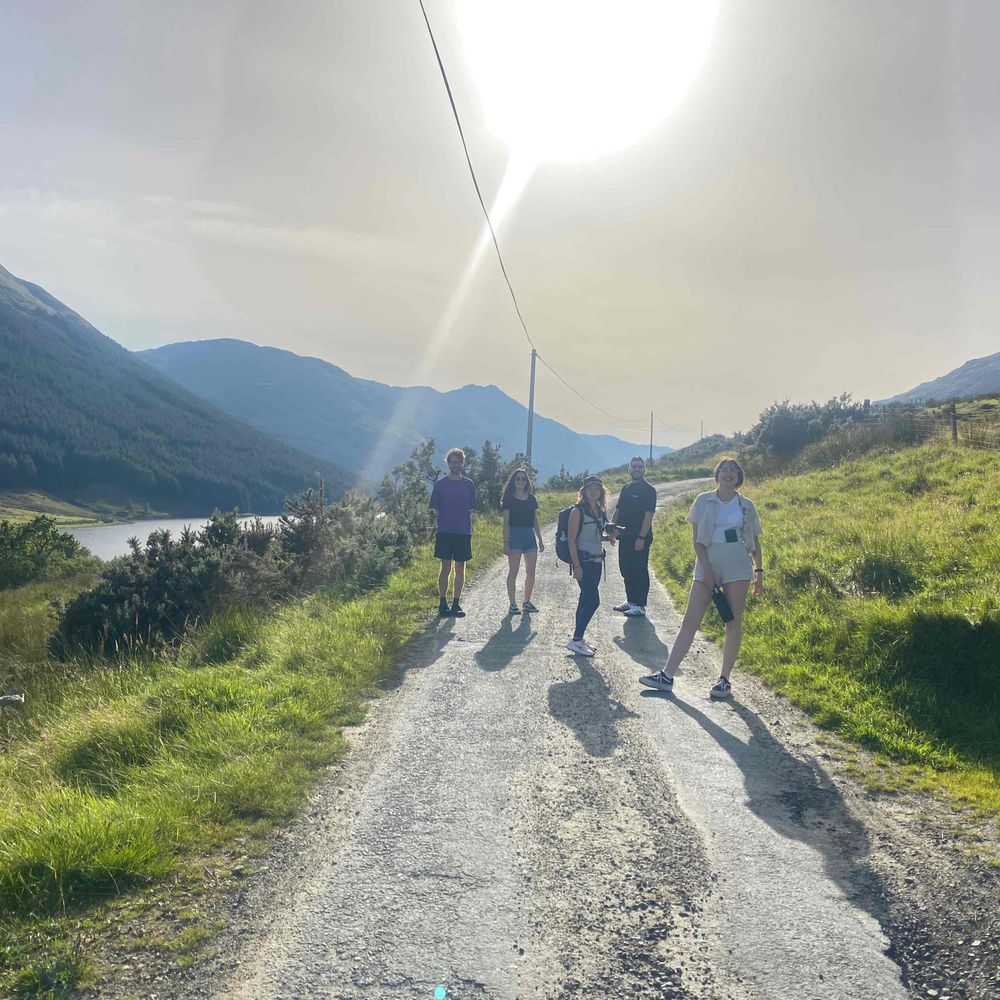
Hello world! I am excited to announce my lab is open at the University of Utah in the Department of Biochemistry. We are looking for scientists at all levels interested in studying host-virus interactions in both bacteria and animals. Come join us in beautiful Utah! (photo is 10 steps from lab)
22.01.2026 22:06 — 👍 72 🔁 31 💬 6 📌 0
Super new paper from @ubch-alice.bsky.social and Danny Huang @cruk-si.bsky.social – a great deal of hard work and development behind this story. From a technical perspective, this reads as a primer for tapping 'unconventional' E3s. Very well done Alice and team!
22.01.2026 16:40 — 👍 1 🔁 0 💬 0 📌 0

UBA6 specificity for ubiquitin E2 conjugating enzymes reveals a priority mechanism of BIRC6
Nature Structural & Molecular Biology - Riechmann et al. uncover structural features governing ubiquitin transfer from ubiquitin-activating E1 enzymes UBA1 and UBA6 to specific E2...
Excited to share our work into ubiquitin E1-E2 specificity mechanisms. CryoEM visualising #ubiquitin transfer,biochemistry,evolution @labhofmann.bsky.social & tissue expression analyses @psarkies.bsky.social Big thanks to the team,reviewers & handling editor @dimitristypas.bsky.social rdcu.be/eTRdR
09.12.2025 13:21 — 👍 34 🔁 13 💬 4 📌 2
We’re thrilled to onboard Alice Wicks @ubch-alice.bsky.social in the lab this week. Alice trained with Danny Huang @cruk-si.bsky.social and has developed exciting new ideas for co-opting E3s for targeted degradation. Welcome to the team, Alice.
01.12.2025 23:14 — 👍 5 🔁 0 💬 1 📌 0

We’ve made some new tools to manipulate N-recognins. Check them out in our preprint.
www.biorxiv.org/content/10.1...
29.11.2025 03:24 — 👍 18 🔁 13 💬 0 📌 0
Join @uofglasgow.bsky.social for a funded 3.5 year PhD programme:
www.gla.ac.uk/colleges/mvl...
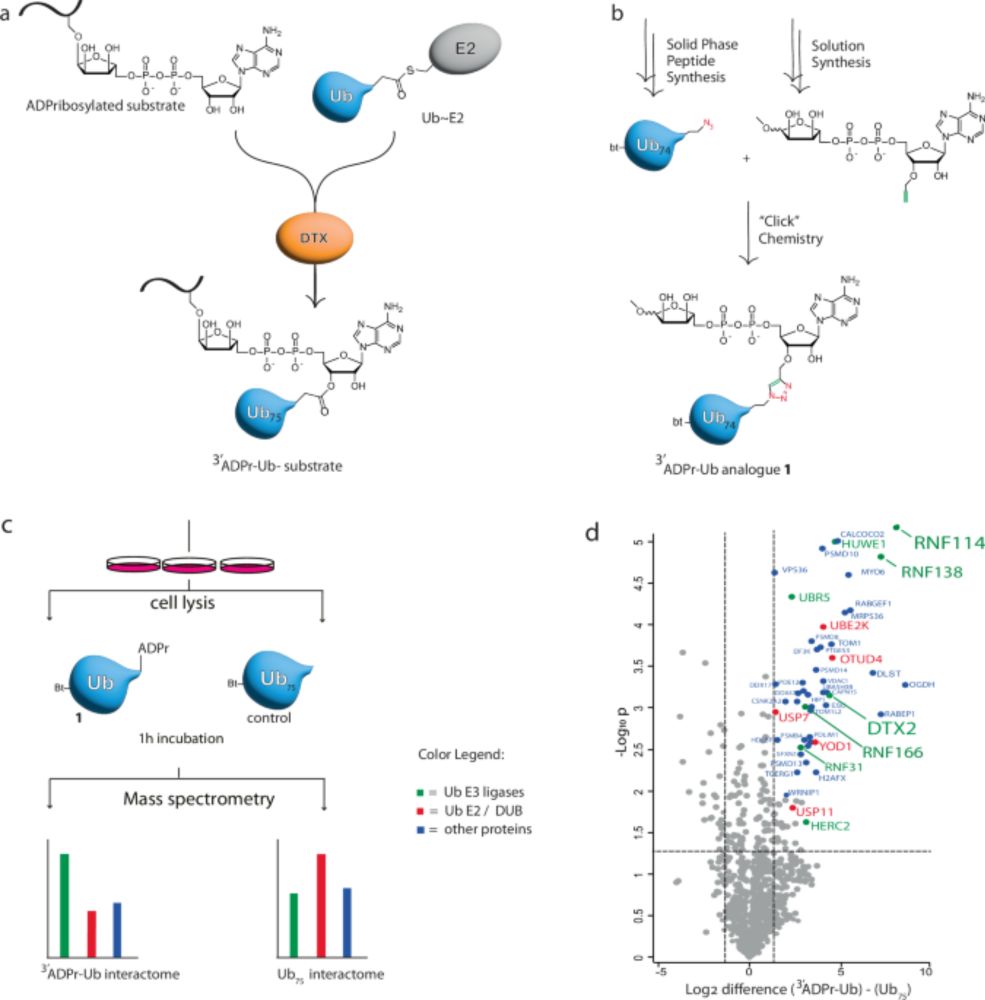
Also up for grabs is a project on antiviral PROTACs, supervised by us and the France lab (School of Chemistry) should ubiquitin and viruses appeal! Please get in touch with any questions.
24.11.2025 15:47 — 👍 4 🔁 5 💬 0 📌 0
Excited to share the peer-reviewed version of our work, now online in @embojournal.org! Big thanks to our reviewers and @hvodermaier.bsky.social for facilitating this process. Looking forward to continuing this fun collaboration with @michaelnadbio.bsky.social!
www.embopress.org/doi/full/10....
30.10.2025 15:33 — 👍 35 🔁 13 💬 5 📌 1

A #postdoc position in atypical #ubiquitin signalling and protein binder engineering is opening soon in my lab at DTU Bioengineering! Get in touch if you are interested.
30.10.2025 14:13 — 👍 7 🔁 3 💬 0 📌 1
🎉 Fletcher lab PhD student Emma Davies reflecting on her prize winning talk - we’re super proud of you Emma - many congrats! 🎉
@cvrinfo.bsky.social @uofgsii.bsky.social @uofgmvls.bsky.social
08.10.2025 14:32 — 👍 16 🔁 6 💬 0 📌 0

Illustration depicting a bacterium under assault by phage. The bacterium “sees” phage immune evasion proteins and protects itself using a newly described antiphage system called Panoptes, named for the many-eyed mythical giant Argus Panoptes. Credit: Clair Huffine Insight Illustrations LLC
Our work on the Panoptes antiphage system is published! Here we find that Panoptes "watches" the cytosol for phage immune evasion proteins–captured in this illustration by Clair Huffine of Insight Illustrations. A beautiful example of the effector triggered immunity paradigm.
08.10.2025 11:14 — 👍 35 🔁 12 💬 1 📌 0
Aye
19.09.2025 11:02 — 👍 0 🔁 0 💬 0 📌 0
Liam please can we come to you for advice when naming our manuscripts?
19.09.2025 08:49 — 👍 1 🔁 0 💬 1 📌 0

A few months ago, our review “The Molecular Toolbox for Linkage Type-Specific Analysis of Ubiquitin Signaling” 🧬🧰🛠️ came out in ChemBioChem. Time to give it a spotlight!
chemistry-europe.onlinelibrary.wiley.com/doi/full/10....
16.09.2025 07:45 — 👍 19 🔁 9 💬 1 📌 0
So excited to see our newest study out in print! Led by the brilliant @jgezelle.bsky.social and @sophiekorn.bsky.social, we discovered how viruses from highly divergent families converge on a shared RNA structure mechanism to inhibit cellular nucleases. #RNAsky #LoveVirology
04.09.2025 20:54 — 👍 19 🔁 8 💬 1 📌 0
Glad to share the final version of our story about the UBR4 complex, an E4 ligase protein quality control hub @science.org. Now with more cryo-EM structures and a deeper dive into substrate recognition, especially escaped mitochondrial proteins @clausenlab.bsky.social www.science.org/doi/10.1126/...
28.08.2025 18:54 — 👍 80 🔁 30 💬 7 📌 1
Research Assistant/Associate
Research Assistant/Associate COLLEGE OF MVLSSchool of Infection & ImmunityResearch and TeachingGRADE 6/7 Job PurposeThe post holder will join the School of Infection & Immunity, MRC-Univers...
Opening for a biochemist to help us in the characterisation of novel ubiquitin-based antivirals. Diverse backgrounds welcomed; a keen sense of adventure is a must 😁
Details and criteria are below; please get in touch with any questions.
www.jobs.gla.ac.uk/job/research...
25.08.2025 12:34 — 👍 3 🔁 4 💬 0 📌 0
Post 5/5 🧵
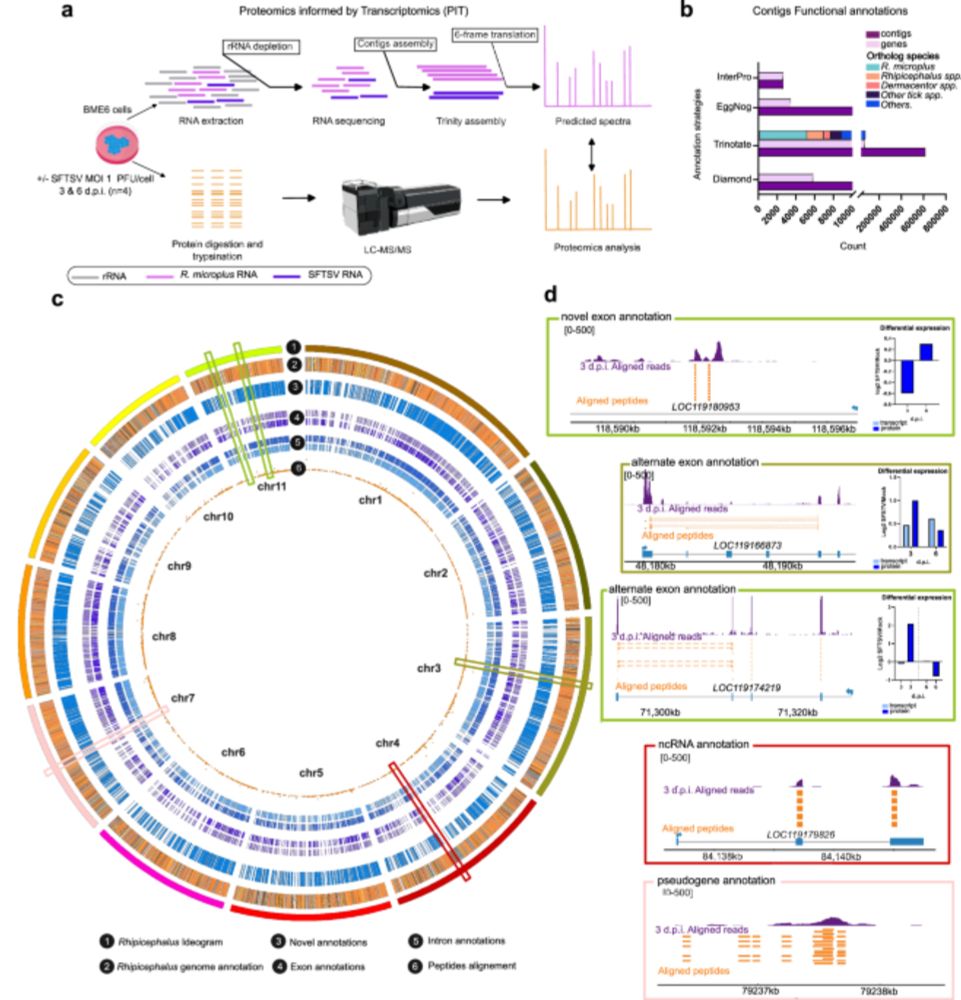
IMPACT: This transforms tick-borne disease research:
🎯 New drug targets
🎯 Understanding vector competence
🎯 Virus-tick evolution
Testing if mechanisms work across other tick viruses next.
👨🔬 collaborative project with @alf-castello.bsky.social and @alainkohlvirology.bsky.social
13.08.2025 12:32 — 👍 3 🔁 2 💬 0 📌 0
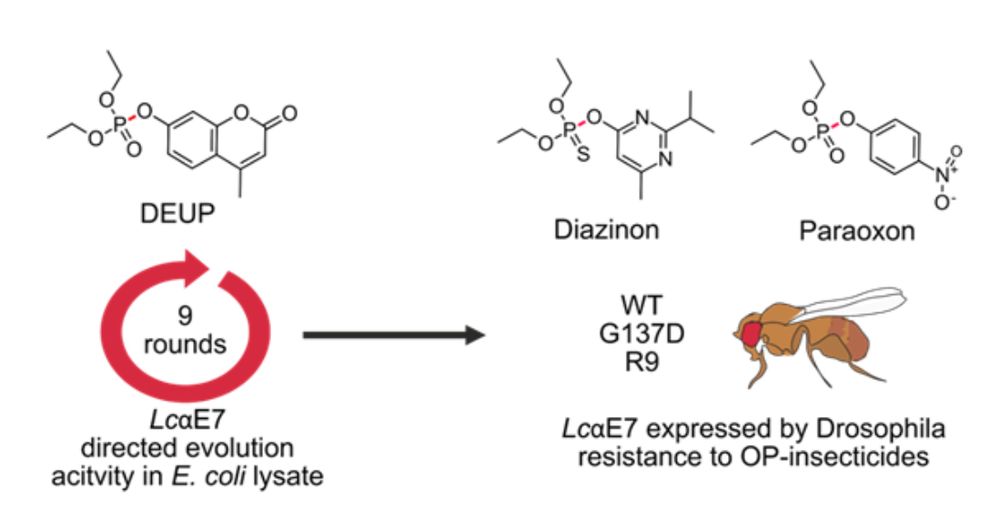
Nine rounds of directed evolution resulted in LcαE7 variants with increased rates of OP-hydrolysis. Three LcαE7 genes (wild-type, G137D and R9) were introduced into the genome of Drosophila. Fluorometric substrate DEUP, and insecticides Diazinon and Paraoxon are shown with the scissile bond indicated in red.
How predictable are the evolutionary pathways leading to insecticide resistance? Why do some species gain resistance while others do not? We explore these questions in our latest preprint. A huge effort from Rebecca Frkic, Alex Giang, Colin Jackson and the team.
www.biorxiv.org/content/10.1...
08.07.2025 23:05 — 👍 1 🔁 1 💬 0 📌 1

PhD student in Biochemistry - Uppsala University
PhD student in Biochemistry, Disciplinary Domain of Science and Technology, Faculty of Chemistry, Department of Chemistry - BMC, Uppsala University
We are looking for a PhD student in (mostly )wet-lab biochemistry to work on short linear motifs, intrinsically disordered regions, in the context of the Marie Curie network "IDPro". More info an apply here: www.uu.se/en/about-uu/...
30.06.2025 08:39 — 👍 12 🔁 21 💬 2 📌 1
VIP³ Post Doc Program (2025 - 2030)
VIP3 is a postdoctoral fellowship program at the Vienna BioCenter offering three – year fellowships that are open to candidates with backgrounds in life sciences, chemistry, physics, medicine, enginee...
postdoc opening in vienna: study lipid droplets (LDs) with integrative structural biology, uncover how LD proteins shuttle between cytosol & nucleus to regulate lipid metabolism, organelle architecture and immune response. #VIP3 #lipidtime #cryoEM #coffee training.vbc.ac.at/post-docs/vi...
24.06.2025 21:03 — 👍 11 🔁 11 💬 0 📌 2
🚨🚨 News from the @castello-lab.bsky.social and @shabazlab.bsky.social. Our work, led by Louisa Iselin, reveals pervasive changes in the RNA-bound proteome induced by interferon. #RNA, #immunity, #interferon, #host-virus www.biorxiv.org/content/10.1...
03.06.2025 22:01 — 👍 18 🔁 6 💬 1 📌 0
Happy that my work on RNF213 has been published as a part of doi.org/10.1038/s414...!
Many thanks to all the groups involved:
@clausenlab.bsky.social
@e3chembio.bsky.social
@fletcherlab.bsky.social
Have a look at the summary from Fletcher lab for an insider perspective of the paper's history:
22.05.2025 12:37 — 👍 18 🔁 3 💬 0 📌 0
cryo EM enthusiasts with interest in molecular machines.
junior group leader at University of Würzburg || RNA biologist with a 🖤 for splicing || science & 🎨, #firstgen www.beuschlab.org
British Skin Foundation–funded postdoc at Trinity College Dublin studying inflammasomes and ultra-rare variants in the inflammatory skin condition HS. PhD from QUB using RSV and SARS-CoV-2 to understand airway innate immune responses.
We study host-virus interactions & innate immunity in gene therapy & autoimmunity. From 🇫🇮/🇺🇦 via 🇫🇷 in 🇮🇹. Views are my own.
Dept. of Biology & Biochemistry , University of Pavia, Pavia, Italy
Molecular biologist | Wellcome Trust Senior Fellow | antiviral defence | RNA processing | interferons | transposable elements | small RNAs | embryonic development
Free Palestine 🍉
Microbes & mucus 🤩 | Gut Microbial Ecology | Wageningen University, NL
Postdoc in the Meissner lab at the Institute for Innate Immunity in Bonn. Previously DTU Bioengineering. Interested in innate immune signaling with a focus on ubiquitin and other post-translational modifications.
Assistant Professor at University of Utah studying host-virus interactions
http://hobbs.biochem.utah.edu/
Executive Editor/Team Lead Open Access Science & Medicine Journals Sage Publishing
Opinions = mine
http://linkedin.com/in/jlovick-editor
#oncology #cancerresearch #medicine #biology #cardiology #neurology #microbiology #publichealth #healthcare
I carry out research into the evolution of viruses and their impact on host species. Open science.
At the Department of Biochemistry, University of Oxford, UK. Structural biology. Ubiquitination pathways. elliottlab.web.ox.ac.uk
Cancer Research UK Scotland Institute (formerly the CRUK Beatson Institute). Our Mission: Cancer discovery for patient benefit.
www.crukscotlandinstitute.ac.uk
Postdoc researching ubiquitin biology @fletcherlab.bsky.social @CVR in the context of viral infection. Equality, Diversity, and Inclusion (EDI) Advocate. What I say here is my personal opinion.
X: UbcH_Alice
thefletcherlab.co.uk
Postdoc in the Group of Prof. Satpal Virdee at the MRC PPU - fascinated by the complexity of the ubiquitin system and other posttranslational modifiers
Clinical Research Fellow at MRC-University of Glasgow Centre for Virus Research // Paediatric registrar
Mpox 🦠 host immunity 🧬
Biochemist studying #Cilia, Cell Signaling and Protein Trafficking via Proximity Labeling and Proteomics.
https://www.mick-lab.com
chem bio PhD student in the Doudna Lab @Berkeley
chemical/synthetic biologist, Luddite trying to find better ways to make molecules that do important stuff, dad, @uchicago professor of chemistry
http://www.dickinsonlab.uchicago.edu/
Immunology lab led by Dr. Dave Boucher, Unravelling how proteases control innate immune responses to infections and diseases
Boucherlab.org