Wurm on Warsh
Podcast Episode · Moody's Talks - Inside Economics · 02/02/2026 · 1h 13m
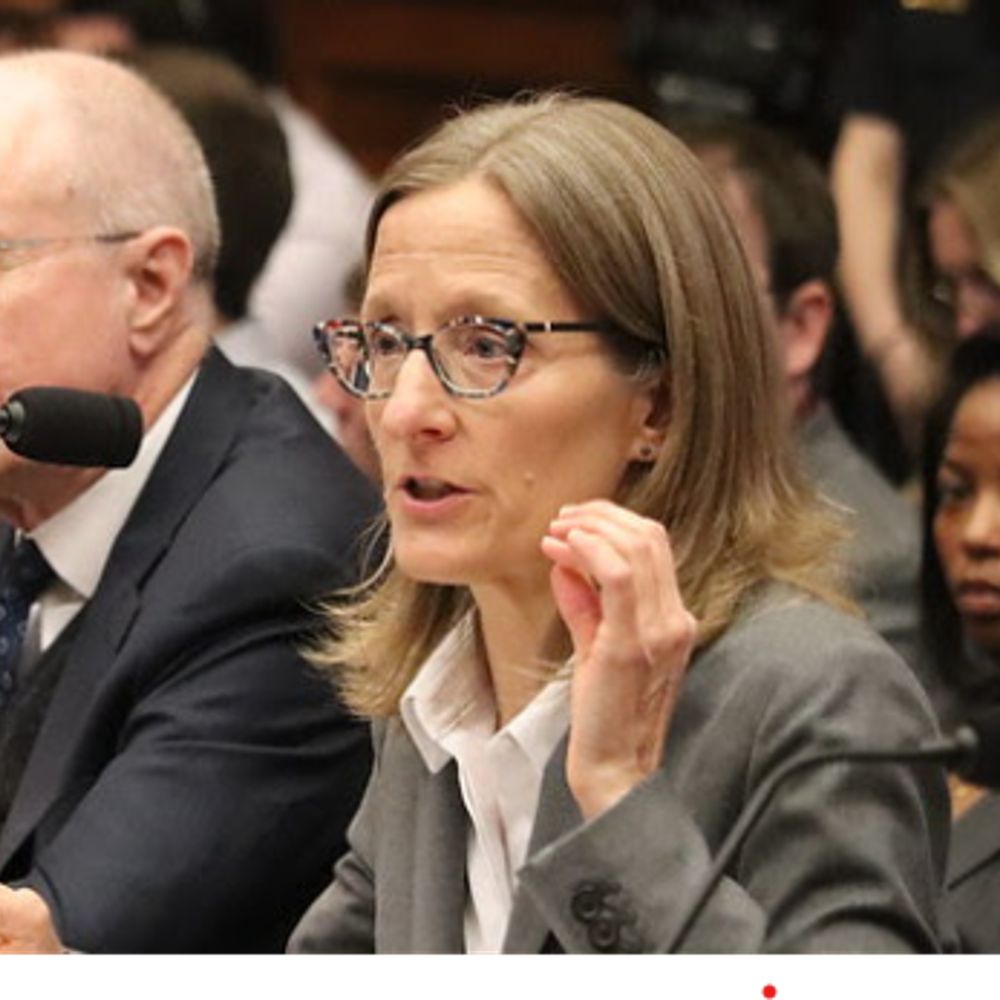
We dig into Warsh’s speeches and writings to understand how he might reshape monetary and regulatory policy—and whether the Fed could maintain its independence under his leadership. Listen here: podcasts.apple.com/us/podcast/w...
02.02.2026 16:52 — 👍 8 🔁 1 💬 0 📌 0
Wurm on Warsh
Podcast Episode · Moody's Talks - Inside Economics · 02/02/2026 · 1h 13m
New episode: Wurm on Warsh. No, this isn’t a Bavarian dish.
On the latest episode of the #InsideEconomics podcast, colleague Martin Wurm joins to take a close look at Kevin Warsh as a potential next Chair of the #FederalReserve.
02.02.2026 16:52 — 👍 14 🔁 3 💬 2 📌 0
Warsh’s ostensible views on the use of the Fed’s balance sheet or its data dependency are quirky, even odd, but his legacy as Fed chair will be determined by how much of the Fed’s independence he is able to preserve.
01.02.2026 20:20 — 👍 8 🔁 1 💬 3 📌 0
But the critical question is whether he will be strong enough to ensure that interest rates are set based on the economy, and not politics. That won’t be easy, as the President has made no bones that he wants to have a say, if not set, interest rates.
01.02.2026 20:20 — 👍 16 🔁 1 💬 1 📌 0
And as a former investment banker, he is well-versed in financial markets, which is especially important when markets go off the rails, which they will almost surely do some time during his four-year term.
01.02.2026 20:20 — 👍 2 🔁 0 💬 1 📌 0
Kevin Warsh is a reasonable choice for the next Federal Reserve chair. His obvious strength is his previous stint on the Fed during the Global Financial Crisis. He knows the institution and everyone in global central banking circles.
01.02.2026 20:20 — 👍 14 🔁 2 💬 9 📌 0
FYI, this data is based on all credit files in the country from credit bureau Equifax.
25.01.2026 20:14 — 👍 11 🔁 0 💬 1 📌 0
Delinquency is up across all credit score banks, but not surprisingly, it is up most among subprime borrowers, which, by my definition, includes those with a score below 660. And this despite generally tight underwriting, FHA mortgage lending aside, and a still-low unemployment rate.
25.01.2026 20:14 — 👍 14 🔁 2 💬 2 📌 0
Overall delinquency jumped to 2.84% of loans outstanding in the month, the highest seasonally adjusted rate in about a decade, and the direction of travel is concerning. Delinquency is up across nearly all types of lending, from student loans and credit cards to auto loans and first mortgages.
25.01.2026 20:14 — 👍 7 🔁 2 💬 1 📌 0

The uncomfortable financial stress on low- and middle-income Americans is evident in the December 2025 consumer delinquency rates.
25.01.2026 20:14 — 👍 25 🔁 7 💬 3 📌 0
After this adjustment, those in the top 20% accounted for 3-4 percentage points less of total personal outlays over the historical period.
19.01.2026 14:38 — 👍 4 🔁 0 💬 0 📌 0
For those paying close attention, we have made a methodological adjustment to our estimates of personal outlays by demographic group. We are now using after-tax income instead of before-tax income in our calculations.
18.01.2026 16:39 — 👍 10 🔁 0 💬 1 📌 0
The increasing angst of Americans, evident in consumer sentiment surveys, our mounting societal ills, and our fractured politics, is likely at least in part due to the K-shape.
18.01.2026 16:39 — 👍 7 🔁 0 💬 1 📌 0
An increasingly K-shaped economy can’t be good. It means the economy is highly dependent on a small group of the well-to-do, who, in turn, spend based in significant part on how their stock portfolios are performing.
18.01.2026 16:39 — 👍 8 🔁 0 💬 2 📌 0
The late 1990s by speculation in internet stocks, and the recent period by runaway AI stocks. The well-to-do own the stocks, and as their wealth surged, they spent more.
18.01.2026 16:39 — 👍 5 🔁 0 💬 1 📌 0
I may have looked at the chart too long, but it looks to me that most of the increase in the share of outlays going to the top 20% over the past 35 yrs occurred in the late 1990s and since the pandemic. Of course, these two periods were characterized by surging stock prices.
18.01.2026 16:39 — 👍 6 🔁 0 💬 1 📌 0
The share of total outlays going to those in the top 20% of the income distribution – making over $175,000 per year nationwide – increased to nearly 60% in the 3rd quarter of 2025. This is another new high in the data we have constructed back to 1989.
18.01.2026 16:39 — 👍 5 🔁 2 💬 1 📌 1

The K-shaped economy is becoming steadily more K-shaped. That’s the message in our updated estimate of personal outlays by income group.
18.01.2026 16:39 — 👍 35 🔁 10 💬 3 📌 1
It is currently allowing its holdings of MBS to prepay and mature. But the GSEs’ MBS purchases will work to countervail the Fed’s efforts.
Who is in charge of setting monetary policy?
12.01.2026 20:37 — 👍 10 🔁 4 💬 1 📌 0
Even more worrisome, this effectively creates a backdoor way for the executive branch of government to circumvent the Federal Reserve. As part of its quantitative easing efforts to reduce mortgage rates and support the economy during the GFC and pandemic, the Fed purchased Fannie and Freddie MBS.
12.01.2026 20:37 — 👍 8 🔁 3 💬 1 📌 0
Prior to the GFC, they had become effectively huge hedge funds, which hastened their demise during the crisis when their purchases of private-label MBS went badly awry. We are a long way from that, but…
12.01.2026 20:37 — 👍 3 🔁 1 💬 1 📌 0
Potentially more worrisome, however, is that this means that one of the principal constraints put on Fannie & Freddie in the wake of their collapse in the Global Financial Crisis, that they could no longer have a big balance sheet, is eroding.
12.01.2026 20:37 — 👍 5 🔁 2 💬 1 📌 0
Unfortunately, this will do little to make homebuying more affordable, as while the lower rates will support housing demand, given the severe housing shortage, it will also result in higher house prices, all else equal.
12.01.2026 20:37 — 👍 6 🔁 3 💬 1 📌 0
President Trump says he is directing Fannie Mae & Freddie Mac to purchase $200 bil of mortgage-backed securities in an effort to bring down mortgage rates and address the severe housing affordability problem. Fixed mortgage rates have, in fact, declined by 10-20 bps to just over 6% on the news.
12.01.2026 20:37 — 👍 14 🔁 5 💬 3 📌 0
Thus, the fastest way to boost the job market would be for the Supreme Court to declare the reciprocal tariffs unlawful and for lawmakers to let them become a thing of the past.
11.01.2026 18:28 — 👍 28 🔁 10 💬 2 📌 1
Other factors are certainly at play, including highly restrictive immigration policies, DOGE cuts, and artificial intelligence; however, the global trade war’s fingerprints are all over the ailing job market.
11.01.2026 18:28 — 👍 17 🔁 2 💬 2 📌 0
This reflects the direct effects of the tariffs on manufacturing, transportation and distribution, and ag-related businesses, which are steadily losing jobs, as well as the indirect uncertainty hit to hiring by most other businesses.
11.01.2026 18:28 — 👍 8 🔁 1 💬 1 📌 0
There has been no job growth (and likely job declines after all the revisions are in), as measured by either the payroll or household employment data, since Liberation Day last April, following the President’s announcement of significant reciprocal tariffs.
11.01.2026 18:28 — 👍 10 🔁 3 💬 1 📌 0

After cogitating a bit on the December jobs data, I’m increasingly convinced that the job market is struggling, and the broader economy is fragile, in big part due to U.S. tariffs.
11.01.2026 18:28 — 👍 46 🔁 12 💬 1 📌 1
2026 will suffer much weaker job growth, higher unemployment, and higher inflation. Stock and house price gains will also be much more pedestrian.
04.01.2026 17:28 — 👍 11 🔁 2 💬 2 📌 0
Former FDIC chair and other great jobs. I opine on financial issues, with an occasional dog post. Also a NYT best selling author. Don’t miss my next book, How Not to Lose a Million Dollars.
CNBC senior economics reporter. Husband, father, journalist, guitarist and fly fisherman. (The Lies-man joke has been made. It’s not fresh. It’s my father’s father’s name, bastardized at Ellis Island. Move along.)
Econ. Prof. @ Fletcher/Tufts, Founder & Exec. Editor EconoFact
⚡️Tampa Bay's Congresswoman⚡🌴🌤🌅 🇺🇸 People Over Politics! 🇺🇸 former Chair of the Select Committee on the Climate Crisis 🇺🇸 #FL14
Ex NY Times, now author of Substack Paul Krugman. Nobel laureate and, according to Donald Trump, "Deranged BUM"
Economics writer at The New Yorker. Author of “Capitalism and Its Critics: A History from the Industrial Revolution to AI" and other beach reads.
Personal Account. Director of Economics, The Budget Lab at Yale University. Former Chief Economist, White House Council of Economic Advisers.
President, @EPI-org. Board member, EPI Action. Former Chief Economist, US Dept of Labor. Bike commuter, backyard beekeeper. Tweets my own. She/her.
Chief Economics Correspondent for The New York Times. Adjunct at CUNY Newmark. Ex: FiveThirtyEight, WSJ. He/him.
Email: ben.casselman@nytimes.com
Signal: @bencasselman.96
📸: Earl Wilson/NYT
Chief economics correspondent at The Wall Street Journal
United States Senator for Hawaii. Climate hawk. Chief Deputy Whip.
International economics and policy for Bloomberg.
And some snark
Usually 35,000 feet above somewhere ✈️
Senior Fellow in Economic Studies at Brookings. Previously, director of The Hamilton Project at Brookings and before that chief economist of CBO.
macro, fiscal, Fed. creator of the Sahm rule recession indicator. Stay-At-Home Macro (SAHM) Substack.
Reporter at The Washington Post. Listen to my series on John Brown: https://podcasts.apple.com/us/podcast/american-carnage/id1723391781
Economic columnist at Washington Post | Data aficionado | Email: Heather.long@washpost.com
Former Member of President Obama’s Council of Economic Advisers & Chief Economist at Labor. Current academic economist at Michigan. Always an economist at home.
Director of Economic Policy Studies and Senior Fellow at the American Enterprise Institute. Professor of Practice at Georgetown University.
Chicago diehard. President & CEO of the Chicago Fed, econ prof Chicago Booth School, former Chairman of the Council of Economic Advisers.
I do not speak for the Fed or others on the FOMC
Author of "Slouching Towards Utopia: An Economic History of the 20th Century". Too online since 1995. Sometime Deputy Assistant Secretary of the U.S. Treasury. UC Berkeley Professor.