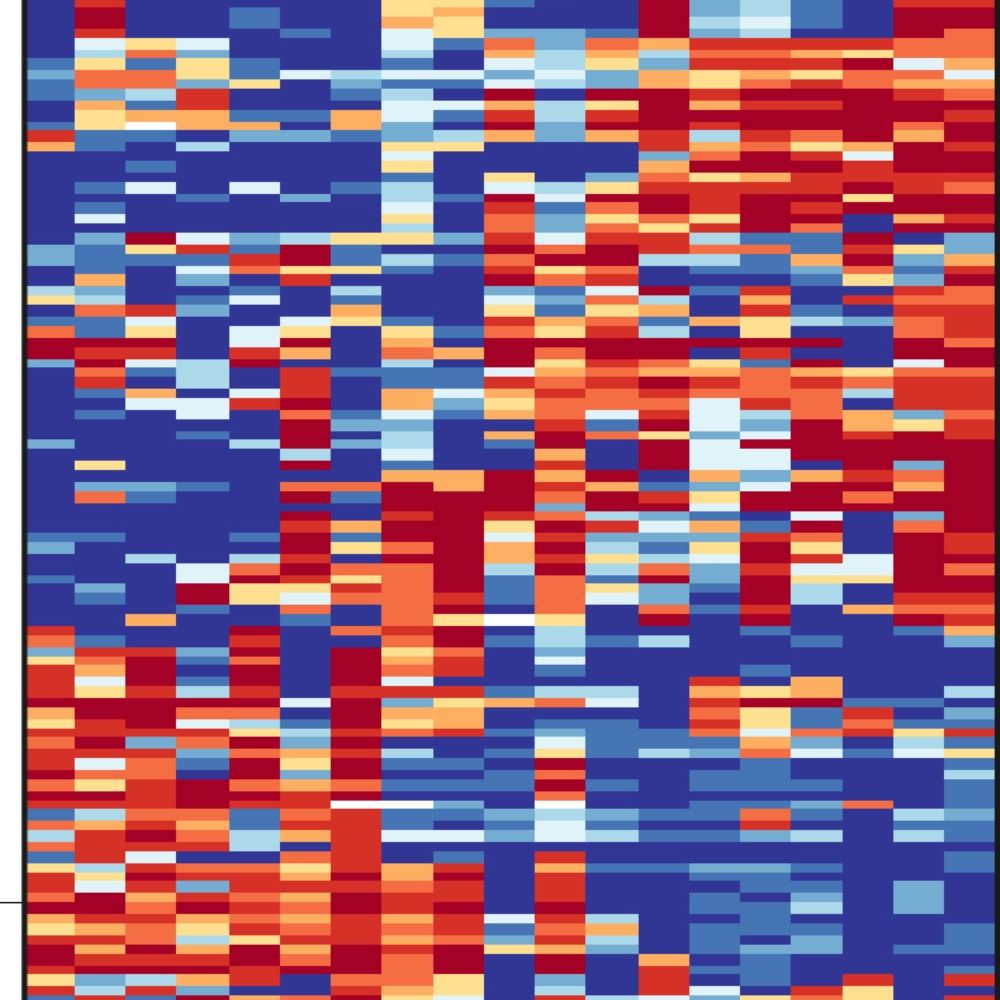
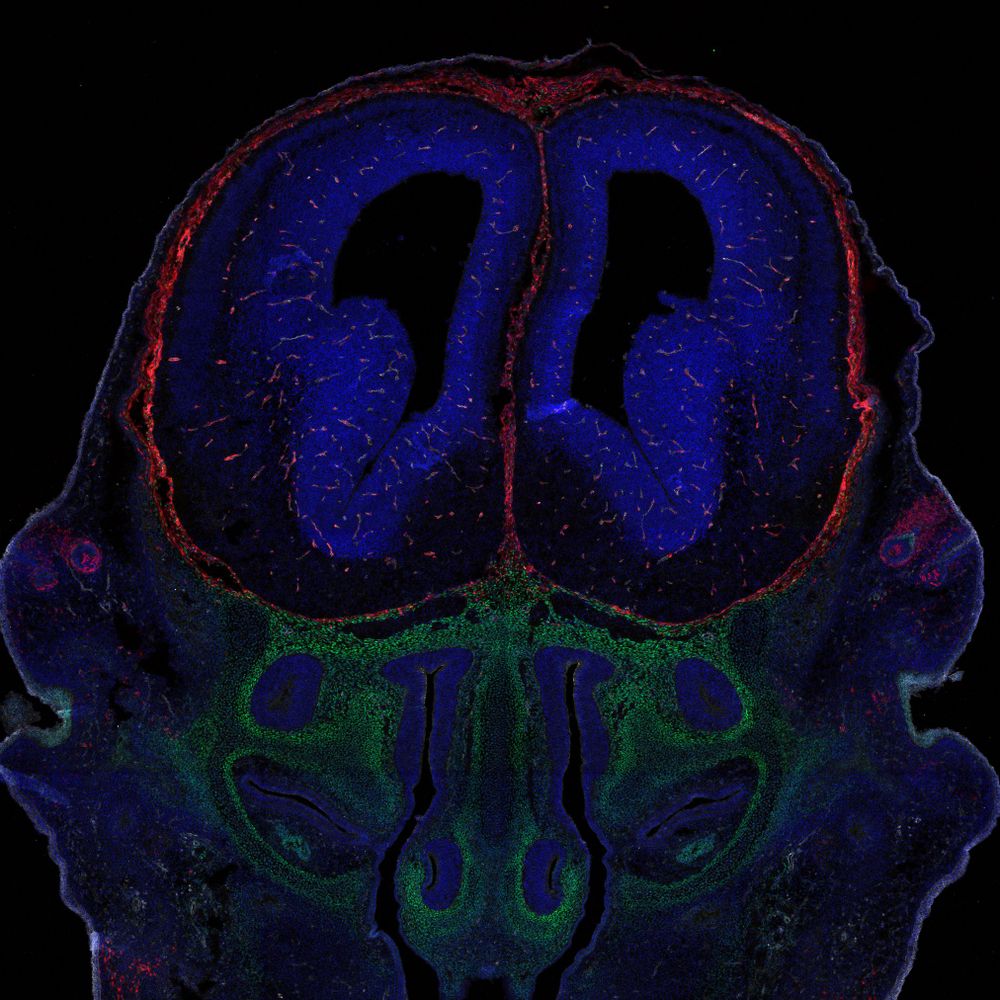
Proud of two covers from India this year in JCB....both so beautiful, @rpadinjat.bsky.social and @spindlebehavior.bsky.social
06.12.2025 14:48 — 👍 6 🔁 3 💬 0 📌 0
Happy to see our work on how Aurora A kinase orchestrates nuclear organization by regulating the material properties of spindle pole–localized NuMA at mitotic exit featured on the cover. Grateful to the students for creating this beautiful image!
04.12.2025 10:34 — 👍 5 🔁 0 💬 0 📌 0

New Aurora A kinase role in maintaining proper nuclear shape organization at mitotic exit:
NuMA inhibition causes its dynamic-to-solid material-state transition, leading to bending of segregated mitotic chromosomes
Sachin Kotak @spindlebehavior.bsky.social et al
www.embopress.org/doi/full/10....
19.09.2025 07:49 — 👍 15 🔁 3 💬 0 📌 0
Hi Carlos, thank you so much!
19.09.2025 00:50 — 👍 0 🔁 0 💬 0 📌 0
Hi Jorge, thank you so much!
15.09.2025 09:21 — 👍 0 🔁 0 💬 0 📌 0
Thank you so much-Helfrid!
14.09.2025 00:30 — 👍 0 🔁 0 💬 0 📌 0
Huge thanks to all students for their hard work, to our collaborator @daannoordermeerlab.bsky.social for a wonderful partnership, and to colleagues/friends for valuable suggestions.
Grateful to DBT, ANRF, CEFIPRA, and IISc for their support 🙏
13.09.2025 05:13 — 👍 2 🔁 0 💬 0 📌 0

Finally, by tracking nucleolar organization and chromatin–chromatin contacts (via 4C analysis), we show that perturbing nuclear organization directly disrupts chromatin organization at mitotic exit. This work highlights the biological significance of spindle pole disassembly at mitotic exit.
13.09.2025 05:13 — 👍 1 🔁 0 💬 1 📌 0
By restricting Aurora A activity to only one spindle pole, we found that the opposite pole lacking Aurora A activity accumulates “solid” NuMA, which in turn forces the segregated chromosomes to bend around this abnormal pole.
13.09.2025 05:13 — 👍 0 🔁 0 💬 1 📌 0
Notably, forcing multimerization of NuMA molecules is sufficient to recapitulate the phenotype seen upon Aurora A inactivation. This indicates that multimerization is the key process disrupted when Aurora A activity is lost.
13.09.2025 05:13 — 👍 0 🔁 0 💬 1 📌 0
We further show that dynamic-to-solid material state transition in the absence of Aurora A activity in anaphase is assisted by glutamine residues in its C-terminus IDR.
13.09.2025 05:13 — 👍 0 🔁 0 💬 1 📌 0

NuMA accumulation at spindle poles depends on:
• dynein/dynactin (trucks)
• its coiled-coil domain (cranes), and
• its ability to form multivalent cation-π interactions through its intrinsically disordered region (IDR) at the C-terminus (hooks in cyan).
13.09.2025 05:13 — 👍 0 🔁 0 💬 1 📌 0
When Aurora A is inactivated, we found that NuMA, a conserved spindle pole protein, undergoes a material state transition from dynamic to solid, and abnormally accumulates at the spindle poles.
This abnormal “accumulation” causes NuMA segregated chromosomes/nuclei to bend around them.
13.09.2025 05:13 — 👍 0 🔁 0 💬 1 📌 0

- We found that Aurora A activity in anaphase is crucial for shaping the nucleus during mitotic exit.
To probe this, we built a cyclin-B1-based degron tool that enables rapid, phase-specific degradation of Aurora A, right as cells exit mitosis.
13.09.2025 05:13 — 👍 1 🔁 0 💬 1 📌 0

Happy to share our work in @embojournal 👉 shorturl.at/zXNyn
For decades, we’ve known cells dismantle & rebuild the nuclear envelope in sync with spindle poles. But why does this coordination matter? And how do pole material properties ensure error-free division?
Follow this thread to know more 👇
13.09.2025 05:13 — 👍 20 🔁 9 💬 4 📌 1

It’s happening on the 15th!!
#centrosome, #microtubules, #centromere, #mitosis, #cellbiology
@kaustuvsanyal.bsky.social
@viji-draviam.bsky.social
@spindlebehavior.bsky.social
09.07.2025 16:08 — 👍 4 🔁 1 💬 0 📌 0

The cover of @jcb.org's July issue (rupress.org/jcb/issue/22...) shows a confocal timelapse imaging of #Celegans one-cell embryo expressing fluorescently labeled plasma membrane, microtubules, chromosomes, and ZEN-4, a plus-end directed kinesin motor protein (Adhikary et al. doi.org/10.1083/jcb....)
07.07.2025 14:04 — 👍 4 🔁 2 💬 0 📌 0
PhD, MPH, MSc, MSc, PGCert, BSc (Hons) | MB BCh BAO Candidate | Aspiring Neurosurgeon
https://scholar.google.com/citations?user=U_uB130AAAAJ&hl=en
https://www.linkedin.com/in/drmofatteh/
https://orcid.org/0000-0002-2458-0447
https://linktr.ee/drmofatteh
Cell adhesion, cytoskeletal regulation, Wnt signaling & wherever science leads us + wildflowers & my own idiosyncratic views. First gen college grad
Diversity, equity & Inclusion are core American Values
https://peiferlab.web.unc.edu
Postdoctoral scholar @ Oegema/Desai labs, UC San Diego | Bowerman lab & UOregon alumna | Dungeons and Dragons Enthusiast | Painter of Tiny Things | she/her
Cell and development biologist 🦋 Art enthusiast 🎨 Postdoc @Oegema and Desai Labs @UCSD
PhD @JNCASR
Our lab at NCBS Bangalore is interested in understanding the mechanisms of nervous system communication using teeny-tiny nematodes - C. elegans. We use genetics, microscopy, animal behaviour and all possible methods to address these questions!
Director, Dept. of Mechanistic Cell Biology, Max Planck Institute of Molecular Physiology, Dortmund (DE). Opinions my own
Cell cycle, mitosis, nuclear pores, ubiquitin, disease.
Group leader @igbmc.bsky.social, research director DR1 @cnrs.fr, Strasbourg, France.
Alumna @JagiellonskiUni.bsky.social @impvienna.bsky.social @ethz.ch
Hobby cook and occasional runner.
Postdoc @SophieMartinLab.bsky.social studying #GPCR and #MAPK signalling in fission yeast. Alumnus of @mjafreeman.bsky.social and @jordanraff.bsky.social
Cell biologist 🔬 | Exploring the mysteries of centrosomes and cytoskeleton diversity🐉🦠 | Postdoc at Centriole Lab, University of Geneva
Laboratory of Srimonta Gayen, Associate Professor, IISc Bangalore.
Interests: DevBio | epigenetics | X-chromosome inactivation/upregulation | DNA/RNA modifications | environment-epigenome crosstalk | ageing
(she/her) PhDing on jellyfish regeneration.
Finds tidbits of joy in random long walks and ice-creams!
Sean Tallman heads the Forensic and Bioanthropology Laboratory (FAB Lab) at Boston University's Program in Forensic Anthropology #LGBTQ #Fulbrighter
Interested in chromatin dynamics during mammalian development
Executive Publisher at T&F. Publish journals. Walk dogs. ❤️ doughnuts & ice cream. #scicomm #physicalsciences #mathematics #statistics #datascience #history #science #STS
Group leader at MRC Human Genetics Unit, University of Edinburgh. Interdisciplinary research on disease #epigenetics. Part-time solo dad. Occasional music and climbing.
https://institute-genetics-cancer.ed.ac.uk/research/research-groups-a-z/sproul-group
Group leader at Institut Jacques Monod. When I say "epigenetics" what I really mean is "DNA methylation".
www.maximgreenberglab.com
Molecular Cell Biologist - Principal Scientist. Interests: RNA therapeutics, pharmacology&drug discovery, cell cycle research.
Neuroscience, meninges, blood-brain barrier, cake (or cookies)
http://siegenthalerlabcu.weebly.com/